About GramsToCups.us
"Practical baking measurement tools built to make ingredient conversions easier to understand, verify, and use."
GramsToCups.us is an independent culinary reference and conversion website built around a simple problem: a recipe may give ingredients in grams while a US baker expects cups, tablespoons, or teaspoons. Because ingredients do not all have the same physical density, accurate conversions require ingredient-specific reference data rather than one universal grams-to-cups formula.
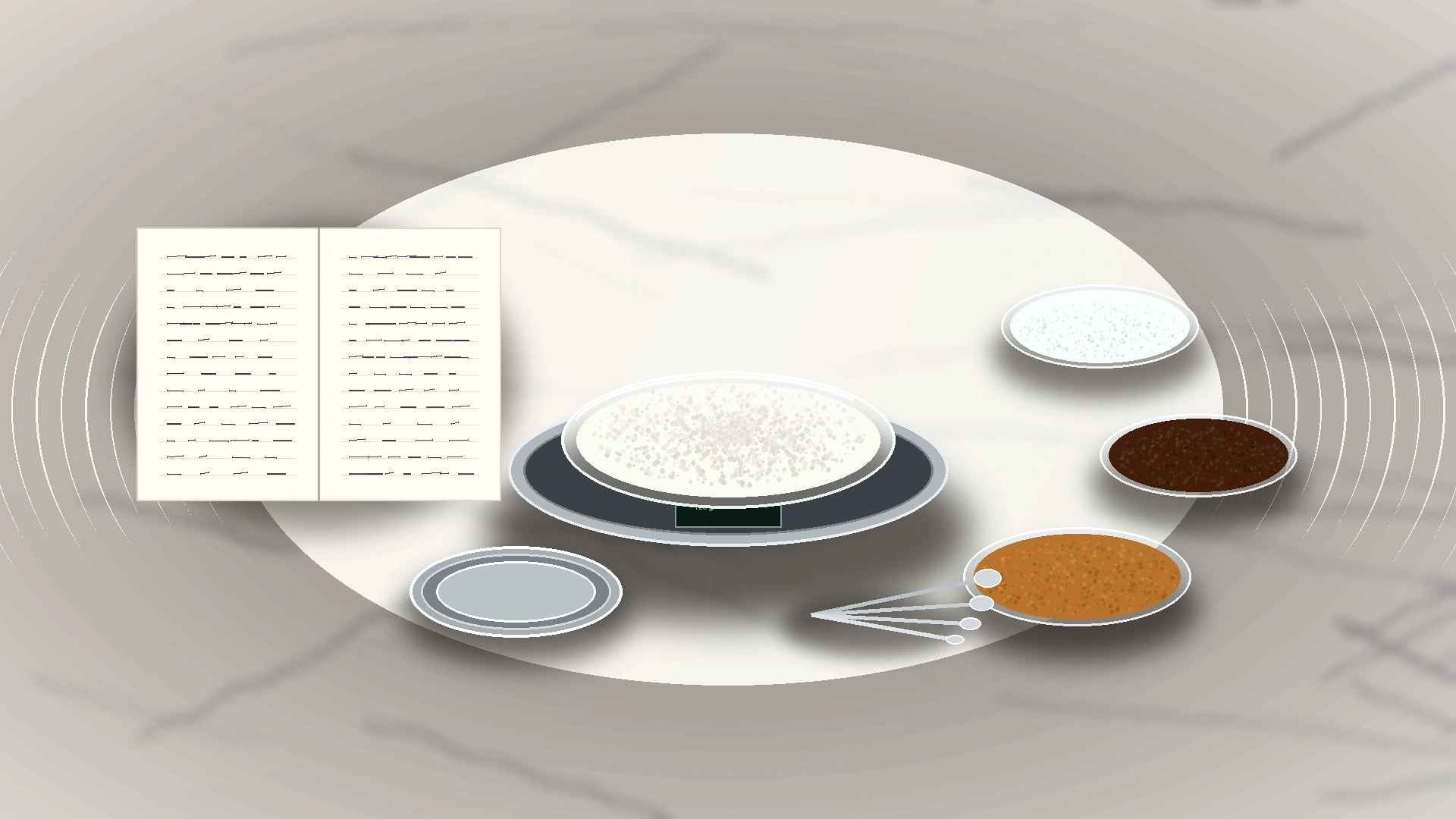
Accurate culinary conversion requires ingredient-specific bulk density data, taking into account volume standards, preparation states, and physical mass.
What Is GramsToCups.us?
GramsToCups.us is an open culinary measurement reference and conversion utility designed to bridge the gap between mass-based metric baking recipes and traditional volume-based American household measures.
What Our Utility Helps You Do
- Convert grams to cups with ingredient specificity
- Convert cups to grams for US and international recipes
- Convert grams to tablespoons for small baking portions
- Convert grams to teaspoons for micro-ingredients
- Understand ingredient-specific bulk density values
- Scale batch recipes up or down without calculation errors
- Compare US Legal, Customary, and Metric cup standards
- Learn key baking measurement science and techniques
Who This Website Is Built For
- US home bakers adapting European or metric recipes
- Recipe readers looking to double-check measurement ratios
- Baking students learning pastry science fundamentals
- Recipe developers standardizing weight and volume lists
- Food bloggers writing dual-measurement ingredient tables
- Bakers without digital scales needing reliable volume guides
- Anyone navigating weight-to-volume culinary conversions
Notice: GramsToCups.us is an independent editorial reference resource. We do not claim to operate a certified physical food laboratory or invent proprietary chemical research. Our goal is to synthesize published food composition data, industry standards, and baking science into practical, transparent tools.
Why Grams-to-Cups Conversion Is Not a Simple Formula
A common misconception in home baking is that one single multiplier can convert grams to cups for every food item. Water has a 1:1 metric density ratio where 1 gram equals 1 milliliter (meaning 240 grams of pure water fills a 240 mL US Legal Cup). However, dry kitchen ingredients behave completely differently.
Consider these basic kitchen examples:
- Flour vs. Sugar: A cup of all-purpose flour weighs approximately 125 grams, whereas a cup of granulated white sugar weighs approximately 200 grams. Sugar crystals are far denser than wheat starch particles.
- Powdered Sugar vs. Granulated Sugar: Even within the exact same sweetener family, 1 cup of fine powdered sugar weighs roughly 120 grams, while 1 cup of granulated sugar weighs 200 grams, a 40% weight difference for the same volume!
- Brown Sugar Packing: Light brown sugar changes in weight substantially depending on whether it is loosely scooped (approx. 170g per cup) or firmly packed into the cup (approx. 220g per cup).
- Liquid & Fat Variations: Honey, vegetable oil, milk, cocoa powder, rolled oats, and softened butter each possess unique physical structures, particle geometries, and moisture levels.
Key takeaway:
1 Cup ≠ One Universal Number of Grams.
Grams measure mass (how much matter an ingredient contains). Cups measure volume (how much three-dimensional space an ingredient occupies). Ingredient bulk density is the physical property that connects the two.
How Our Conversion Method Works
To provide practical conversions, GramsToCups.us applies a fundamental physical relationship between weight mass, bulk density, and container volume:
Simplified: Volume = Weight ÷ Reference Density
When you select an ingredient in our calculator, the utility incorporates four critical variables:
- Identified Ingredient: The specific item selected (e.g., bread flour, almond flour, honey).
- Reference Bulk Density: The standard weight benchmark (g/cm³ or grams per cup) established for that ingredient.
- Cup Standard Selection: The cup volume system being used (defaulting to the 240 mL US Legal Cup).
- Target Unit: The requested output measure (cups, tablespoons, teaspoons, or grams).
Calculation Workflow Diagram
Our primary calculations default to the US Legal Cup standard of 240 mL, mandated by the FDA for commercial food nutrition labels in the United States. Where helpful, we also highlight comparisons with the US Customary Cup (approx. 236.59 mL / 8 fl oz) and the Metric Cup (250 mL) used across Australia, New Zealand, Canada, and the UK.
Why Ingredient Density Matters
Physical density governs how ingredients fit into kitchen measuring containers. The table below illustrates why different baking staples demand unique weight-to-volume considerations:
| Ingredient Type | Why Density Matters in Baking |
|---|---|
| Flour (All-Purpose, Bread, Cake) | Scooping directly packs flour particles tight; fluffing and spooning aerates the powder, changing weight by up to 25% per cup. |
| Brown Sugar (Light & Dark) | High molasses moisture causes crystals to cling together. Packing compresses air voids, shifting density from 170g to 220g per cup. |
| Powdered / Confectioners' Sugar | Fine particle size traps large air volumes. Sifting before versus after measuring alters how much mass fits into a single cup. |
| Honey & Liquid Syrups | Extremely dense and viscous (approx. 340g per cup). Honey is nearly 40% heavier by volume than pure water. |
| Cocoa Powder | High surface area and fat content create electrostatic clumping, making volume weights fluctuate unless sifted or weighed. |
| Butter & Solid Fats | Physical state (cold solid block, softened, or melted liquid) dictates whether air pockets form inside volume measuring cups. |
Where Our Data Comes From
GramsToCups.us compiles density references from published public data resources, agricultural databases, and established baking standards:
Primary Reference Sources
- USDA FoodData Central: The official U.S. Department of Agriculture food-composition data resource providing baseline weight-per-household-measure entries for raw agricultural commodities and basic ingredients.
- Food and Agriculture Organization (FAO): Global density and yield factor tables compiled for international agricultural commodities.
- Standardized Culinary Measurement Benchmarks: Published weight standards from recognized test kitchens and baking institutions (e.g., All-Purpose Flour at 125g/cup, Granulated Sugar at 200g/cup, Unsalted Butter at 227g/cup).
- Ingredient-Specific Weight Publications: Verified technical sheets for specialty items like almond flour, tapioca starch, and coarse sea salts.
Different ingredients require different data references because no single database covers every specialty baking product. For example, while basic flour and sugar weights trace to public agricultural data, specialized gluten-free flour blends rely on manufacturer technical benchmarks.
How We Handle Measurement Differences
If you compare three different baking books or conversion websites, you may notice that one lists 1 cup of flour as 120 grams, another lists 125 grams, and a third lists 130 grams. None of these sources are inherently "fake" or "broken." Instead, these variations stem from eight real-world factors:
Using 236.6 mL US Customary vs 240 mL US Legal vs 250 mL Metric cups.
Differences between hard wheat bread flour and soft wheat cake flour.
Chipped cold butter vs melted butter vs softened room-temperature butter.
Sifting flour incorporates air, lowering volume weight per cup.
Lightly spooned brown sugar vs firmly pressed packed cup.
Grind coarseness variations between major commercial sugar and flour brands.
Dipping measuring cups directly into flour sacks vs spooning and leveling.
Rounding exact decimal outputs (e.g., 124.7g) to practical kitchen numbers (125g).
When evaluating conversion discrepancies, we advise bakers not to dismiss a chart outright. Always check the target ingredient, preparation instructions, cup size definition, and recipe author's regional origin.
Why We Recommend Weighing Ingredients When Precision Matters
While GramsToCups.us builds tools for volume conversion, we strongly advocate using a digital kitchen scale whenever baking precision is critical. Digital scales measure gravitational mass directly, eliminating volume measurement variables altogether.
- 100% batch-to-batch consistency for delicate bakes
- Simplifies recipe scaling (doubling 375g to 750g)
- Eliminates volume compaction and humidity variables
- Speeds up prep with single-bowl tare weighing
- Practical, fast, and familiar in American home kitchens
- Ideal for forgiving quick breads, cookies, and muffins
- Universally available without requiring batteries
- Essential for converting heritage family recipes
Measuring cups remain a beloved staple of American baking. The goal of GramsToCups.us is to help bakers work confidently and accurately with both systems.
Read our in-depth article:Why Baking by Weight Is Superior to Measuring by Volume →
What You Can Do on GramsToCups.us
Explore our suite of open culinary conversion calculators, density databases, and educational baking guides:
Grams to Cups Calculator
Convert ingredient weight in grams into estimated cups and volume measures.
Cups to Grams Calculator
Convert recipe volume measurements into estimated ingredient mass weights.
Flour Conversion Hub
Specific conversions for All-Purpose, Bread, Cake, Whole Wheat, and Almond flours.
Sugar Conversion Hub
Detailed charts for Granulated, Powdered, Light Brown, and Dark Brown sugars.
Dairy & Fats Hub
Butter sticks, heavy cream, milk, vegetable oil, and shortening conversions.
Grain & Seed Hub
Rolled oats, chia seeds, flaxseed, cornmeal, and grain weight tables.
Recipe Scaler
Adjust ingredient quantities proportionally for larger or smaller baking batches.
Batch Converter
Convert full multi-ingredient recipe lists together in a single step.
Density Database
Reference values for food item densities (g/cm³) and reference weight benchmarks.
Baking Measurement Guide
Comprehensive guide covering flour leveling, cup standards, and volume math.
Printable Charts
Downloadable baking conversion cheat sheets to keep handy in the kitchen.
Baking Blog
Deep-dive articles on baking science, ingredient density, and scale reviews.
Our Editorial Approach
Our editorial data team follows a clear methodology to maintain usefulness and transparency across GramsToCups.us:
- Identify Ingredient First: We never apply blanket conversion factors without verifying ingredient density.
- Use Documented Benchmarks: We cross-reference USDA FoodData Central and published baking standards.
- Distinguish Mass from Volume: We explicitly highlight when a recipe relies on volume space versus scale mass.
- State Measurement Assumptions: We disclose standard cup baseline volumes (240 mL US Legal Cup) across our calculators.
- Avoid Unsupported Precision: We explain that volumetric kitchen measurements are reference estimates rather than exact laboratory constants.
- Review Data Periodically: We update density tables when better agricultural or commercial benchmark data becomes available.
- Correct Identified Errors: We review user feedback and update questionable data entries promptly.
Understanding the Limits of Volume Measurements
While digital kitchen scales directly measure gravitational mass, volume measurements depend on how dry particles pack together in space. Understanding these physical limits helps prevent unexpected baking errors:
Direct dipping packs flour against cup walls, adding up to 30g extra dry flour per cup.
Unpacked loose brown sugar leaves large air voids, under-measuring sugar by 50g per cup.
Sifting aerates fine sugar particles; 1 cup of sifted powdered sugar weighs 100g vs 120g unsifted.
High humidity causes dry flour and cocoa to absorb atmospheric moisture, increasing bulk mass.
Recommended Step-by-Step Guides:• How to Measure Flour Correctly: Spoon and Level Method vs Scooping →• How to Measure Brown Sugar: Lightly Packed vs Firmly Packed →• Sugar Conversion Guide: Granulated, Powdered, Light & Dark Brown →• Step-by-Step Guide: How to Use a Digital Kitchen Scale for Baking →
Who We Build This Website For
GramsToCups.us is crafted for anyone who loves spending time in the kitchen and wants clear, practical measurement help:
- Home Bakers: People baking weekend cookies, birthday cakes, or sourdough loaves who want reliable measurement results.
- Beginner Bakers: Readers learning why their cakes turned out dry or why flour measurement technique matters.
- Recipe Developers & Food Bloggers: Creators translating international metric recipes for American audience readers.
- Metric & European Recipe Followers: Home cooks in North America following traditional European, British, or Australian cookbooks.
- Everyday Kitchen Cooks: Anyone needing a quick, simple lookup for grams, cups, tablespoons, or teaspoons.
Our Goal
"We want baking measurements to be easier to understand."
GramsToCups.us exists to reduce confusion whenever recipes move between grams, cups, tablespoons, teaspoons, ounces, and regional cup standards. By explaining the physical science of ingredient density, we empower bakers to bake with confidence.
Accuracy, Updates & Corrections
Our central density database is reviewed periodically to reflect updated agricultural benchmarks and refined methodology. We update conversion values when:
- Better public agricultural data or food composition benchmarks become available
- Calculation methodology or cup standard comparisons are refined
- A data entry error or typo is identified
- Commercial ingredient processing definitions shift
Transparent, Tested Density Benchmarks
All conversions on GramsToCups.us are calculated using empirical bulk density data cross-referenced with USDA FoodData Central and leading culinary authorities.
Connect & Follow GramsToCups
Stay updated with our newest baking conversion charts, ingredient density infographics, and culinary metrology guides across our official social channels:
How GramsToCups.us Is Funded
GramsToCups.us is independently owned and operated. To keep our conversion utilities, density database, and PDF cheat sheets completely free for home bakers, our platform is funded through standard digital display advertising.
We accept no sponsored ingredient placements, brand payment, or manufacturer-funded weight distortions. Read our full Editorial Policy and Calculation Methodology.
Questions or Corrections?
Found a conversion that looks wrong, have a question about our calculation methodology, or want to suggest a new ingredient we should add to our database? We would love to hear from you.
Frequently Asked Questions
Q:What is GramsToCups.us?
GramsToCups.us is an independent culinary measurement reference utility designed to help home bakers, recipe developers, and pastry enthusiasts convert ingredient mass (grams) into volume measurements (cups, tablespoons, teaspoons) and vice-versa using ingredient-specific density metrics.
Q:How does the grams-to-cups calculator work?
The calculator converts weight to volume using the physical formula: Volume = Weight ÷ Density. Rather than using a single blanket conversion, it factors in the specific bulk density of the ingredient (in g/cm³) and the target cup volume (such as the 240 mL US Legal Cup).
Q:Why does one cup of flour weigh differently from one cup of sugar?
Flour and sugar have vastly different physical structures and bulk densities. Granulated sugar crystals are dense and pack tightly (weighing approx. 200 grams per US cup), whereas aerated flour particles trap air space between starch granules (weighing approx. 125 grams per US cup).
Q:What cup size does GramsToCups.us use as its primary baseline?
GramsToCups.us uses the US Legal Cup standard of 240 mL as its primary baseline, which is mandated by the US Food and Drug Administration (FDA) for nutrition labeling. We also provide comparisons for the US Customary Cup (236.59 mL) and Metric Cup (250 mL).
Q:Does GramsToCups.us use USDA data?
Yes, USDA FoodData Central is one of the primary reference resources used when researching ingredient composition, standard weight measures, and bulk density benchmarks. However, GramsToCups.us is an independent utility and is not affiliated with or endorsed by the USDA.
Q:Why can two conversion charts show different results?
Conversion charts differ because they may assume different cup standards (e.g., 240 mL US Legal vs 250 mL Metric), different ingredient preparation states (sifted vs unsifted, packed vs unpacked), varying brand processing, or different underlying reference benchmarks.
Q:Is weighing ingredients more accurate than measuring by cups?
Yes. Digital kitchen scales measure gravitational mass directly in grams, eliminating errors caused by ingredient packing, settling, fluffing, or humidity. Mass remains constant regardless of how an ingredient occupies volume.
Q:Are GramsToCups.us conversions exact?
Conversions between mass and volume are reference estimates based on published density standards. Because real-world ingredients vary by brand, moisture content, grinding coarseness, and packing technique, volumetric measurements naturally carry a margin of variation.
Sources & References
GramsToCups.us references official agricultural and food-composition data alongside published baking benchmarks:
- USDA FoodData Central - Official U.S. Department of Agriculture food composition and household measurement database.
- Food and Agriculture Organization (FAO) of the United Nations - Agricultural commodity bulk density & yield reference tables.
- Recognized culinary baking benchmarks (e.g., King Arthur Baking weight standards and FDA Code of Federal Regulations Title 21).