How to Measure Brown Sugar: Lightly Packed vs Firmly Packed vs Grams
"Learn how to measure brown sugar correctly, including packed, lightly packed, and gram measurements, plus light vs dark brown sugar conversions."
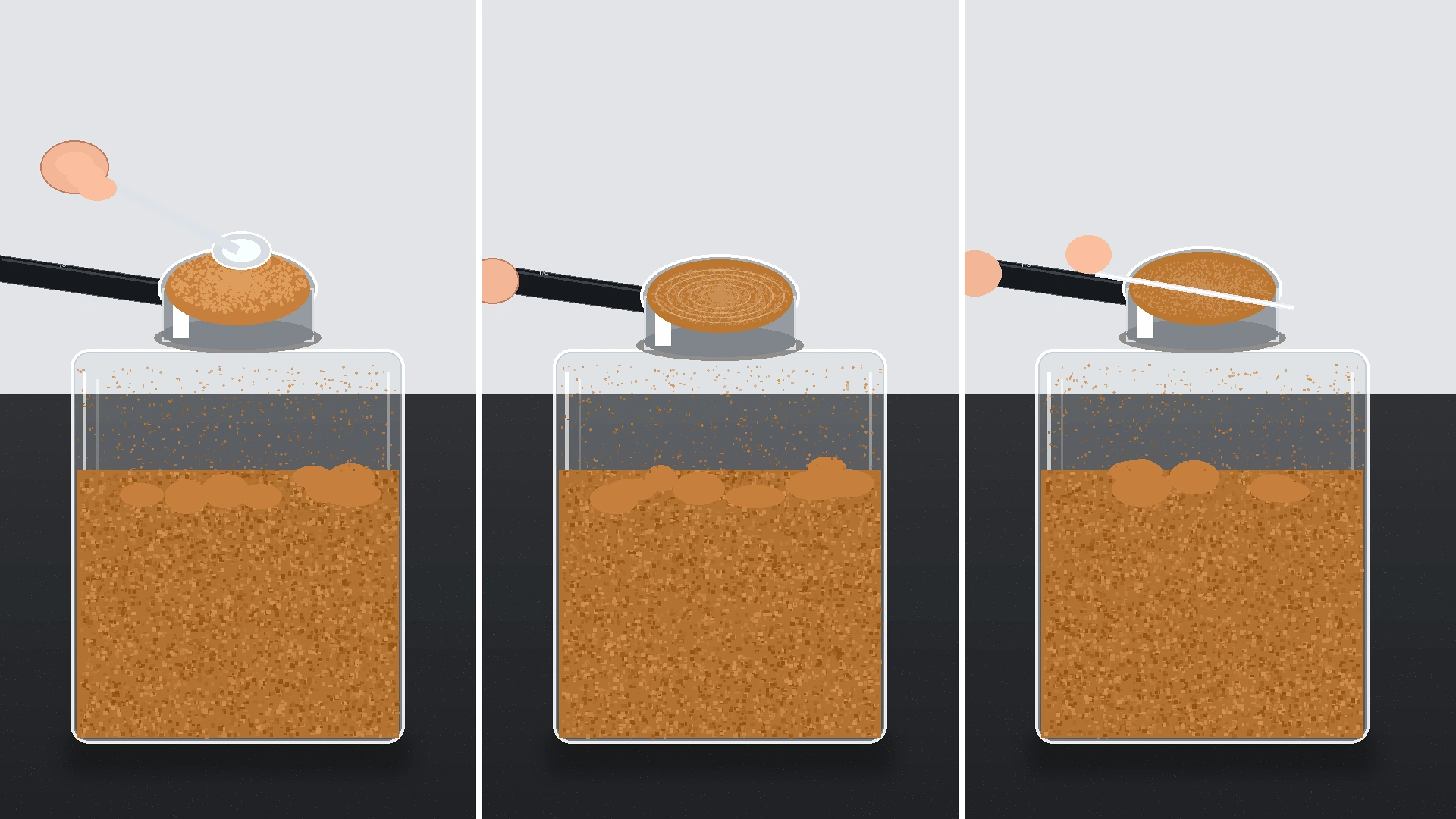
When a US baking recipe calls for 1 cup of brown sugar, it almost always assumes packed brown sugar unless explicitly stated otherwise. Unlike granulated white sugar or flour, brown sugar contains a thin coating of molasses that makes the sugar crystals moist, sticky, and compressible.
If you scoop brown sugar loosely into a measuring cup, large irregular air pockets remain trapped between the sticky granules, causing you to under-measure your sugar by up to 25%. Pressing (packing) brown sugar into a dry measuring cup expels these internal voids, delivering the moisture and caramel sweetness your recipe developer intended. However, the most accurate strategy is to bypass packing entirely by weighing brown sugar on a digital kitchen scale. On our site, we select 213 grams as the standard reference weight for 1 US cup of packed brown sugar (following King Arthur Baking test kitchen data), while noting that individual recipe developers may specify 200g or 220g based on their specific formula.
Reference exact ratios in Packed Brown Sugar Grams to Cups, explore the Sugar Conversions Silo Hub, calculate single-cup portions via 200g Brown Sugar to Cups, or convert spoons with the Grams to Tablespoons Calculator.
Why Brown Sugar Is Usually Packed
To understand why brown sugar requires packing while white sugar does not, consider the physical chemistry of sugarcane refining:
Granulated White Sugar
Pure sucrose crystals stripped of molasses syrup. The dry, hard crystals flow freely and settle uniformly into a measuring cup without trapping air pockets (~200g per cup).
Light & Dark Brown Sugar
Sucrose crystals coated in cane molasses syrup (approx 3.5% for light, 6.5% for dark). Surface tension and moisture cause crystals to cling together, forming large hollow bridges when poured loose.
Packing brown sugar applies mechanical force to break these sticky crystal bridges, forcing air out and ensuring the cup fills with solid sugar mass rather than empty space. Learn more about sugar density variations in our comprehensive Sugar Conversion Guide.
What Does "Packed Brown Sugar" Mean?
Packing brown sugar means pressing the moist sugar firmly into a nesting dry measuring cup until no air pockets remain and the sugar fills the cup completely to the brim. Follow this 5-stage technique:
- Scoop Sugar Into a Dry Measuring Cup: Spoon brown sugar into a metal or plastic dry measuring cup (do not use a glass liquid measuring cup).
- Press Down With the Back of a Spoon or Fingertips: Compress the sugar firmly into the bottom and corners of the cup.
- Add More Sugar and Press Again: Add additional brown sugar and press firmly until the compressed sugar reaches the top rim of the cup.
- Level Off the Top: Sweep the straight edge of a butter knife flat across the rim to remove any excess sugar overflowing the cup.
- Perform the Turn-Out Test: Invert the measuring cup over your mixing bowl. Properly packed brown sugar will pop out in a solid, moist cylinder that retains the exact shape of the measuring cup.
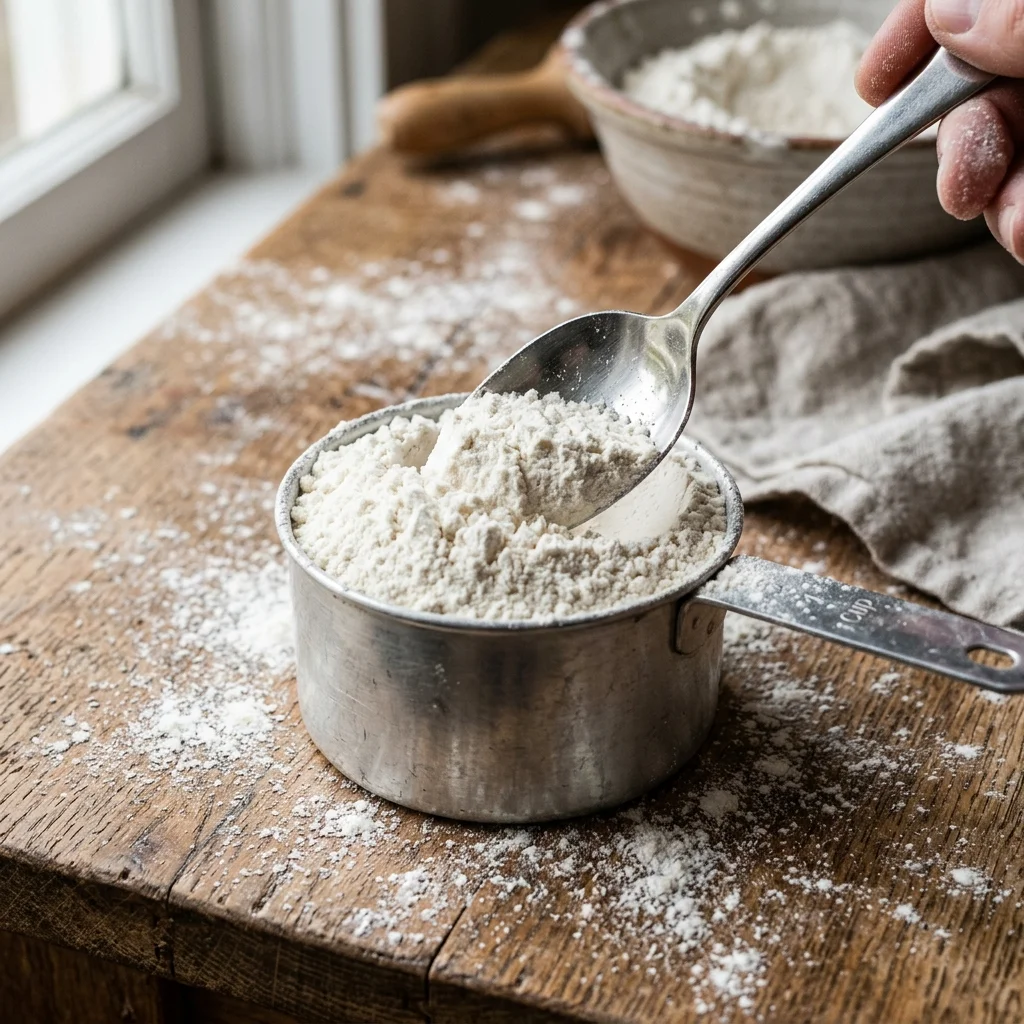
Lightly Packed vs Firmly Packed vs Loosely Packed
Recipe developers use specific adjectives to indicate how much mechanical pressure you should apply when measuring brown sugar:
| Packing Method | Technique & Pressure Applied | Approx Weight per US Cup | When to Use It / Recipe Wording |
|---|---|---|---|
| Loosely Packed / Unpacked | Spooned gently into cup without pressing or leveling | 160g – 180g | Rare; used only when recipe explicitly says "loose brown sugar" |
| Lightly Packed | Pressed lightly with fingertips just until sugar settles evenly | 190g – 200g | Light quick breads, delicate cakes, subtle glazes |
| Packed (Standard Default) | Pressed firmly with back of spoon until cup is full to rim | 213g (Gold Standard Baseline) | Standard default when recipe simply states "1 cup brown sugar" |
| Firmly Packed / Heavily Packed | Compressed with max force until sugar is completely solid | 220g – 225g | Chewy chocolate chip cookies, rich gingerbread, BBQ rubs |
How Many Grams Are in 1 Cup of Brown Sugar?
Different culinary authorities list slightly different rounded gram weights for 1 cup of packed brown sugar. For example, King Arthur Baking specifies 213g per cup, while USDA tables list ~220g and some vintage cookbooks round to 200g. On GramsToCups.us, we select 213 grams as our standard reference baseline for 1 packed cup.
However, if a specific recipe developer provides an explicit gram weight (such as 200g or 220g), always follow the recipe author's stated gram weight above general reference charts.
Below is the mathematical breakdown of fractional cups based on our 213g packed baseline standard:
| US Volume Cup Measurement | Packed Brown Sugar Weight (Grams) | Weight in Ounces (oz) | Exact Math Calculation |
|---|---|---|---|
| 1 Cup | 213 grams | 7.51 oz | 213g * 1.00 |
| 3/4 Cup | 160 grams | 5.63 oz | 213g * 0.75 = 159.75g |
| 2/3 Cup | 142 grams | 5.01 oz | 213g * 0.667 = 142.0g |
| 1/2 Cup | 107 grams (106.5g) | 3.76 oz | 213g * 0.50 = 106.5g |
| 1/3 Cup | 71 grams | 2.50 oz | 213g * 0.333 = 70.9g |
| 1/4 Cup | 53 grams | 1.88 oz | 213g * 0.25 = 53.25g |
| 1 Tablespoon | 13.3 grams | 0.47 oz | 213g / 16 = 13.31g |
For more baking ingredient weight tables, visit The Master Cups to Grams Baking Conversion Guide.
Light Brown Sugar vs Dark Brown Sugar
Home bakers frequently wonder whether light and dark brown sugar require different measuring techniques or conversion weights:
- Molasses Percentage: Light brown sugar contains roughly 3.5% molasses by weight, whereas dark brown sugar contains roughly 6.5% molasses.
- Flavor and Moisture Impact: Dark brown sugar delivers deeper caramel, toffee, and acidity notes with slightly higher moisture. Light brown sugar offers a milder, delicate butterscotch sweetness.
- Weight Difference per Cup: Because molasses coating thickness is microscopic, 1 cup of packed light brown sugar and 1 cup of packed dark brown sugar weigh virtually the same (within 1 to 2 grams of difference). Human packing technique introduces far more weight variance than the molasses percentage!
- Interchangeability: You can substitute light brown sugar and dark brown sugar 1:1 by volume or weight in virtually all cookie, cake, and muffin recipes without altering structural rise.
Can You Measure Brown Sugar by Weight Instead?
Yes! In fact, measuring brown sugar on a digital kitchen scale is strongly recommended.
When you weigh 213g of brown sugar on a scale, 213 grams is exactly 213 grams whether the sugar is loose, packed hard, clumpy, or freshly fluffed. You eliminate all packing guesswork, achieve 100% recipe reproducibility, and avoid clean-up of sticky measuring cups.
Learn how to master single-bowl tare weighing in Why Baking by Weight Is Superior to Measuring by Volume and Step-by-Step Guide: How to Use a Digital Kitchen Scale for Baking.
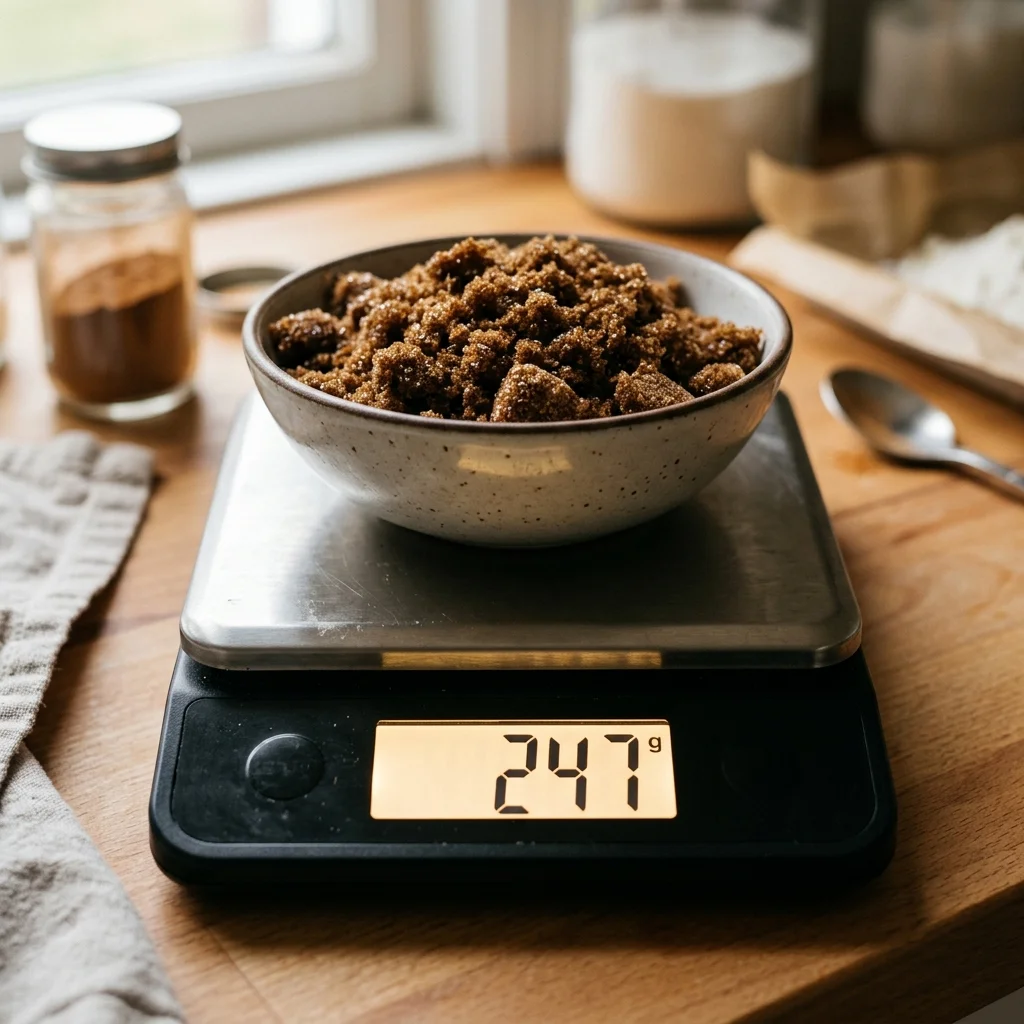
How to Measure Brown Sugar Without a Scale
If you don't have a scale on hand, follow this foolproof beginner routine using standard dry measuring cups:
- Fluff Any Large Clumps: Use a fork to break apart hardened lumps inside your brown sugar storage container.
- Use Nesting Dry Cups: Always measure in individual dry cups (1 cup, 1/2 cup, 1/3 cup, 1/4 cup). Never measure dry sugar in liquid glass measuring pitchers.
- Pack Firmly to the Brim: Press sugar into the cup in layers until flush with the rim.
- Sweep Flat With a Knife: Level off excess with a straight edge. (See How to Measure Flour Correctly for leveling techniques).
Master Brown Sugar Conversion Chart
Bookmark this practical conversion reference chart comparing packing methods and gram weights:
| US Cup Measure | Unpacked / Loose | Lightly Packed | Packed (Standard 213g) | Firmly Packed |
|---|---|---|---|---|
| 1 Cup | 170g | 195g | 213g | 225g |
| 3/4 Cup | 128g | 146g | 160g | 169g |
| 1/2 Cup | 85g | 98g | 107g | 113g |
| 1/4 Cup | 43g | 49g | 53g | 56g |
What Happens If Brown Sugar Is Not Packed?
If a recipe calls for 1 cup of packed brown sugar (~213g) and you scoop it loosely into a cup (~170g), you add 43 grams less sugar (a 20% deficit). This moisture and sugar deficiency causes distinct baking issues:
- Dry, Cakey Cookie Texture: Sugar acts as a liquid hygroscopic sweetener. Less sugar means cookie dough retains less moisture, turning chewy cookies dry and crumbly.
- Reduced Cookie Spread: Sugar melts into syrup in oven heat, allowing cookies to spread into thin, chewy disks. Under-measuring sugar produces tall, dome-shaped cookies.
- Pale Browning & Weaker Flavor: Molasses caramelizes under Maillard reaction heat. Less brown sugar results in pale crusts and muted butterscotch flavor.
How to Soften Hardened Brown Sugar
When exposed to air, moisture evaporates from brown sugar molasses, locking crystals into a hard brick. Restore soft texture using these tested methods:
- Terracotta Brown Sugar Saver (Long-Term Storage): Soak a terracotta clay disk in water for 15 minutes, pat dry, and place it inside an airtight container with brown sugar. Keeps sugar soft for months.
- Microwave Method (Quick 30-Second Fix): Place hardened sugar in a microwave-safe bowl, cover with a damp paper towel, and microwave in 15-second bursts, fluffing with a fork between intervals.
- Slice of Bread or Apple Wedge (Overnight Solution): Place a slice of white bread or apple wedge in an airtight bag with hard brown sugar. Sugar absorbs moisture from the bread overnight without adding flavor.
Also review our tips for handling awkward ingredients in How to Measure Sticky Liquids and fat conversions in Butter Conversion Master Table.
Common Brown Sugar Measurement Mistakes
Avoid these seven frequent mistakes when measuring brown sugar:
- Using a Clear Liquid Measuring Cup: Glass pitchers make pressing and leveling impossible. Always use nested dry measuring cups.
- Scooping Loose Sugar When Recipe Says "Packed": Omitting packing under-measures sugar by up to 25%.
- Ignoring the Recipe's Explicit Gram Value: If a recipe developer specifies 200g, do not weigh 213g just because a general conversion chart lists 213g. (See Top 7 Gram-to-Cup Conversion Mistakes).
- Assuming Light and Dark Brown Sugar Weigh Differently: Both weigh virtually 213g per cup when packed.
- Packing Dry, Rock-Hard Sugar: Hardened sugar cannot compress properly, producing inaccurate weights. Soften sugar before measuring.
- Over-Packing With Maximum Body Weight: Applying extreme force packs up to 225g+ into a cup, making baked goods overly sweet and greasy.
- Measuring Melted Sugar by Volume: Never melt brown sugar before measuring volume; heat alters volume density completely.
Quick Brown Sugar Cheat Sheet
1 Packed Cup: 213 grams (7.5 oz)
3/4 Packed Cup: 160 grams (5.6 oz)
1/2 Packed Cup: 107 grams (3.8 oz)
1/3 Packed Cup: 71 grams (2.5 oz)
1/4 Packed Cup: 53 grams (1.9 oz)
1 Packed Tablespoon: 13.3 grams (0.47 oz)
Frequently Asked Questions
1. Do you pack brown sugar when measuring?
Yes. In US baking recipes, brown sugar is packed into the dry measuring cup unless the recipe explicitly states "loose" or "unpacked" brown sugar.
2. What does packed brown sugar mean?
Packed brown sugar means pressing the moist sugar firmly into a dry measuring cup with the back of a spoon or fingers until no air pockets remain and the sugar fills the cup to the brim.
3. How many grams are in 1 cup of packed brown sugar?
On GramsToCups.us, 1 cup of packed brown sugar equals 213 grams (based on King Arthur Baking test kitchen standards). Some recipes round to 200g or 220g.
4. Is 1 cup of brown sugar always 200 grams?
No. While 200g is a common rounded number in international recipes, standard US packed brown sugar weighs 213 grams per cup. Always use the recipe author's specified gram weight if provided.
5. What is the difference between packed and lightly packed brown sugar?
Lightly packed brown sugar (~195g/cup) is pressed gently just until even. Standard packed brown sugar (~213g/cup) is pressed firmly until solid.
6. Can I weigh brown sugar instead of packing it?
Yes! Weighing 213 grams of brown sugar on a digital kitchen scale is more accurate than packing a measuring cup and eliminates clean-up of sticky cups.
7. Is light brown sugar the same as dark brown sugar?
Light brown sugar contains ~3.5% molasses while dark brown sugar contains ~6.5% molasses. Both weigh virtually the same per packed cup (~213g) and can be substituted 1:1 by weight or volume.
8. Can I substitute light brown sugar for dark brown sugar?
Yes. You can swap them 1:1 in equal amounts. Dark brown sugar provides a stronger molasses caramel flavor, while light brown sugar is milder.
9. How do you measure brown sugar without a scale?
Fluff large clumps, spoon sugar into a dry nesting cup, press firmly with the back of a spoon until flush with the rim, and level off excess with a straight knife.
10. Why does brown sugar need to be packed?
Because molasses makes sugar sticky, crystals trap large air gaps when poured loose. Packing expels air so you get the full moisture and sweetness intended by the recipe.
11. How much does 1/2 cup of brown sugar weigh?
1/2 cup of packed brown sugar weighs 107 grams (106.5g) or 3.76 ounces.
12. How do you soften hard brown sugar?
Place hard brown sugar in a bowl, cover with a damp paper towel, and microwave in 15-second bursts. For long-term storage, use a soaked terracotta brown sugar saver disk in an airtight container.
Interactive Sugar & Sweetener Converter
Convert grams to cups for granulated, brown, powdered sugars, and syrups.
Interactive Sugar & Sweetener Converter
Convert grams to cups for granulated, brown, powdered sugars, and syrups.
Custom package weights override standard database densities for this session without altering official database records.
Need Full Density Reference Tables?
Explore complete g/cup density tables, USDA ratios, and measurement tools.
Related Baking Guides
How to Measure Sticky Liquids Like Honey, Molasses, and Maple Syrup
Pro tricks to prevent honey sticking to measuring tools, and why weighing directly into the bowl is easiest.
Sugar ConversionsSugar Conversion Guide: Granulated, Powdered, Light & Dark Brown
Convert granulated, powdered, light brown, and dark brown sugar from cups to grams with accurate baking tables and packing instructions.