Why Baking by Weight Is Superior to Measuring by Volume
"Learn why weighing baking ingredients in grams is more accurate than cups, how density affects volume, and how a kitchen scale improves consistency."
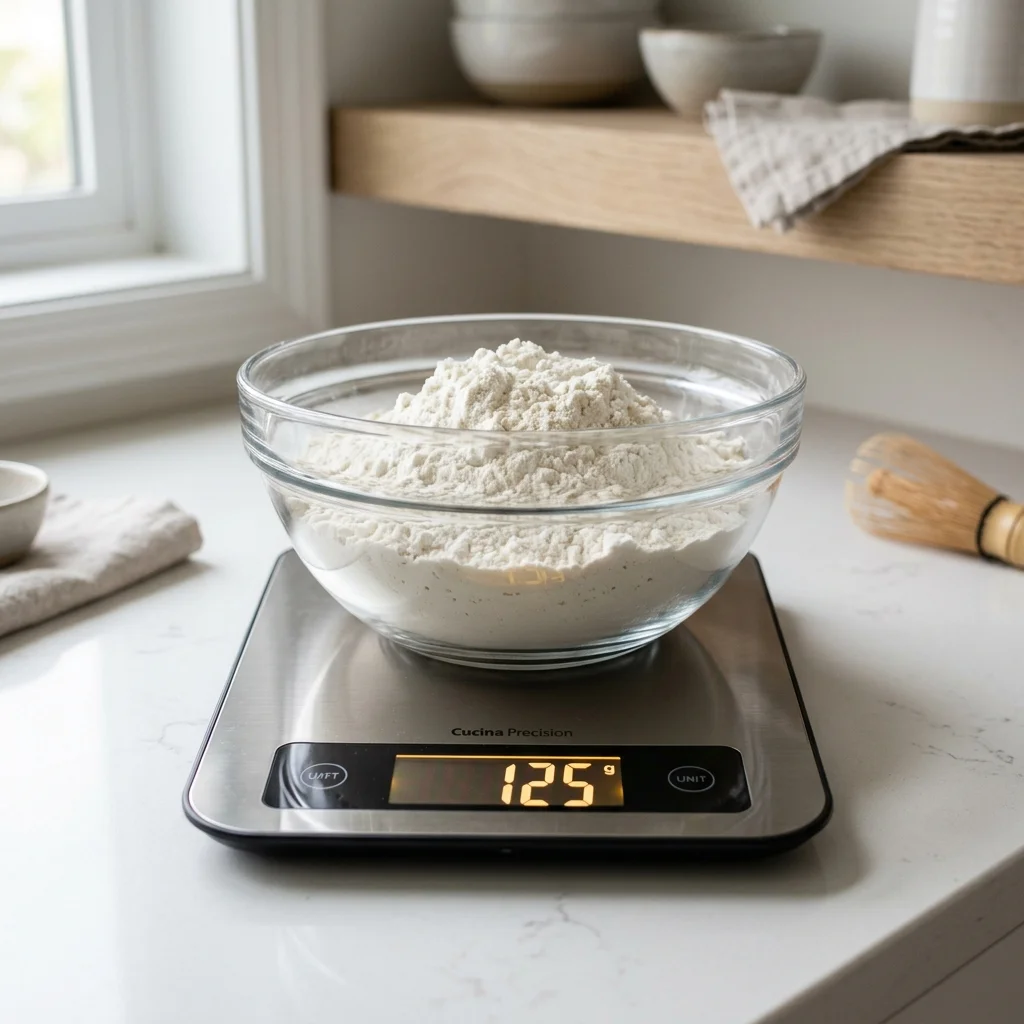
Baking by weight is superior to measuring by volume because mass remains constant while volume fluctuates based on packing, settling, and ingredient density. When you weigh ingredients in grams using a digital kitchen scale, 125 grams of flour is exactly 125 grams of flour every single time, regardless of how fluffed or compacted the flour is inside the canister.
Unlike cooking a savory soup where adding an extra handful of carrots or splash of broth rarely ruins the dish, baking is applied chemistry. Precise moisture-to-protein, fat-to-sugar, and leavening ratios dictate crumb structure, rise, tender textures, and browning. Authoritative test kitchens like King Arthur Baking have repeatedly demonstrated that volume cup measuring introduces up to a 25% to 30% error margin in dry ingredients. Switching to weight measurements eliminates guesswork, guarantees repeatable results, speeds up prep time, and drastically reduces dirty dishes.
Calculate professional dough ratios using our Baker's Percentage Calculator, convert fat mass in Softened Butter Grams to Cups, or multiply batch yields with our Recipe Scaler.
Weight vs Volume: What's the Difference?
To understand why professional bakers exclusively formulate recipes in grams, it helps to distinguish between the physical properties of mass and volume:
Weight (Mass)
Definition: The measurement of physical mass or quantity of matter in an ingredient, expressed in grams (g) or ounces (oz).
Key Property: Independent of shape, settling, moisture absorption, or container size. 200g of granulated sugar exerts the exact same gravitational mass whether poured loosely or packed tight.
Volume
Definition: The amount of three-dimensional space an ingredient occupies, expressed in cups, fluid ounces, or milliliters (mL).
Key Property: Highly variable for compressible solids. Air pockets between dry particles mean volume changes dramatically depending on scoops, settling, and humidity.
Why the Same Cup Can Contain Different Amounts
When you dip a 1-cup measuring tool into an ingredient container, the amount of material that fills the cup depends on four major physical variables:
- Packing and Compaction: Pressing a measuring cup directly into a bag of flour compresses the microscopic starch granules, forcing air out and trapping up to 30% more ingredient mass than necessary.
- Settling During Storage: As bags of flour or cocoa powder sit in grocery warehouses or pantry shelves, gravity causes fine particles to settle toward the bottom, increasing bulk density over time.
- Ingredient Bulk Density: Fine powder (like confectioners' sugar) behaves differently than coarse granules (like raw cane sugar) or porous flakes (like rolled oats). Volume cups treat all space identically despite vast density differences.
- Individual Measuring Technique: Five different home bakers scooping from the same flour canister using measuring cups will yield five completely different ingredient weights.
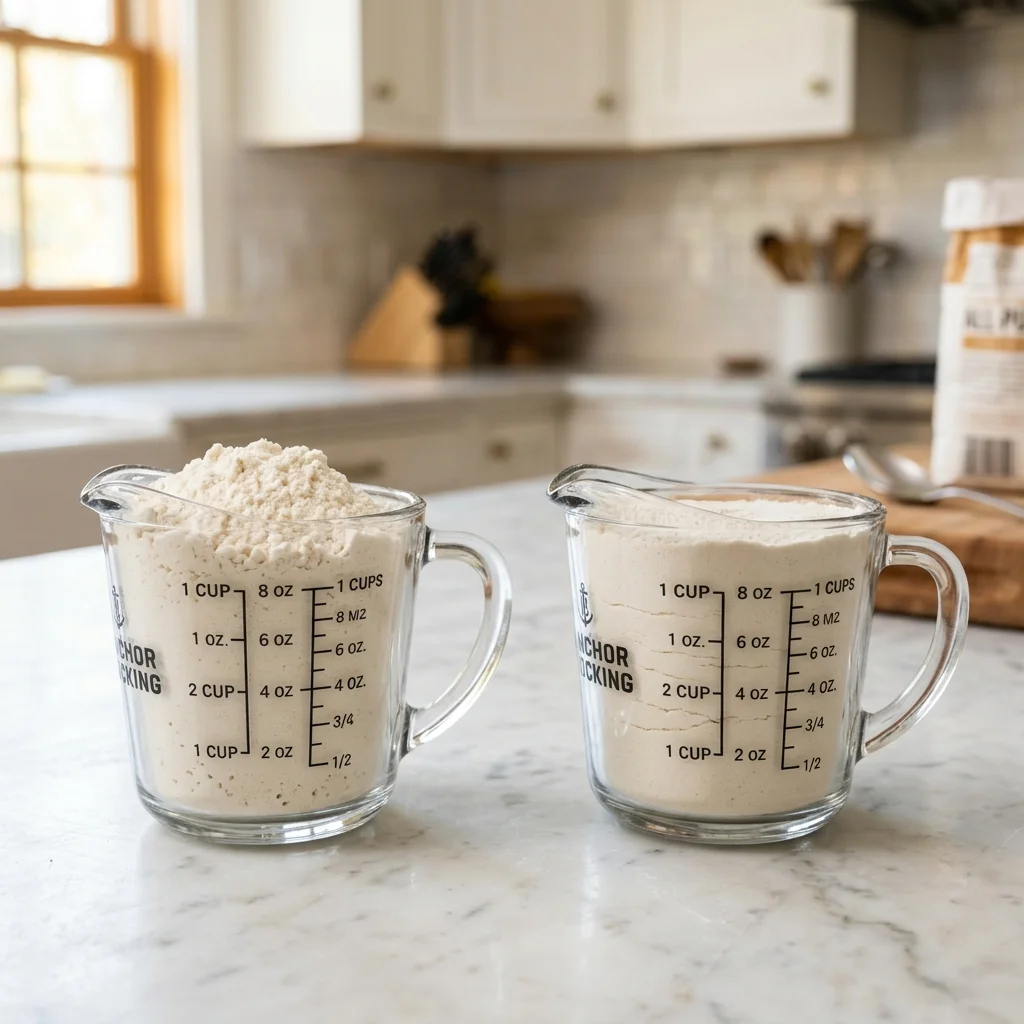
Why Flour Is the Best Example of Volume Inaccuracy
All-purpose flour is the classic demonstration of why volume measuring fails in home baking. Depending on how flour is handled, 1 US customary cup of all-purpose flour can yield dramatically different weights on a digital scale:
| Measurement Technique | Weight per Cup (Grams) | Variance vs Standard (125g) | Impact on a 4-Cup Cake Recipe |
|---|---|---|---|
| Sifted & Gently Lightly Spooned | 115g – 120g | -4% to -8% light | Slightly weaker cake structure |
| Standard Spoon & Level Method | 125g (Gold Standard) | 0% Baseline | Perfect texture as recipe developer intended |
| Direct Dip & Sweep (Un-fluffed) | 140g – 145g | +12% to +16% heavy | 60g extra flour (adds density & dryness) |
| Packed / Tapped Cup on Counter | 155g – 160g | +24% to +28% heavy | 140g extra flour (dense, gummy, tough bake) |
In a layer cake recipe calling for 4 cups of all-purpose flour, a baker dipping a cup directly into a settled flour sack adds up to 140 grams of extra flour, the equivalent of adding more than a full additional cup of dry ingredient! This unintended flour excess absorbs precious batter liquid, resulting in dry, rubbery, or crumbly baked goods.
Learn more about flour techniques in our detailed guide: How to Measure Flour Correctly: Spoon and Level Method vs Scooping.
How Weighing Ingredients Improves Baking Results
Switching from measuring cups to a digital kitchen scale transforms your baking workflow in five key ways:
- 100% Unmatched Consistency: When you measure 250 grams of flour, 150 grams of sugar, and 113 grams of butter, your recipe yields the exact same flavor and texture every single time you bake it.
- Effortless Recipe Scaling: Doubling a 375g flour dough recipe to 750g is simple mental math. Halving or quartering complex recipes in grams avoids awkward volume calculations like "half of 3/4 cup minus 1 tablespoon." (See How to Double or Halve a Baking Recipe Without Ruining It).
- Single-Bowl Preparation & Less Cleanup: By placing your primary mixing bowl on a scale and pressing the Tare button between ingredients, you pour dry flour, sugar, cocoa, and butter directly into one bowl. You save time and eliminate a sink full of dirty measuring cups.
- Accurate International Baking: European, British, and Australian recipes default to grams. Weighing ingredients allows you to bake recipes from anywhere in the world without converting cup sizes. (Read US Cup vs Metric Cup vs Imperial Cup: The International Baking Guide).
- Easier Sticky Ingredient Measurement: Weighing honey, molasses, peanut butter, or vegetable shortening directly into a bowl on a scale avoids messy residual coating inside measuring cups. (See How to Measure Sticky Liquids).
Baker's Percentages and Why Professional Bakers Use Weight
Professional bread bakers and pastry chefs rely on a system called Baker's Percentages (Baker's Math). In baker's math, total flour weight is always designated as 100%, and every other ingredient (water, salt, yeast, fat) is calculated as a percentage relative to the flour mass.
For instance, a standard sourdough bread recipe might specify:
Flour (100%): 500 grams
Water (70% Hydration): 350 grams (500g * 0.70)
Salt (2%): 10 grams (500g * 0.02)
Sourdough Starter (20%): 100 grams (500g * 0.20)
Because volume cups measure space rather than mass, calculating hydration percentages with cups is mathematically impossible, water weighs 236.6g per cup, whereas flour weighs 125g per cup! Measuring mass in grams allows bakers to adjust hydration levels precisely for perfect artisan bread crumbs. Explore baker's math deeper in Artisan Bread Baking: Understanding Baker's Percentages and Sourdough Starter & Bread Hydration.
Can You Still Bake Successfully With Cups?
Yes, absolutely. Millions of home cooks bake delicious chocolate chip cookies, quick breads, and fruit pies using traditional measuring cups every day. You do not need to throw away your nesting cups to enjoy baking.
Volume measurement works reliably when:
- Baking Forgiving Recipes: Quick breads, muffins, brownies, and drop cookies have higher moisture tolerance than delicate macarons or high-hydration sourdough.
- Using Proper Spoon-and-Level Technique: Fluffing flour with a fork, gently spooning it into a dry measuring cup, and leveling it flat with a straight knife edge keeps flour weight close to 125g per cup.
- Measuring Pure Liquids: Water, milk, and vegetable oil have stable densities and don't compress under pressure. Clear glass liquid measuring cups with side markings handle liquids accurately.
However, when tackling delicate pastries, soufflés, or French macarons, switching to a digital scale provides unmatched reliability. Learn scale selection in our review of Step-by-Step Guide: How to Use a Digital Kitchen Scale for Baking.
Which Ingredients Benefit Most From Weighing?
Not all ingredients suffer from volume variance to the same degree. The reference table below details how weight measurement helps key baking ingredients:
| Ingredient | Why Weight Helps | Typical Volume Measurement Issue |
|---|---|---|
| Flour (All-Purpose, Bread, Cake) | Eliminates 25-30% packing density error | Scooping directly packs flour tightly (120g vs 160g) |
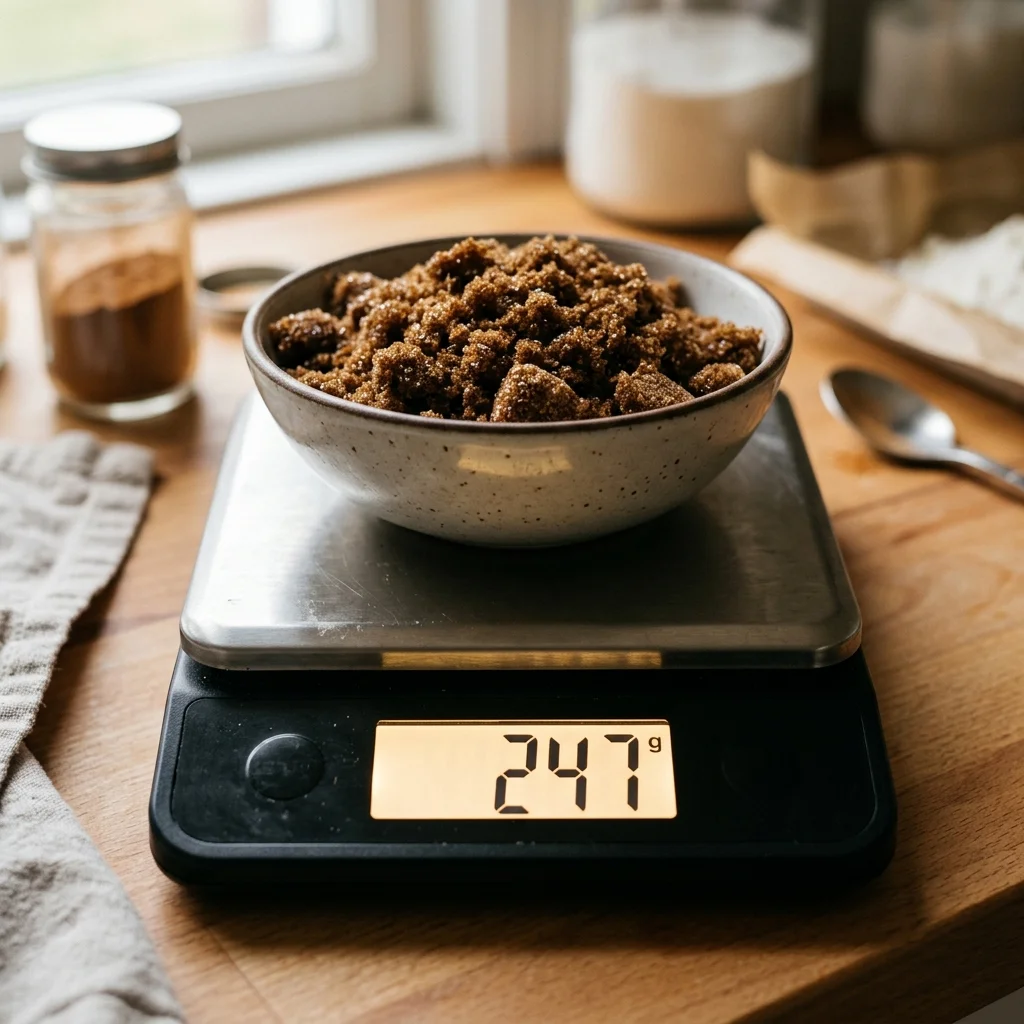
| Brown Sugar | Replaces ambiguous "packed" cup descriptions | Loose cup (170g) vs tight packed cup (220g) |
| Butter & Solid Fats | Eliminates air gaps when packing into cups | Softened butter leaves large empty voids inside cups |
| Cocoa Powder & Powdered Sugar | Bypasses extreme clumping and aeration | Sifted cocoa weighs 85g/cup, unsifted weighs 115g/cup |
| Nut Flours (Almond, Coconut) | Prevents oil moisture compacting | Almond flour varies from 96g to 112g depending on grind |
| Sticky Syrups (Honey, Molasses) | Pours straight into bowl without stick residue | Up to 20% of syrup remains coated on cup walls |
| Salt & Leavening (Yeast, Soda) | Guarantees exact chemical leavening balance | Table salt is 2x denser than coarse Kosher salt per tsp |
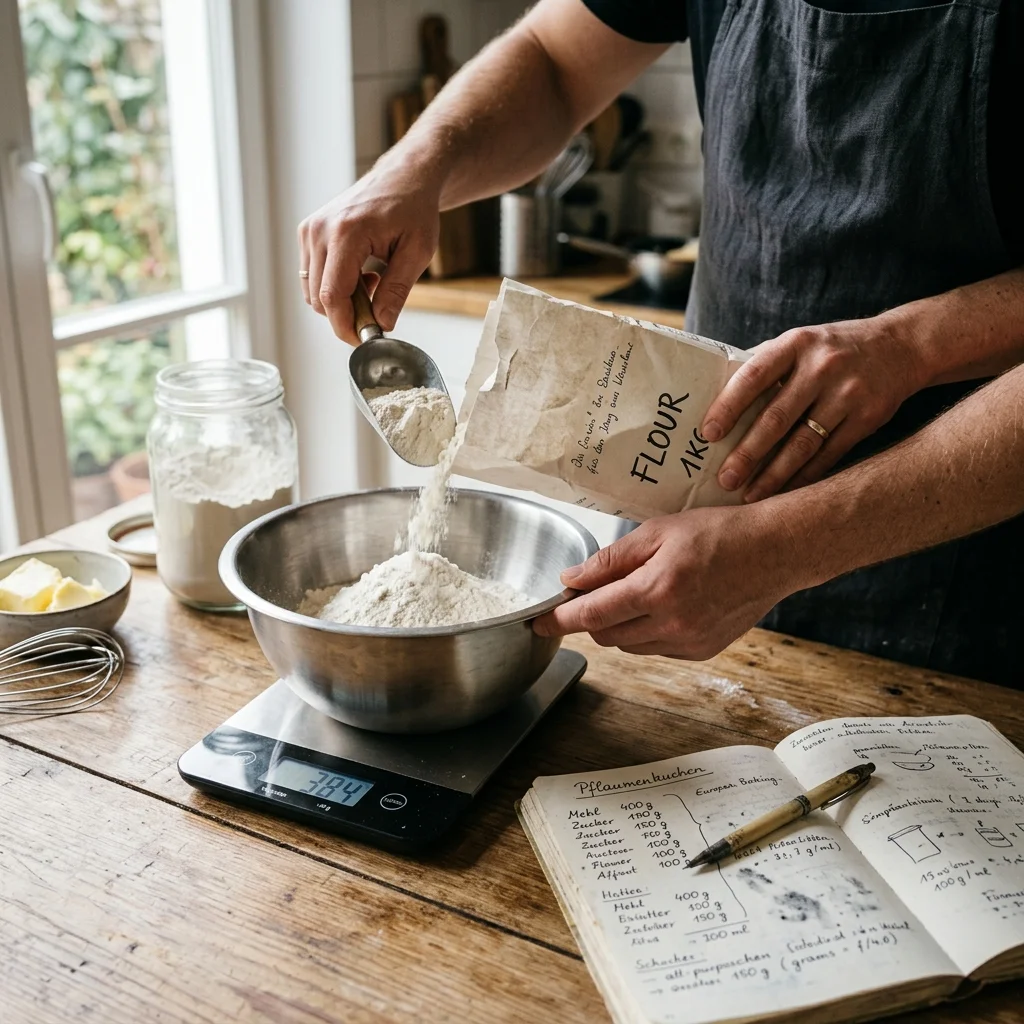
How to Start Baking by Weight (4-Step Workflow)
Transitioning from volume cups to a scale takes under two minutes. Follow this 4-step beginner routine:
- Set Your Scale on a Flat Surface: Place your digital kitchen scale on a level, hard countertop away from vibrating appliances.
- Place Mixing Bowl & Press Tare: Set your dry mixing bowl on the platform and hit Tare to zero out the weight of the container.
- Select Gram Units: Press the unit selector button to display grams (
g). - Pour Ingredients Sequentially: Add flour until you reach your target mass (e.g., 250g). Hit Tare again to return to
0g, then add your next ingredient directly into the same bowl.
Common Mistakes When Switching to Grams
Avoid these five frequent pitfalls when transitioning to weight measurement:
- Using Incorrect Conversion Charts: Assuming all dry ingredients weigh 200g per cup. Flour weighs ~125g, granulated sugar weighs ~200g, and rolled oats weigh ~90g. Always use ingredient-specific conversion tables like The Master Cups to Grams Baking Conversion Guide.
- Confusing Fluid Ounces and Dry Ounces: 8 fluid ounces measures liquid volume (236.6 mL), whereas 8 dry ounces measures weight (226.8 grams). Stick to grams to avoid confusion.
- Assuming All Flours Weigh the Same: Cake flour (~115g/cup) is lighter than all-purpose flour (~125g/cup) and whole wheat flour (~130g/cup).
- Forgetting to Tare Between Ingredients: Adding sugar on top of flour without pressing Tare leads to incorrect weight calculations.
- Mixing Weight and Volume Randomly: Measuring flour by weight but scooping sugar by cup reintroduces volume variance into your recipe balance.
Review more error prevention tips in Top 7 Gram-to-Cup Conversion Mistakes.
Quick Grams vs Cups Conversion Cheat Sheet
Bookmark this handy quick-reference conversion guide for common baking ingredients:
| Ingredient | 1/4 Cup | 1/3 Cup | 1/2 Cup | 1 Cup |
|---|---|---|---|---|
| All-Purpose Flour | 31g | 42g | 63g | 125g |
| Granulated Sugar | 50g | 67g | 100g | 200g |
| Brown Sugar (Packed) | 55g | 73g | 110g | 220g |
| Butter (1 Stick = 1/2 Cup) | 57g | 76g | 113g | 227g |
| Unsweetened Cocoa Powder | 21g | 28g | 42g | 85g |
Frequently Asked Questions
1. Is baking by weight really more accurate than cups?
Yes. Weight measures absolute ingredient mass in grams, eliminating volume variations caused by packing, flour sifting, atmospheric humidity, and measuring cup variations.
2. Why do professional bakers use grams instead of cups?
Professional bakers use grams because grams ensure 100% batch-to-batch consistency, allow simple calculation of baker's percentages, speed up prep time, and make scaling recipes effortless.
3. Are grams better than cups for measuring flour?
Yes. Flour compresses easily. Direct scooping with a cup can pack up to 160g of flour into a 125g cup, adding 30% extra dry weight that makes cakes and breads dry and dense.
4. Can I still bake successfully using measuring cups?
Yes. Forgiving recipes like muffins, cookies, and quick breads bake well with cups if you use the fluff, spoon, and level method rather than dipping cups directly into flour bags.
5. Why does flour have different weights per cup?
Flour weight varies due to compaction, settling during storage, humidity absorption, and protein content. Cake flour weighs ~115g/cup, all-purpose ~125g/cup, and whole wheat ~130g/cup.
6. Is a digital kitchen scale worth buying for baking?
Yes. A basic $15 to $20 digital scale is the most cost-effective kitchen investment you can make to guarantee baking accuracy and eliminate dirty measuring cups.
7. How do I convert cup recipes to grams?
Use an ingredient-specific weight chart (e.g., 1 cup all-purpose flour = 125g; 1 cup sugar = 200g). Never use a single universal factor across all ingredients.
8. Do grams make recipes easier to scale up or down?
Yes. Doubling 375g to 750g or halving to 187.5g is straightforward arithmetic, avoiding complicated fractional cup math like halving 3/8 cup.
9. What is the best way to measure flour if I don't have a scale?
Use the spoon-and-level method: fluff flour with a fork, spoon it lightly into a dry measuring cup until overflowing, and sweep off excess with the straight edge of a butter knife.
10. Are baking cups inaccurate across different countries?
Yes. US cups hold 236.6 mL, metric cups (Australia, Canada) hold 250 mL, and vintage British Imperial cups hold 284 mL. Weighing in grams bypasses international cup volume mismatches entirely.
Interactive Baking Weight Converter
Convert recipe volumes into exact gram weights instantly.
Interactive Baking Weight Converter
Convert recipe volumes into exact gram weights instantly.
Custom package weights override standard database densities for this session without altering official database records.
Need Full Density Reference Tables?
Explore complete g/cup density tables, USDA ratios, and measurement tools.
Related Baking Guides
US Cup vs Metric Cup vs Imperial Cup: The International Baking Guide
Learn the difference between US, metric, and Imperial cups, their milliliter sizes, and how to convert international baking recipes accurately.
Baking ScienceHow to Bake European Recipes in an American Kitchen
Learn how to convert European baking recipes for an American kitchen, including grams, milliliters, Celsius, gas marks, cups, and ingredient weights.
Baking ScienceHigh Altitude Baking Adjustments: Flour, Liquid, and Oven Temps
Learn how to adjust flour, liquid, sugar, leavening, oven temperature, and bake time when baking at high altitude, with practical elevation tips.