Almond Flour vs All-Purpose Flour: Conversion Ratios and Weight Differences
"Compare almond flour and all-purpose flour by weight, density, texture, and substitution ratio, with practical tips for cakes, cookies, muffins, and bread."
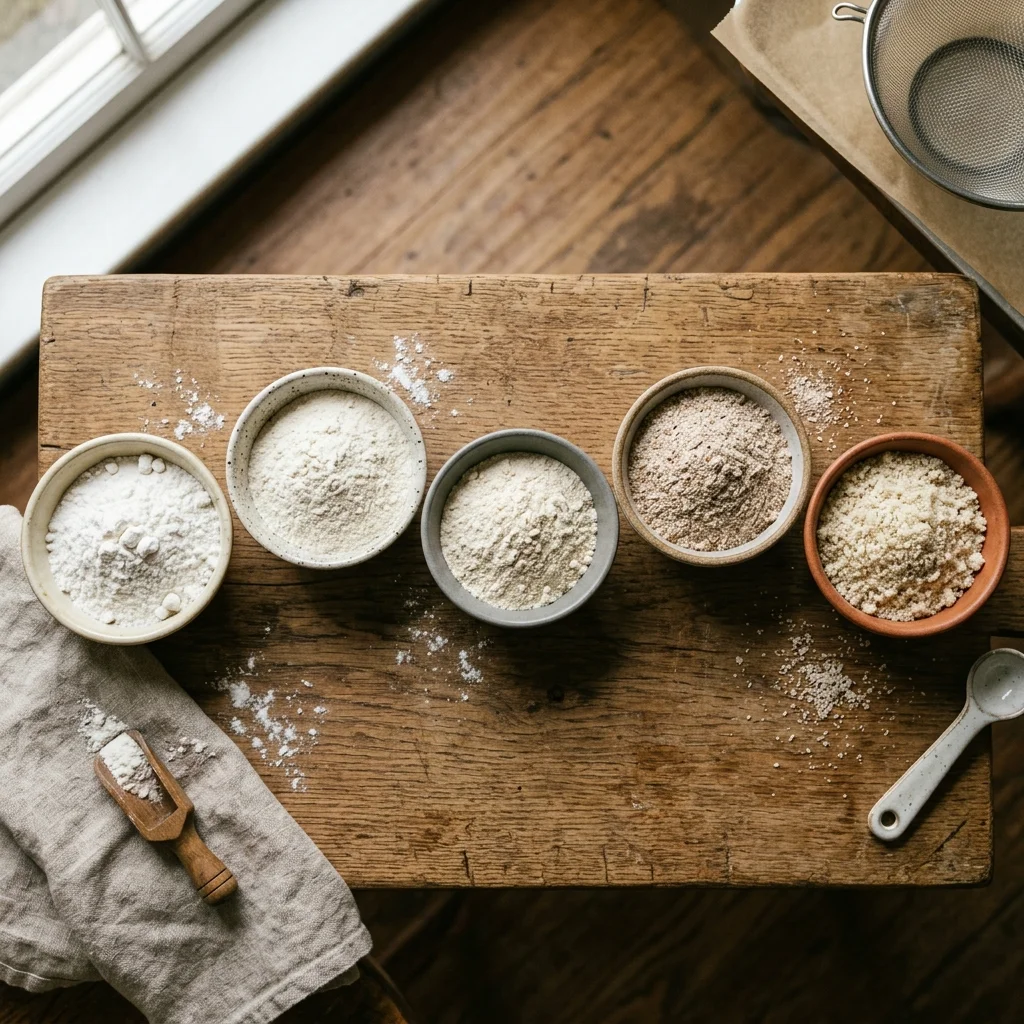
Home bakers converting wheat recipes to gluten-free or low-carb alternatives frequently ask whether almond flour can replace all-purpose flour cup-for-cup. The short answer is no. Almond flour and all-purpose wheat flour are completely different ingredients with distinct bulk densities, fat contents, and structural capabilities.
One US Customary Cup of lightly spooned all-purpose flour weighs 125 grams (or 120g spooned & leveled according to King Arthur Baking test kitchen data), whereas 1 cup of finely ground blanched almond flour weighs only 96 grams. Because almond flour is ~23% lighter by volume than wheat flour, swapping them equal cups adds significantly less dry flour mass to your batter. More importantly, almond flour contains roughly 50% fat by weight and zero gluten proteins. Swapping wheat flour 1:1 with almond flour in standard cake or cookie dough results in greasy, crumbly bakes that collapse flat. Understanding how these two flours differ by mass, fat, and structural chemistry allows you to adapt recipes successfully.
Explore complete density metrics in our Flour Conversions Silo Hub, check the 96g Almond Flour to Cups Reference, or scale nut flour quantities in the Interactive Recipe Scaler.
Almond Flour vs All-Purpose Flour at a Glance
The comparative matrix below highlights the core physical, chemical, and culinary differences between finely ground blanched almond flour and standard wheat all-purpose flour:
| Feature / Property | Blanched Almond Flour | All-Purpose Wheat Flour |
|---|---|---|
| Weight per 1 US Cup | 96 grams (King Arthur Standard) | 125 grams (120g spooned & leveled) |
| Protein & Gluten Matrix | ~21% nut protein (Zero Gluten) | 10% – 11.5% wheat protein (Gluten-forming) |
| Fat Content by Weight | High Fat (~50% natural almond oil) | Very Low Fat (~1% lipid content) |
| Moisture & Liquid Behavior | Repels liquid initially; holds moisture long-term | Absorbs water rapidly to form gluten network |
| Baked Crumb Texture | Dense, moist, tender, nutty, cake-like | Elastic, chewy, structured, light crumb |
| Direct 1:1 Swap Feasibility | Poor (Requires binder/egg adjustments) | Standard recipe baseline |
| Gluten-Free Status | 100% Gluten-Free naturally | Contains Wheat Gluten |
How Many Grams Are in a Cup of Almond Flour?
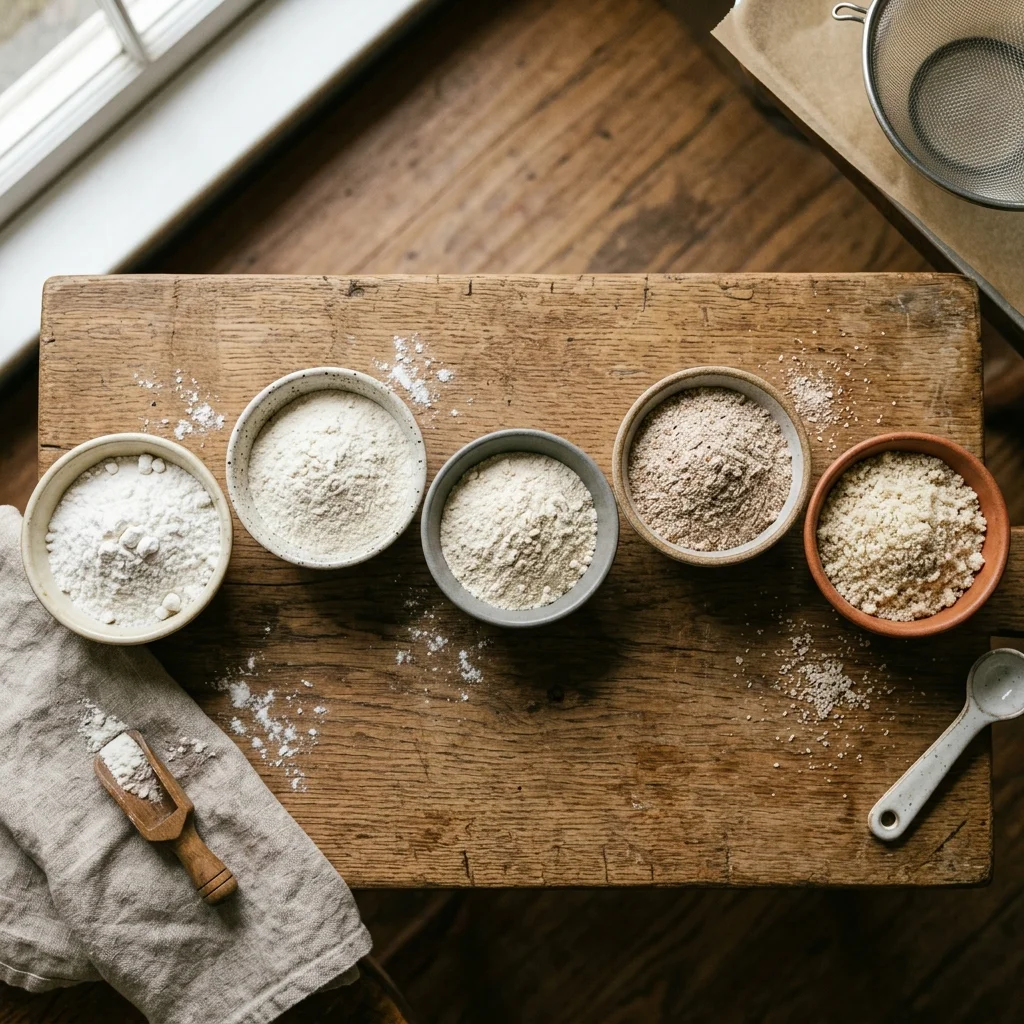
According to the King Arthur Baking ingredient weight chart, 1 cup of finely ground blanched almond flour weighs 96 grams (3.39 ounces) when spooned lightly into a cup and leveled off. If almond flour is packed tightly into a measuring cup, its weight increases to roughly 112 grams per cup.
Below is the mathematical breakdown of fractional cup weights for finely ground blanched almond flour based on our 96g reference baseline standard:
| Almond Flour Volume Cup | Spooned & Leveled Weight (g) | Weight in Ounces (oz) | Calculation Formula |
|---|---|---|---|
| 1 US Cup | 96 grams | 3.39 oz | 96g * 1.00 |
| 3/4 Cup | 72 grams | 2.54 oz | 96g * 0.75 |
| 2/3 Cup | 64 grams | 2.26 oz | 96g * 0.667 |
| 1/2 Cup | 48 grams | 1.69 oz | 96g * 0.50 |
| 1/3 Cup | 32 grams | 1.13 oz | 96g * 0.333 |
| 1/4 Cup | 24 grams | 0.85 oz | 96g * 0.25 |
| 1 Tablespoon | 6.0 grams | 0.21 oz | 96g / 16 |
For complete ingredient density listings across 50+ flours and sugars, consult The Master Cups to Grams Baking Conversion Guide.
How Many Grams Are in a Cup of All-Purpose Flour?
On GramsToCups.us, 1 US Customary Cup of all-purpose flour is standardized to 125 grams (4.41 oz) for standard spooned-and-leveled flour. In King Arthur test kitchen charts, spooned-and-leveled AP flour is listed at 120g per cup, whereas dipping a measuring cup directly into a flour bag scoops up to 140g+ per cup.
Learn why scooping directly from the bag packs extra flour in our detailed guide: How to Measure Flour Correctly: Spoon and Level Method vs Scooping.
| All-Purpose Flour Volume Cup | Spooned & Leveled Weight (g) | Scooped from Bag Weight (g) | Weight Difference |
|---|---|---|---|
| 1 US Cup | 125 grams | 140 – 150 grams | +15% to +20% extra flour |
| 3/4 Cup | 94 grams | 108 grams | +14g extra flour |
| 1/2 Cup | 62.5 grams | 72 grams | +9.5g extra flour |
| 1/4 Cup | 31.25 grams | 36 grams | +4.75g extra flour |
Why Almond Flour Weighs Less Per Cup
The key reason almond flour weighs less per cup than all-purpose flour lies in particle geometry and bulk density:
- Particle Size & Air Trapping: Milling whole blanched almonds produces irregular nut granules that cannot pack together as tightly as ultra-fine starch particles from milled wheat endosperm. The larger air gaps between almond granules decrease bulk density.
- Starch vs Nut Mass: All-purpose flour consists almost entirely of dense wheat starch granules (carbohydrate) and gluten protein. Almond flour consists of crushed almond cotyledons filled with natural oils and protein.
- Weight Deficit in Volume Swaps: Because 1 cup of almond flour (96g) weighs 29 grams less than 1 cup of all-purpose flour (125g), swapping 1 cup of AP flour for 1 cup of almond flour reduces the total dry flour mass in your recipe by 23%!
Why Almond Flour Bakes Differently
Swapping flour in a baking formula alters fundamental chemical interactions during baking. Consider these four critical baking chemistry differences:
1. Zero Gluten Formation
Wheat flour contains gliadin and glutenin proteins that form an elastic gluten web when hydrated and kneaded. This web traps steam and carbon dioxide bubbles from leavening agents (Baking Powder vs Baking Soda), creating rise and structural chew. Almond flour has zero gluten, so baked goods cannot trap gas without added binders like eggs or xanthan gum.
2. High Fat Content (~50% Oil)
Almond flour is roughly 50% fat by weight. This rich almond oil acts as an intense tenderizer, shortening gluten strands, increasing dough spread in cookies, and creating a melt-in-your-mouth tender crumb. However, excess fat can make cakes greasy or cause cookies to melt flat if butter is not reduced.
3. Moisture Hydrophobicity
Because almond flour granules are coated in natural oil, they do not absorb liquid water as quickly as wheat starch during mixing. Batter may appear thin initially, but almond flour holds onto moisture during storage, keeping cakes fresh for days.
4. Rapid Maillard Browning
The combination of natural nut sugars, proteins, and high fat causes almond flour baked goods to brown much faster in the oven. Bake almond flour recipes at slightly lower temperatures (325°F vs 350°F) or tent with foil to prevent burning.
Can You Substitute Almond Flour for All-Purpose Flour?
You cannot replace all-purpose flour 1:1 with almond flour in traditional wheat recipes without adjusting the entire formula.
King Arthur Baking test kitchen research suggests replacing up to 25% of all-purpose flour with almond flour in non-yeast recipes (cookies, muffins, quick breads) to add tenderness and moisture without sacrificing structural integrity. For yeast doughs, King Arthur recommends replacing no more than 1/3 cup of wheat flour per cup with almond flour, adding extra liquid to compensate.
Here is how almond flour performs across specific baked goods:
- Cookies: Replacing 25% of AP flour with almond flour makes cookies wonderfully chewy and tender. Replacing 100% requires adding an extra egg or tapioca starch binder to prevent cookies from melting flat into a greasy pool.
- Cakes & Cupcakes: Almond flour creates exceptionally moist cakes (such as French financiers or Italian olive oil cakes). For traditional sponge cakes, swap no more than 25% to avoid heavy, flat layers.
- Muffins & Quick Breads: Excellent candidate for 100% almond flour adaptation when formulated specifically with extra eggs (which provide egg white protein structure to replace gluten).
- Biscuits & Scones: 100% almond flour yields crumbly, shortbread-like biscuits. Use a blend of 50% almond flour and 50% tapioca starch / arrowroot for better flake.
- Yeast Breads & Pizza Crust: 100% almond flour cannot produce traditional yeast bread because yeast requires gluten elasticity to hold gas bubbles. Almond flour pizza crusts rely on cheese (mozzarella) and eggs as structural binders rather than yeast leavening.
Almond Flour vs Almond Meal
Grocery stores sell both almond flour and almond meal. While both come from ground almonds, their texture and culinary behavior differ:
| Feature | Blanched Almond Flour | Natural Almond Meal |
|---|---|---|
| Almond Preparation | Skins removed (Blanched in hot water) | Whole almonds ground with skins intact |
| Texture & Particle Size | Superfine, powdery grind | Coarse, gritty, uneven meal |
| Color Appearance | Uniform creamy white / golden yellow | Speckled brown and tan skin flecks |
| Best Culinary Uses | Macarons, delicate cakes, cookies, tart crusts | Rustic quick breads, meatball binder, chicken breading |
How to Convert Almond Flour From Cups to Grams
To convert any cup volume of almond flour into exact grams, multiply the cup fraction by 96 grams (the baseline weight for 1 US cup of spooned blanched almond flour):
Conversion Formula: Grams = Almond Flour Cups * 96
Example 1: 2.5 cups almond flour = 2.5 * 96 = 240 grams
Example 2: 1/3 cup almond flour = 0.333 * 96 = 32 grams
How to Convert All-Purpose Flour From Cups to Grams
To convert all-purpose flour from cups to grams on our platform, multiply the cup fraction by 125 grams:
Conversion Formula: Grams = AP Flour Cups * 125
Example 1: 2 cups AP flour = 2 * 125 = 250 grams
Example 2: 3/4 cup AP flour = 0.75 * 125 = 94 grams
Why Weighing Matters When Using Almond Flour
Weighing ingredients on a digital kitchen scale is even more critical when baking with nut flours than with wheat flour. Because almond flour contains natural oils, ambient temperature and humidity affect how tightly nut granules pack into a measuring cup. Read how climate alters flour mass in How Ambient Humidity Affects Flour Weight and Dough Hydration.
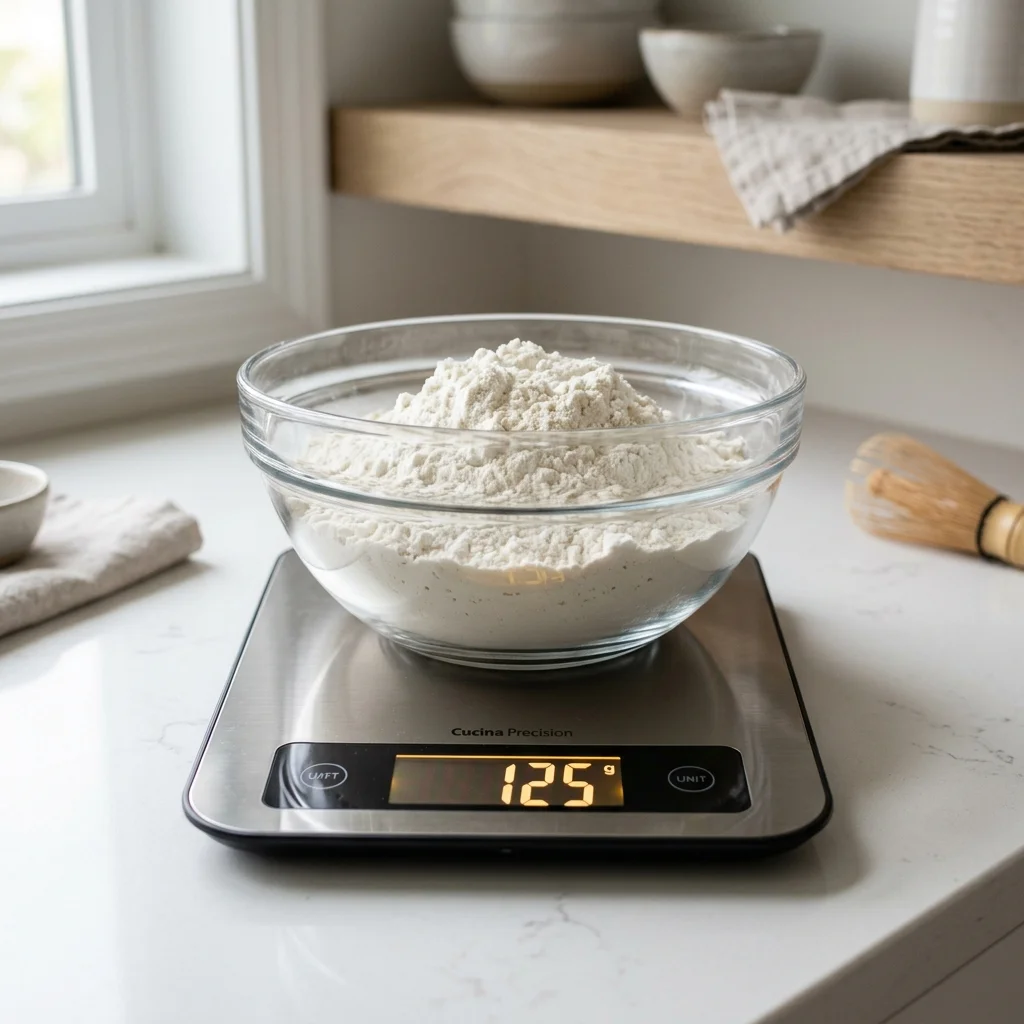
When you weigh 96 grams of almond flour on a digital scale, you get the exact mass required regardless of storage settling or packing technique. Explore the benefits of digital scale baking in Why Baking by Weight Is Superior to Measuring by Volume and Step-by-Step Guide: How to Use a Digital Kitchen Scale for Baking.
Common Almond Flour Substitution Mistakes
Avoid these seven frequent errors when baking with almond flour:
- Assuming a Universal 1:1 Cup Swap: Swapping 1 cup AP flour for 1 cup almond flour reduces dry mass by 23% and adds 48g of extra nut fat to your batter.
- Ignoring the Lack of Gluten Structure: Replacing wheat flour 100% in cakes without adding structural binders (eggs, xanthan gum, or tapioca starch) causes cake layers to sink.
- Using Coarse Almond Meal for Macarons or Fine Cakes: Coarse almond meal produces gritty, heavy cakes and cracked macaron shells. Use superfine blanched almond flour.
- Baking Almond Flour at High Heat (375°F+): High nut fat causes rapid surface browning. Reduce oven temperature by 25°F and check browning 5 minutes early.
- Packing Almond Flour Into Cups: Dipping a measuring cup into an almond flour bag packs up to 112g+ per cup, making baked goods oily. Always spoon and level or weigh on a scale.
- Not Reducing Added Fats in the Recipe: When substituting almond flour, consider reducing butter or oil slightly to balance the natural almond fat.
- Expecting Yeast Breads to Rise Normally: Yeast requires gluten elasticity to hold leavening gas. 100% almond flour doughs will not rise like wheat bread.
When Should You Use Almond Flour?
Almond flour shines in specific culinary applications where rich moisture and nut flavor enhance the final dish:
- French Macarons & Dacquoise: Superfine blanched almond flour is the mandatory traditional foundation for delicate French meringue pastries.
- Gluten-Free & Keto Baking: Ideal for grain-free, low-carb cookies, keto mug cakes, and sugar-free quick breads. (Reference our Sugar Conversion Guide for low-sugar sweetener weights).
- Moist Cake Formulas: Perfect for French financiers, Italian olive oil cakes, almond frangipane tart fillings, and flourless chocolate cakes.
- Grain-Free Tart Crusts: Pressing almond flour mixed with melted butter into a tart pan creates a rich, shortbread-like crust without chilling dough.
Quick Almond Flour vs AP Flour Cheat Sheet
1 Cup Almond Flour (Spooned): 96 grams (3.4 oz) | ~50% Fat | Zero Gluten
1 Cup All-Purpose Flour (Spooned): 125 grams (4.4 oz) | ~1% Fat | Gluten-Forming
Weight Difference: 1 cup almond flour is 29g (23%) lighter than 1 cup AP flour
Recommended Partial Substitution: Replace up to 25% AP flour with almond flour in cookies/muffins
Yeast Dough Rule: Replace max 1/3 cup per cup wheat flour with almond flour
Frequently Asked Questions
1. Is almond flour the same as all-purpose flour?
No. Almond flour is made from ground blanched almonds (high fat, zero gluten, 96g/cup). All-purpose flour is milled from wheat endosperm (low fat, gluten-forming, 125g/cup).
2. Can I substitute almond flour for all-purpose flour 1:1?
No. A 1:1 cup swap reduces dry flour weight by 23% and adds 48g of fat per cup. Replacing 100% wheat flour requires reformulating eggs, liquid, and binders.
3. Is almond flour lighter than all-purpose flour?
Yes. By volume, 1 cup of spooned almond flour weighs 96 grams, compared to 125 grams for 1 cup of all-purpose flour (making almond flour ~23% lighter per cup).
4. How many grams are in 1 cup of almond flour?
1 US cup of superfine blanched almond flour weighs 96 grams (based on King Arthur Baking test kitchen standards).
5. How many grams are in 1 cup of all-purpose flour?
1 US cup of spooned and leveled all-purpose flour weighs 125 grams on GramsToCups.us (King Arthur lists 120g per cup).
6. Does almond flour rise like all-purpose flour?
No. Almond flour lacks gluten proteins, so it cannot form an elastic web to trap leavening gases. Almond flour baked goods rely on eggs or baking powder for lift.
7. Can almond flour be used in yeast bread?
Not as a 100% direct replacement. Yeast requires gluten elasticity to expand dough. You can replace up to 1/3 cup of wheat flour per cup with almond flour in yeast recipes.
8. Is almond flour gluten-free?
Yes. Pure almond flour contains 100% ground almonds and is naturally gluten-free.
9. What is the difference between almond flour and almond meal?
Almond flour is made from blanched skinless almonds ground superfine. Almond meal is made from whole almonds ground coarsely with brown skins intact.
10. Does almond flour need more liquid?
Almond flour repels liquid initially due to high fat, making batters look thin. However, adding extra egg binder helps absorb and hold moisture during baking.
11. Why are almond flour baked goods more tender?
Almond flour is ~50% fat by weight. High fat shortens gluten strands and coats starches, producing an extraordinarily tender, moist crumb.
12. How do I substitute almond flour in cookies?
Replace 25% of the all-purpose flour with almond flour for extra chewy texture, or use a 100% almond flour cookie recipe formulated with extra egg binding.
For comprehensive gluten-free baking ratios and binder weights, read our gluten-free flour blend density guide and check verified USDA FoodData Central ingredient density standards.
Interactive Flour Weight Converter
Convert grams to cups for all-purpose, bread, cake, and almond flours.
Interactive Flour Weight Converter
Convert grams to cups for all-purpose, bread, cake, and almond flours.
Custom package weights override standard database densities for this session without altering official database records.
Need Full Density Reference Tables?
Explore complete g/cup density tables, USDA ratios, and measurement tools.
Related Baking Guides
How to Measure Flour Correctly: Spoon and Level Method vs Scooping
Learn how to measure flour correctly using a scale or spoon-and-level method, why scooping adds too much flour, and how accurate measurements improve baking.
Flour Baking GuidesGluten-Free Flour Blends: Density Ratios and Xanthan Gum Weights
Learn how gluten-free flour blends differ in weight and structure, when xanthan gum is needed, and how to measure gluten-free flour accurately in grams.