How Ambient Humidity Affects Flour Weight and Dough Hydration
"Learn how humidity can affect flour moisture and dough hydration, what changes matter for home bakers, and when you should adjust your baking process."
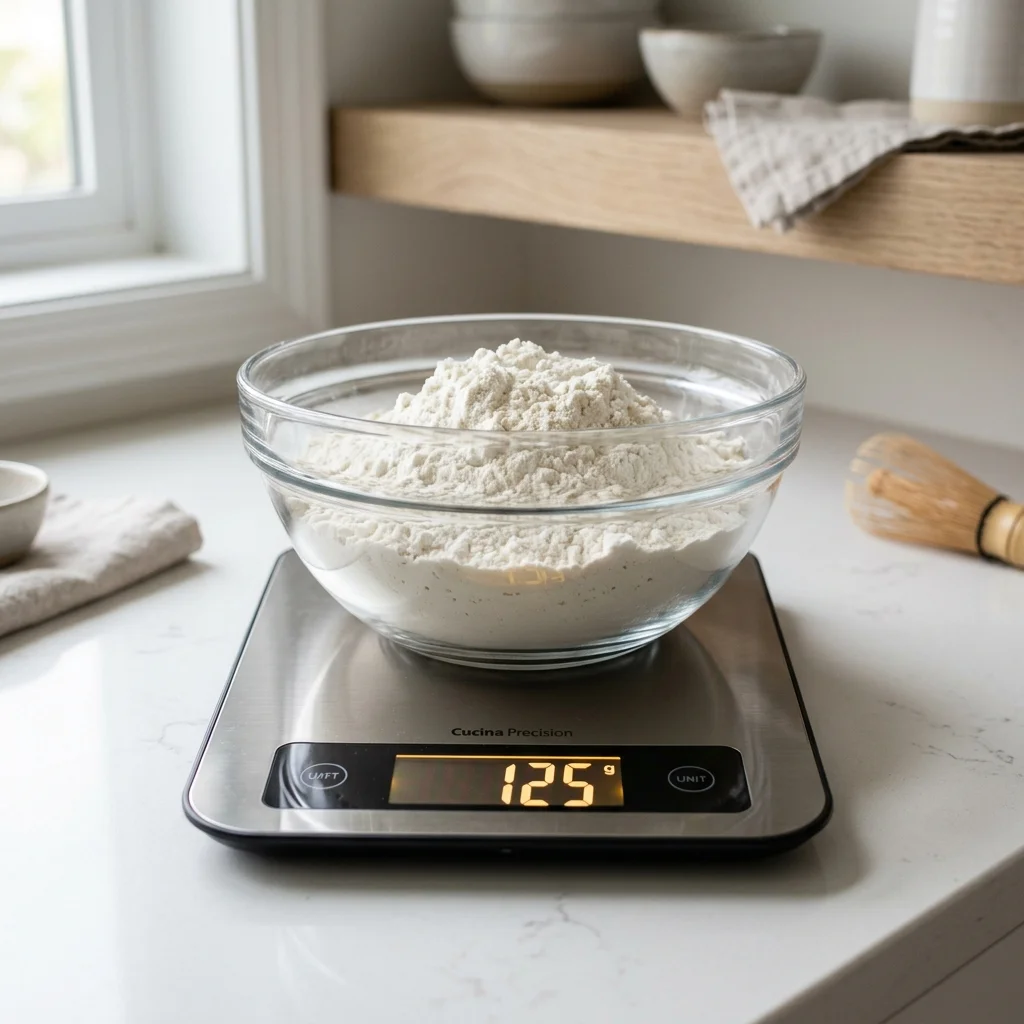
Home bakers frequently wonder whether seasonal weather shifts, such as muggy summer humidity or dry winter heating, require routine adjustments to recipe water. The direct answer is yes, wheat flour is hygroscopic and exchanges moisture with surrounding air, but for typical home bakers storing flour in sealed containers, the day-to-day impact is much smaller than popular baking internet lore suggests.
While ambient relative humidity can alter the internal moisture content of flour left exposed to open air over long periods, controlled culinary research demonstrates that short-term humidity swings cause only minor mass changes. Arbitrarily reducing recipe water on humid days or dumping extra water into winter doughs often causes more harm than good. Understanding how flour moisture absorption actually works, and distinguishing relative humidity from ambient room temperature, allows you to keep your bread, cakes, and pastry dough perfectly consistent year-round.
Calculate exact dough water percentages with our Dough Hydration Calculator, explore bulk densities across the Flour Conversions Silo Hub, and scale artisan formulas via the Baker's Percentage Calculator.
Does Humidity Actually Change Flour Weight?
Wheat flour contains natural starches and proteins that attract and absorb atmospheric water vapor. However, the rate and extent of moisture exchange depend heavily on exposure duration and storage conditions:
- Open Flour Bags vs. Sealed Containers: A bag of flour left open in an un-air-conditioned 85% humidity kitchen will slowly absorb water vapor over several weeks, increasing its total mass by 1% to 3%. Conversely, flour stored in an airtight plastic tub or glass canister undergoes virtually zero moisture exchange regardless of outdoor humidity.
- Short-Term Kitchen Exposure: Opening a flour container during a 15-minute mixing process on a humid day does not allow enough time for flour particles to absorb meaningful amounts of water vapor from the air.
- Moisture Desorption in Dry Air: In dry winter months with indoor heating, exposed flour slowly releases bound water back into dry air, making the flour slightly drier than baseline.
What Is Flour Moisture?
Commercial wheat flour packaged at the mill typically has a baseline moisture content of 12% to 14% by weight. This moisture is trapped inside the starches and proteins during grain milling.
When you weigh 100 grams of all-purpose flour on a scale, roughly 12 to 14 grams of that mass is natural water, while the remaining 86 to 88 grams consists of dry starch carbohydrates, gluten proteins, and lipids. If flour absorbs extra humidity in storage, its moisture content might creep up to 15%. If it dries out in winter heating, its moisture might drop to 11%.
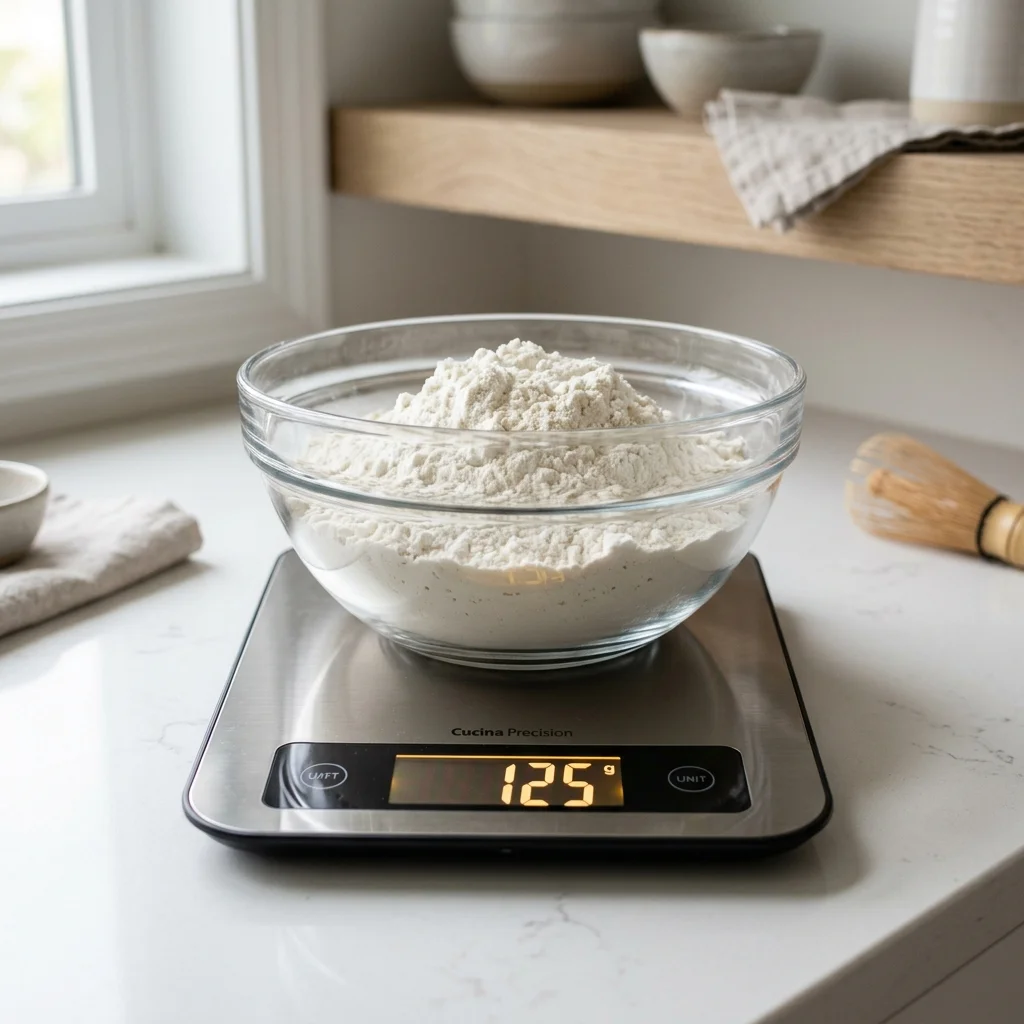
Humidity vs Dough Hydration: What's the Difference?
It is important to distinguish ambient relative humidity (water vapor in kitchen air) from dough hydration (the ratio of liquid water to dry flour in a baking formula):
Dough Hydration Formula: Hydration % = (Total Water Weight / Total Flour Weight) * 100
Example: If a bread recipe uses 500 grams of flour and 325 grams of water, the dough hydration is: (325 / 500) * 100 = 65% Hydration
Learn how hydration ratios govern crust and crumb in Artisan Bread Baking: Understanding Baker's Percentages and Gram Weights.
How Much Can Humidity Really Change Flour?
To evaluate whether humidity changes warrant daily recipe adjustments, consider findings from controlled culinary laboratory testing (including experiments conducted by Serious Eats):
- The Controlled Experiment: Flour samples were stored in extreme environments, one in a high-humidity chamber (80%+ relative humidity) and another in a dry environment (20% relative humidity), for extended periods.
- The Weight Difference: Even under extreme, prolonged exposure, the mass difference between ultra-dry flour and ultra-humid flour amounted to only 1.5 to 2.5 grams per 100 grams of flour.
- Home Baking Impact: In a typical kitchen where flour is stored in a sealed bag or container, day-to-day humidity variations result in less than 1 gram of water difference per cup of flour. This difference is too small to alter dough behavior noticeably.
Why Your Dough Can Feel Different in Humid Weather Anyway
If humidity alone does not drastically alter flour weight, why do bakers frequently report sticky, slack dough during hot summer months? The answer lies in temperature and environmental synergy rather than flour moisture mass:
1. Ambient Kitchen Temperature
Warm summer kitchens raise dough temperature during mixing. Warm dough relaxes gluten bonds rapidly, making the dough feel loose, soft, and sticky, even with exact water weights.
2. Accelerated Fermentation
Yeast and sourdough starters ferment much faster in warm weather. Over-fermenting dough breaks down gluten matrix integrity, releasing bound water and producing wet, unmanageable dough.
3. Decreased Surface Evaporation
On humid summer days, water evaporates off the surface of exposed dough slowly during bench resting, keeping the exterior wet. In dry winter air, surface water evaporates rapidly, creating a dry skin.
4. Flour Protein Variations
Different brands of all-purpose or bread flour absorb vastly different amounts of water due to protein content (10% vs 12.5%), which creates far larger hydration shifts than relative humidity.
Should You Change Water Based on Humidity?
Do not automatically alter your recipe's water amount based on a weather forecast or daily humidity reading.
Instead, follow this practical 5-step workflow for reliable dough hydration:
- Weigh Flour on a Digital Scale: Measuring by weight eliminates volume packing errors. Learn why in Why Baking by Weight Is Superior to Measuring by Volume.
- Keep Flour in Airtight Storage: Store flour in sealed containers to insulate it from atmospheric moisture swings.
- Mix with Specified Recipe Hydration: Add 100% of the recipe's recommended water amount first.
- Evaluate Dough Consistency After Mixing: Allow flour starches to hydrate fully during a 10-minute autolyse rest before assessing texture.
- Adjust in Small Increments Only If Needed: If dough feels unusually stiff or dry, add water 1 teaspoon (5 grams) at a time. If excessively wet, perform stretch-and-folds rather than dumping excess raw flour.
How to Handle Dry Winter Air
In winter, indoor central heating strips moisture from home air, dropping relative humidity below 20%. Here is how to maintain consistent bakes:
- Cover Dough Tight: Keep mixing bowls tightly covered with plastic wrap, damp towels, or silicone lids during proofing to prevent dough from forming a dry crust.
- Gradual Water Addition: If flour stored in paper bags has dried out slightly, you may need 1 to 2 teaspoons of extra water per 500g batch. Add water slowly during initial autolyse.
- Check Volume Scoop Density: If measuring by volume, dry winter flour packs less tightly. Use a scale or review How to Measure Flour Correctly: Spoon and Level Method vs Scooping.
How to Handle Humid Summer Weather
During muggy summer months, sticky dough is usually caused by warm room temperature rather than wet flour:
- Chill Mixing Water: Use ice water (50°F–55°F) for mixing to counteract warm kitchen air and keep final dough temperature around 75°F.
- Hold Back 5% Water Initially: If baking high-hydration bread on a 90°F humid day, reserve 5% of the recipe water. Add it back only after gluten has formed.
- Shorten Bulk Fermentation: Monitor dough volume visual cues rather than relying on strict clock timers.
How Humidity Affects Sourdough
Sourdough bakers often notice significant seasonal variations because wild starter yeast and lactic acid bacteria respond intensely to ambient environment:
- Starter Fermentation Speed: Sourdough starters double rapidly in warm, humid summer kitchens, requiring more frequent feedings or cooler water.
- Enzymatic Gluten Breakdown: High summer temperatures accelerate *protease* enzymes, which digest gluten proteins and turn dough slack. Read more in Sourdough Starter & Bread Hydration: Why Gram Precision Is Non-Negotiable.
- High Elevation & Climate Interplay: Mountain bakers dealing with dry air and low atmospheric pressure should also consult High Altitude Baking Adjustments: Flour, Liquid, and Oven Temps.
Best Way to Keep Baking Consistent
Implement these four core habits to achieve perfect baking results regardless of seasonal weather:
- Use a Digital Kitchen Scale: Weighing ingredients in grams eliminates volume density variations. Read our guide: Step-by-Step Guide: How to Use a Digital Kitchen Scale for Baking.
- Store Flour in Sealed Airtight Tubs: Food-grade plastic tubs with rubber gaskets insulate flour against humidity and kitchen odors.
- Track Desired Dough Temperature (DDT): Aim for a final mixed dough temperature of 75°F to 78°F by adjusting your water temperature.
- Reference Baseline Ingredient Mass: Consult The Master Cups to Grams Baking Conversion Guide to verify precise weights.
Humidity vs Temperature: Which Matters More?
In home baking, ambient temperature has a far greater impact on dough behavior than relative humidity:
| Environmental Factor | Impact on Flour Mass | Impact on Dough Behavior | Baker's Priority |
|---|---|---|---|
| Ambient Temperature | Negligible direct weight change | High: Governs gluten relaxation & yeast speed | Critical (Adjust water temp) |
| Relative Humidity | Minor (< 2% mass shift if sealed) | Moderate: Alters surface evaporation speed | Secondary (Keep bowls covered) |
| Flour Protein Content | No weight change | Extreme: 10% vs 13% protein shifts absorption by 5–10% | Critical (Match flour spec) |
Common Humidity Baking Myths
Debunk these five widespread misconceptions:
- Myth 1: "You must always reduce recipe water by 10% on humid summer days."
Fact: Flour stored in sealed tubs absorbs minimal water vapor. Reducing water by 10% creates stiff, dry bread. - Myth 2: "Flour gains huge amounts of weight overnight in humid weather."
Fact: Controlled tests show flour absorbs moisture very slowly over weeks, gaining less than 2g per cup. - Myth 3: "Every sticky summer dough problem is caused by air humidity."
Fact: Warm kitchen temperatures and accelerated fermentation cause sticky dough far more often than air humidity. - Myth 4: "Dry winter air means you must automatically double your yeast."
Fact: Cold room temperatures slow yeast activity, but adjusting water temperature or using a warm proofing spot resolves the issue without extra yeast. - Myth 5: "A weather app's humidity percentage tells you how much water to add."
Fact: Weather apps report outdoor relative humidity, which differs significantly from indoor kitchen conditions.
Practical Dough Hydration Troubleshooting Table
| Dough Problem | Possible Causes | What to Check | What to Change |
|---|---|---|---|
| Dough is unusually sticky & slack | Warm kitchen temp, over-fermentation, low protein flour | Dough temperature, fermentation time, flour protein % | Use ice mixing water, shorten bulk proof, use bread flour |
| Dough forms a dry skin while resting | Dry winter indoor heating, un-covered bowl | Relative humidity, bowl cover seal | Cover bowl with plastic wrap or damp towel |
| Dough feels stiff & hard to stretch | Cold kitchen, flour dried out in long storage, scoop packing | Water temperature, flour weight vs volume | Weigh flour on scale, add 1–2 tsp warm water |
Frequently Asked Questions
1. Does humidity affect flour weight?
Yes, wheat flour is hygroscopic and can absorb moisture from humid air. However, for flour stored in sealed containers, the weight change is very small (under 2%) and rarely impacts daily baking.
2. Does flour absorb moisture from the air?
Flour absorbs water vapor slowly when exposed to humid open air over several weeks. In a sealed container, moisture exchange is negligible.
3. Should I change hydration on humid days?
No. Do not automatically reduce recipe water on humid days. Mix the recipe as written, evaluate dough texture, and adjust only if needed.
4. Why is my dough sticky in humid weather?
Sticky summer dough is usually caused by warm room temperatures and faster fermentation, which relax gluten, rather than extra water in the flour mass.
5. Why is my dough dry in winter?
Indoor winter heating lowers humidity, causing exposed dough surface water to evaporate rapidly. Keep bowls tightly covered and add 1–2 teaspoons extra water if needed.
6. Does humidity affect sourdough?
Yes. Warm humid weather speeds up sourdough starter fermentation and bacterial activity, requiring shorter bulk rise times or cooler water.
7. Does temperature affect dough more than humidity?
Yes. Ambient temperature governs yeast fermentation rate, enzyme activity, and gluten relaxation far more intensely than air humidity alters flour weight.
8. How should I store flour?
Store flour in an airtight container with a rubber gasket seal in a cool, dark pantry to prevent moisture absorption, pest infestation, and oxidation.
9. Should I weigh flour when baking?
Yes. Weighing flour in grams on a digital kitchen scale guarantees consistent flour mass every time, eliminating volume density packing errors.
10. How do I adjust bread hydration?
Adjust hydration by adding water in small 1-teaspoon (5g) increments during mixing after letting the flour autolyse for 10–15 minutes.
11. What is baker's percentage?
Baker's percentage is a system where all ingredient weights are expressed as a percentage of total flour weight (which is always 100%).
12. Can weather really change a bread recipe?
Weather changes room temperature and fermentation speed significantly, but rarely changes required ingredient weights when flour is stored in sealed containers.
Interactive Baking Weight Converter
Convert recipe volumes into exact gram weights instantly.
Interactive Baking Weight Converter
Convert recipe volumes into exact gram weights instantly.
Custom package weights override standard database densities for this session without altering official database records.
Need Full Density Reference Tables?
Explore complete g/cup density tables, USDA ratios, and measurement tools.
Related Baking Guides
US Cup vs Metric Cup vs Imperial Cup: The International Baking Guide
Learn the difference between US, metric, and Imperial cups, their milliliter sizes, and how to convert international baking recipes accurately.
Baking ScienceWhy Baking by Weight Is Superior to Measuring by Volume
Learn why weighing baking ingredients in grams is more accurate than cups, how density affects volume, and how a kitchen scale improves consistency.
Baking ScienceHow to Bake European Recipes in an American Kitchen
Learn how to convert European baking recipes for an American kitchen, including grams, milliliters, Celsius, gas marks, cups, and ingredient weights.