Artisan Bread Baking: Understanding Baker's Percentages and Gram Weights
"Learn baker's percentages with simple bread-math examples for flour, water, salt, yeast, hydration, recipe scaling, and artisan bread formulas."
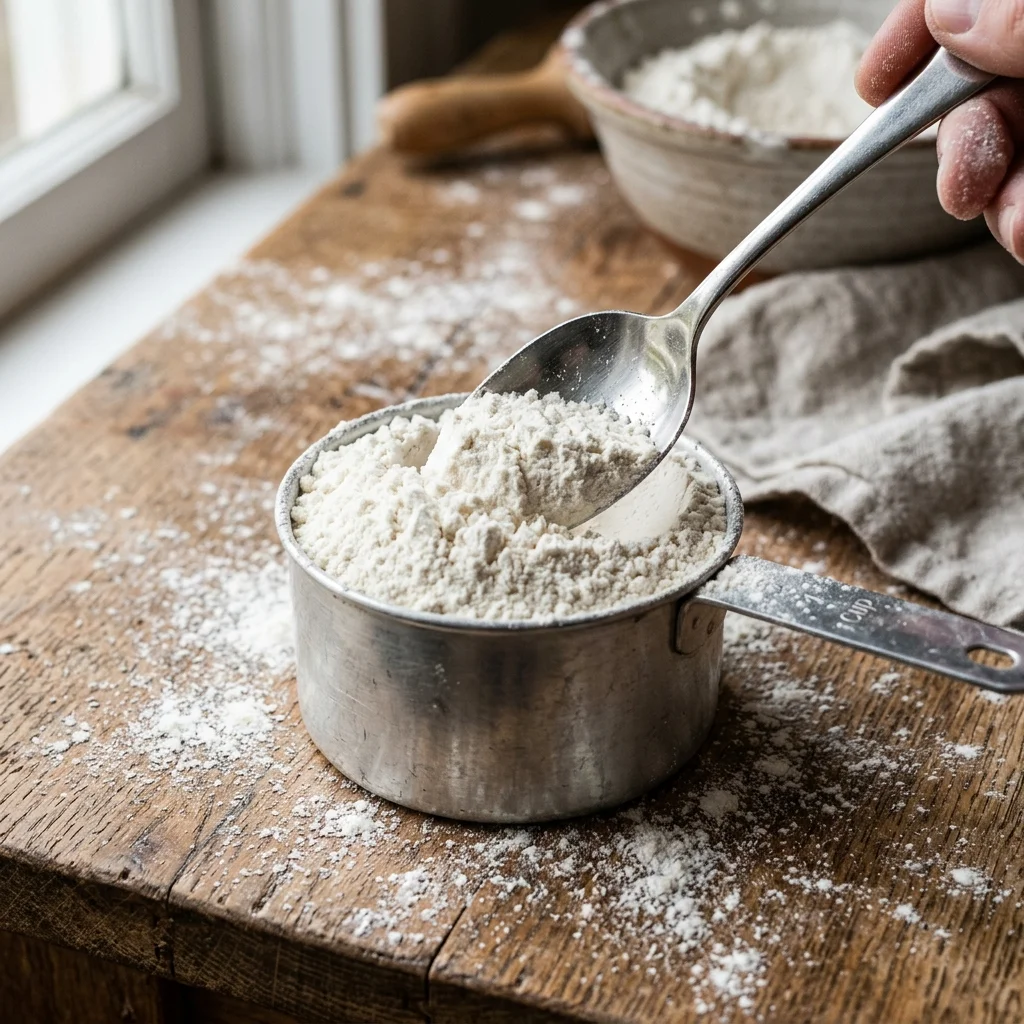
Baker's percentages (also known as baker's math or bread formulas) are a standardized mathematical notation used by professional bakers and artisan bread makers where the total weight of flour in a recipe is always set to 100%, and every other ingredient (water, salt, yeast, preferment) is calculated as a direct percentage of that flour weight.
Unlike standard cooking recipes where ingredients are expressed as percentages of the total batch weight, baker's math uses flour as a fixed baseline. This universal reference system makes it effortless to analyze dough hydration, adjust dough handling characteristics, scale recipes up or down for any yield, and troubleshoot bread texture without altering the underlying formula balance.
Formulate custom dough hydration with our interactive Dough Hydration Calculator, balance grain formulas in the Baker's Percentage Calculator, and explore our Grain & Seed Conversions Hub.
What Are Baker's Percentages?
In conventional home baking recipes, percentages represent parts of a whole (where all ingredients sum to 100%). However, in professional bread formulas, total flour weight is always assigned a value of 100%. Every other ingredient, liquids, leaveners, salt, fats, and enrichments, is expressed as a weight ratio relative to that flour total.
Because every component is anchored to flour, the sum of all baker's percentages in a bread recipe will always exceed 100%. For example, a basic artisan loaf made with 100% flour, 70% water, 2% salt, and 1% instant yeast has a total baker's percentage of **173%**. This system allows bakers to instantly recognize that a recipe has 70g of water for every 100g of flour, whether baking a single 500-gram boule or a 50-kilogram commercial bakery batch.
The Basic Baker's Percentage Formula
To calculate the baker's percentage of any ingredient, divide the weight of that single ingredient by the total weight of flour, then multiply by 100:
Conversely, if you know an ingredient's baker's percentage and your total flour weight, you can calculate the exact target weight in grams:
Using digital metric scale weights eliminates the volume density errors inherent in cups. For step-by-step tare and weighing techniques, consult our guide on How to Use a Digital Kitchen Scale.
A Simple Bread Formula in Grams
Let's examine a standard direct-yeast artisan bread formula weighed in grams on a digital scale:
| Ingredient | Weight in Grams | Baker's Percentage | Mathematical Breakdown |
|---|---|---|---|
| Unbleached Bread Flour | 500g | 100.0% | (500g ÷ 500g) × 100 = 100.0% (Flour Baseline) |
| Water (80°F / 27°C) | 350g | 70.0% | (350g ÷ 500g) × 100 = 70.0% Hydration |
| Fine Sea Salt | 10g | 2.0% | (10g ÷ 500g) × 100 = 2.0% Salt |
| Instant Dry Yeast | 5g | 1.0% | (5g ÷ 500g) × 100 = 1.0% Commercial Yeast |
| Total Dough Batch | 865g | 173.0% | 100% + 70% + 2% + 1% = 173% Total Formula |
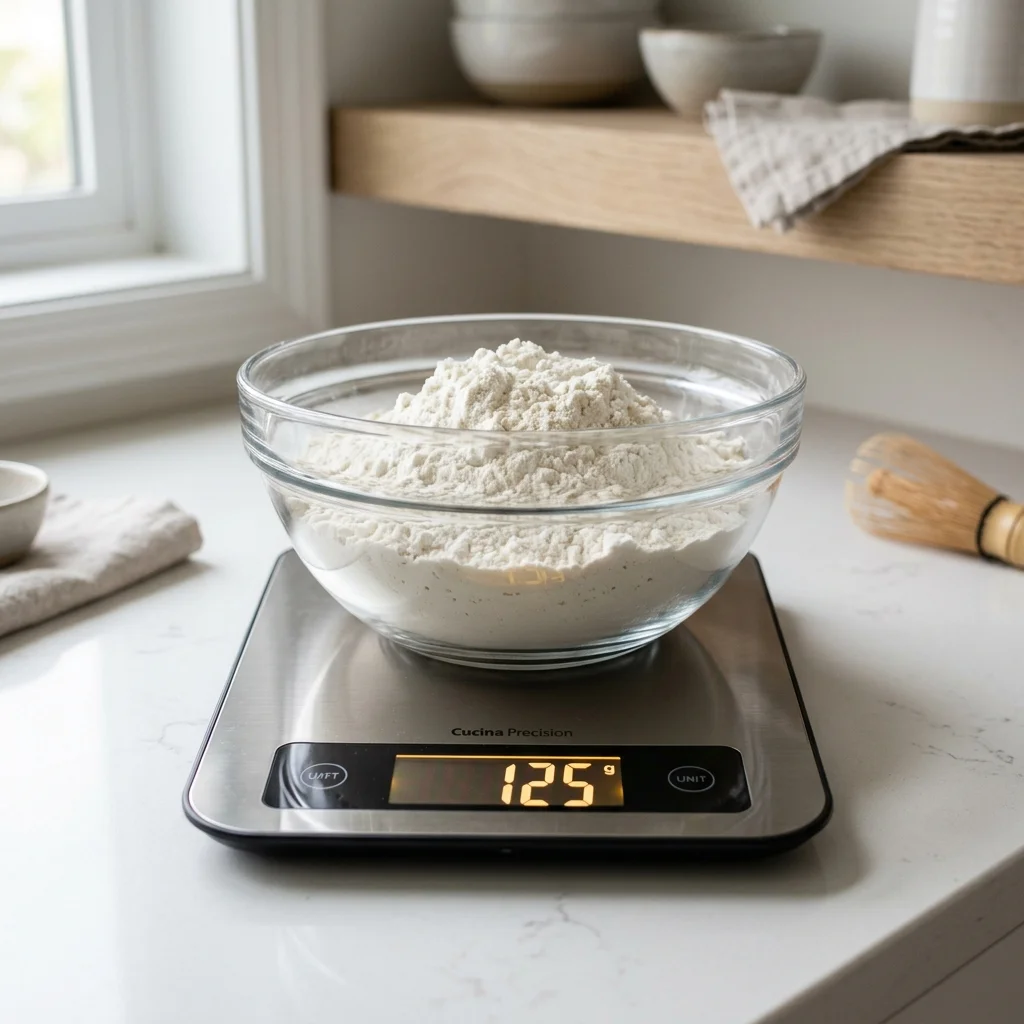 bread flour in grams on a digital scale for precise baker's percentage calculation" class="w-full h-auto rounded-xl border border-[#EFE4D8] shadow-sm" loading="lazy" decoding="async" />
What Is Bread Hydration?
In baker's math, bread hydration is the weight ratio of total liquid to total flour expressed as a percentage. It dictates dough feel, extensibility, fermentation rate, shaping difficulty, and final crumb structure.
In our example above, 350 grams of water mixed into 500 grams of flour yields exactly 70% hydration (350 ÷ 500 × 100 = 70%). A higher hydration percentage creates a softer, wet dough with large irregular air pockets (open crumb), whereas lower hydration yields a firmer dough that holds tight round shaping (closed crumb).
How Hydration Changes Dough
Hydration determines how dough handles during mixing, stretch-and-fold cycles, bench shaping, and baking:
- Low Hydration (55%–62%): Stiff, dense dough that is easy to knead by hand and shape. Produces a tight, uniform crumb structure with high structural strength. Ideal for bagels, pretzels, and sandwich loaves.
- Medium Hydration (63%–72%): The sweet spot for artisan bread makers. Yields a supple, extensible dough that develops strong gluten webs while remaining easy to score and shape into boules and batards.
- High Hydration (73%–85%+): Very wet, sticky, highly extensible dough. Requires gentle stretch-and-fold coil folds rather than traditional kneading. Yields a thin, crispy crust with a translucent, highly open crumb filled with large wild holes (e.g., ciabatta, focaccia, high-hydration sourdough).
Important Note on Flour Absorption: Do not treat hydration categories as rigid universal rules. Different flours absorb liquid at drastically different rates. As baking scientists at King Arthur Baking note, whole-grain flours (whole wheat, rye) contain bran particles and higher protein levels that absorb significantly more water, making a 75% hydration whole wheat dough feel as firm as a 65% hydration white bread dough. Ambient relative humidity also plays a major role; read How Ambient Humidity Affects Flour Weight and Dough Hydration.
Why Flour Is Always 100%
Flour serves as the structural foundation of bread. In wheat doughs, glutenin and gliadin proteins absorb water to form the elastic gluten network that traps expanding carbon dioxide gas during fermentation.
By anchoring flour as the 100% constant, every other ingredient becomes a relative ratio. If you decide to blend multiple flours, such as 400g bread flour (80%) and 100g whole wheat flour (20%), the combined total flour weight remains 500g (100%). All secondary calculations (water, salt, yeast) are evaluated against this 500g total flour sum.
How to Calculate Salt and Yeast Percentages
Precision with salt and leaveners is critical for controlled fermentation and flavor balance:
Salt Percentage (1.8% – 2.2%)
Salt strengthens gluten structure, regulates yeast activity, and enhances wheat flavor. Standard artisan bread utilizes 2.0% salt. For a 1,000g flour batch, 2% salt equals exactly 20 grams of fine sea salt (1,000 × 0.02 = 20g). Going below 1.5% results in bland bread with weak gluten, while exceeding 2.5% retards fermentation excessively.
Yeast Percentage (0.5% – 1.5%)
Commercial instant dry yeast is typically formulated at 0.8% to 1.0% for standard 2-hour bulk fermentations (5g yeast per 500g flour). For overnight cold fermentations in the refrigerator, bakers reduce yeast to 0.2% to 0.5% to allow slow flavor development without over-proofing.
How to Convert a Normal Bread Recipe Into Baker's Percentages
Convert any standard volume-based bread recipe into professional baker's percentages using these 4 steps:
- Weigh All Ingredients in Grams: Use a digital kitchen scale to convert volume cups into exact gram weights. Never rely on volume estimates! Read Why Baking by Weight Is Superior to Measuring by Volume and The Master Cups to Grams Baking Conversion Guide.
- Sum Total Flour Weight: Add the weights of all flours in the recipe to find your 100% flour baseline.
- Divide Ingredient Weight by Total Flour Weight: Divide each individual component weight by the total flour weight.
- Multiply by 100: Multiply the result by 100 to get the exact baker's percentage.
How to Scale a Bread Recipe Using Baker's Math
One of the greatest powers of baker's math is the ability to calculate exact ingredient weights for any target dough weight. Learn more about general scaling in How to Double or Halve a Baking Recipe.
Example: Scaling for 3 Loaves (Target Batch = 2,500g)
Suppose you want to bake 3 large boules totaling 2,500 grams of final dough using our 173% total formula (100% flour, 70% water, 2% salt, 1% yeast):
- Calculate Total Formula Factor: Convert the sum of baker's percentages to a decimal factor: 173% ÷ 100 = 1.73.
- Calculate Required Flour Weight: Target Dough Weight ÷ Formula Factor = 2,500g ÷ 1.73 = 1,445 grams of flour.
- Calculate Remaining Ingredient Weights:
- Water (70%): 1,445g × 0.70 = 1,011.5g water
- Salt (2%): 1,445g × 0.02 = 28.9g salt
- Yeast (1%): 1,445g × 0.01 = 14.5g instant yeast
Verification: 1,445g + 1,011.5g + 28.9g + 14.5g = 2,500 grams total dough. The mathematical balance remains flawless!
Baker's Percentages for Sourdough
Calculating baker's percentages for sourdough recipes involving preferments (levain, poolish, sourdough starter) requires special attention. Sourdough starters consist of flour and water! To maintain exact hydration math, professional bakers break preferments down into their flour and water components to calculate overall recipe percentages.
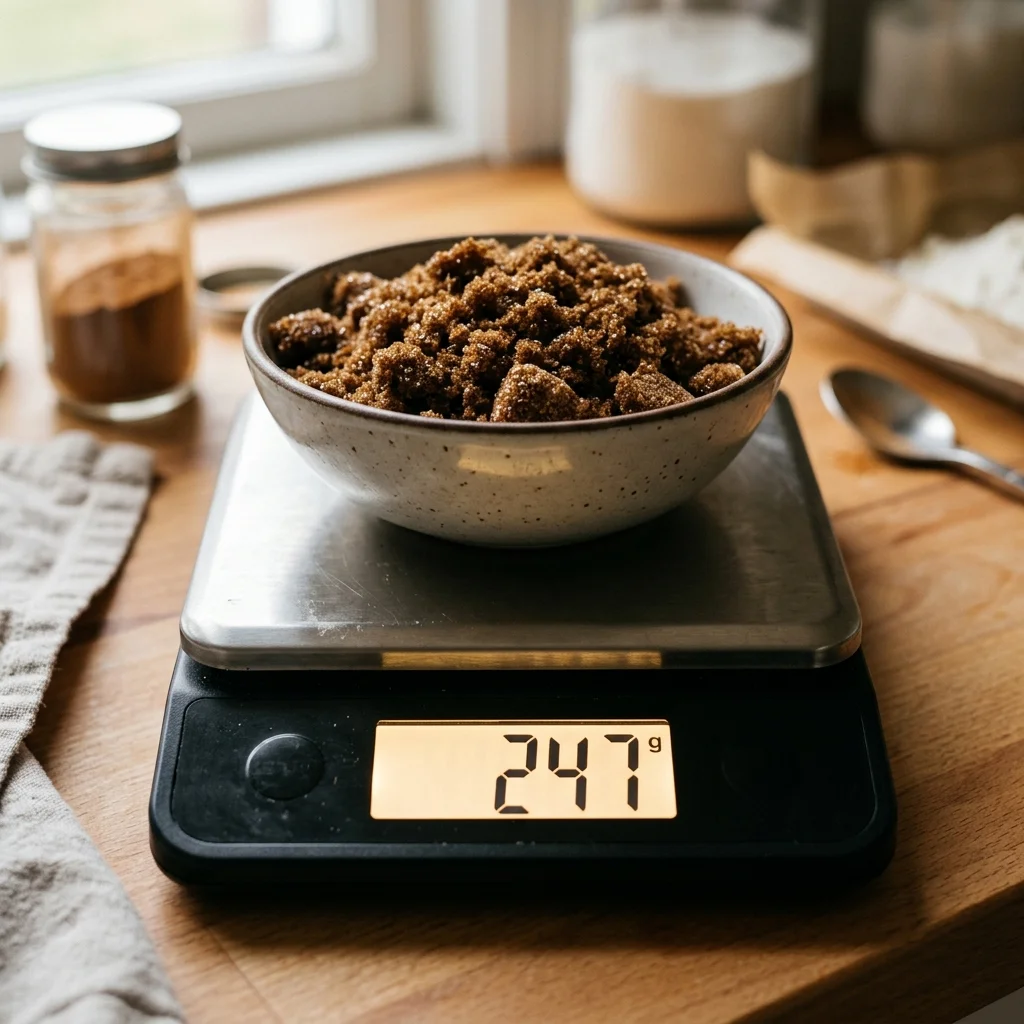
As demonstrated in King Arthur's baker's percentage guidelines, a 100% hydration sourdough levain contains 50% flour and 50% water by weight. If you add 100g of levain to a dough, you are adding 50g of flour and 50g of water. For an in-depth guide on starter hydration dynamics, read Sourdough Starter & Bread Hydration.
Poolish and Levain Calculations
Let's walk through an overall formula calculation featuring a preferment (Poolish or Sourdough Levain):
Recipe Breakdown
- Preferment (100% Hydration Levain): 100g (contains 50g flour + 50g water)
- Main Dough Flour: 450g bread flour
- Main Dough Water: 300g water
- Main Dough Salt: 10g sea salt
Master Formula Calculation
| Component | Preferment Input | Main Addition | Total Weight | Overall Baker's % |
|---|---|---|---|---|
| Total Flour | 50g (preferment flour) | 450g | 500g | 100.0% |
| Total Water | 50g (preferment water) | 300g | 350g | 70.0% (Overall Hydration) |
| Salt | 0g | 10g | 10g | 2.0% |
| Preferment Inoculation | 100g levain | , | 100g | 20.0% Levain Inoculum |
Notice that the overall hydration is exactly 70% (350g total water ÷ 500g total flour × 100 = 70%), and the levain inoculum rate is 20% relative to total flour (100g ÷ 500g × 100 = 20%).
Why Bakers Use Grams Instead of Cups
Volume measurements with measuring cups are notoriously unreliable for bread baking. A single cup of flour can weigh anywhere from 120 grams (spooned and leveled) to 155 grams (scooped directly from a packed bag). In a 4-cup bread recipe, that volume variance introduces up to 140 extra grams of flour, turning an extensible 72% hydration artisan dough into a dry, dense 58% hydration lump.
Grams are absolute metric weights. 500 grams of flour on a digital scale is always 500 grams, ensuring 100% repeatable baker's math results. For detailed flour scooping tests, read How to Measure Flour Correctly.
Common Baker's Percentage Mistakes
Avoid these six frequent mathematical pitfalls when analyzing bread formulas:
- Mistake 1: Treating Flour as 1% Instead of 100%. Flour is always the 100% baseline. Never divide ingredient weights by total dough weight unless calculating batch yields.
- Mistake 2: Calculating Percentages from Total Dough Weight. Expecting all percentages to sum to 100% is standard math, but invalid in baker's math where ingredients sum to 160%–190%.
- Mistake 3: Forgetting Preferment Flour. Excluding flour contained inside sourdough levain or poolish skews total flour weight downward, artificially inflating your calculated hydration.
- Mistake 4: Forgetting Preferment Water. Failing to count preferment liquid makes your true dough hydration higher than assumed.
- Mistake 5: Confusing Liquid Weight with Enriched Liquids. Whole milk is 87% water and 13% milk solids; eggs are 75% water. When formulating enriched brioche, account for water fractions.
- Mistake 6: Mixing Volume and Weight Units. Adding 350ml of water to 4 cups of flour mixes volume units with unknown weight densities. Always weigh ingredients in grams!
Baker's Percentage Cheat Sheet
Use this reference cheat sheet comparing classic international bread formulas:
| Bread Style | Total Flour | Hydration % | Salt % | Leavener % | Key Formula Characteristics |
|---|---|---|---|---|---|
| Classic French Baguette | 100% AP / Bread | 65% – 68% | 2.0% | 1.0% Poolish / Yeast | Crispy crust, cream-colored open crumb |
| Rustic Country Sourdough | 80% White / 20% WW | 72% – 78% | 2.0% | 20.0% Levain (100% hyd) | Blistered chewy crust, complex lactic sour taste |
| Italian Ciabatta | 100% High-Gluten | 80% – 85% | 2.0% | 1.0% Instant Yeast | Wet dough, giant irregular air pockets, slipper shape |
| New York Style Bagel | 100% High-Protein | 53% – 56% | 2.0% | 0.5% Yeast + 1% Malt | Very stiff dough, boiled before baking, dense chewy crumb |
| Enriched Sandwich Loaf | 100% AP Flour | 60% (Milk) | 1.8% | 2% Yeast + 6% Butter + 6% Sugar | Soft sliceable texture, tender golden crust |
Frequently Asked Questions
1. What is a baker's percentage?
A baker's percentage is a formula notation where total flour weight is set to 100%, and all other ingredient weights (water, salt, yeast) are calculated relative to that flour weight.
2. Why is flour always 100% in baker's math?
Flour forms the structural backbone of bread dough. Setting flour as the 100% constant provides a universal baseline to scale recipes up or down without altering hydration balance.
3. How do you calculate baker's percentage?
Divide the weight of an individual ingredient in grams by the total flour weight in grams, then multiply by 100.
4. What is 70% bread hydration?
70% hydration means the recipe contains 70 grams of water for every 100 grams of total flour (e.g., 350g water per 500g flour).
5. How do you calculate bread hydration?
Divide total water weight by total flour weight and multiply by 100 (e.g., 350 ÷ 500 × 100 = 70%).
6. What does 2% salt mean in bread baking?
2% salt means adding 2 grams of salt for every 100 grams of flour in the recipe (e.g., 10g salt for 500g flour).
7. What does 1% yeast mean?
1% yeast means adding 1 gram of commercial yeast for every 100 grams of total flour (e.g., 5g yeast for 500g flour).
8. How do you scale a bread recipe using baker's math?
Sum all ingredient baker's percentages into a decimal factor (e.g., 173% = 1.73). Divide your desired target batch weight by 1.73 to find the required flour weight, then multiply flour weight by each ingredient percentage.
9. Can baker's percentages be used for sourdough?
Yes! Sourdough recipes use baker's percentages, but preferments (levain) must be broken down into their flour and water components to calculate overall total flour and hydration.
10. How do you calculate percentages with a sourdough starter?
For a 100g levain at 100% hydration, count 50g as flour and 50g as water, adding them to the main dough flour and water before calculating total formula percentages.
11. Why do professional bakers use grams instead of cups?
Grams measure exact mass, whereas volume cups fluctuate by up to 25% depending on how flour is scooped, ensuring consistent dough hydration every batch.
12. What is the difference between hydration and baker's percentage?
Hydration is a specific baker's percentage measuring water weight relative to flour weight. Baker's percentage is the overarching mathematical system applied to all ingredients in the recipe.
Bakers at higher elevations must also account for faster liquid evaporation. See our tips on high altitude baking adjustments for bread doughs and liquids.
Interactive Dough Hydration Calculator
Calculate water absorption and baker percentages for artisan loaves.
Interactive Baking Calculator Widget
Adjust inputs below for instant real-time recipe formulation.
Open Aerated Crumb (Baguettes/Sourdough)
Need Full Density Reference Tables?
Explore complete g/cup density tables, USDA ratios, and measurement tools.