Sourdough Starter & Bread Hydration: Why Gram Precision Is Non-Negotiable
"Learn how sourdough hydration works, how to calculate starter and dough hydration, and why weighing flour and water in grams improves bread consistency."
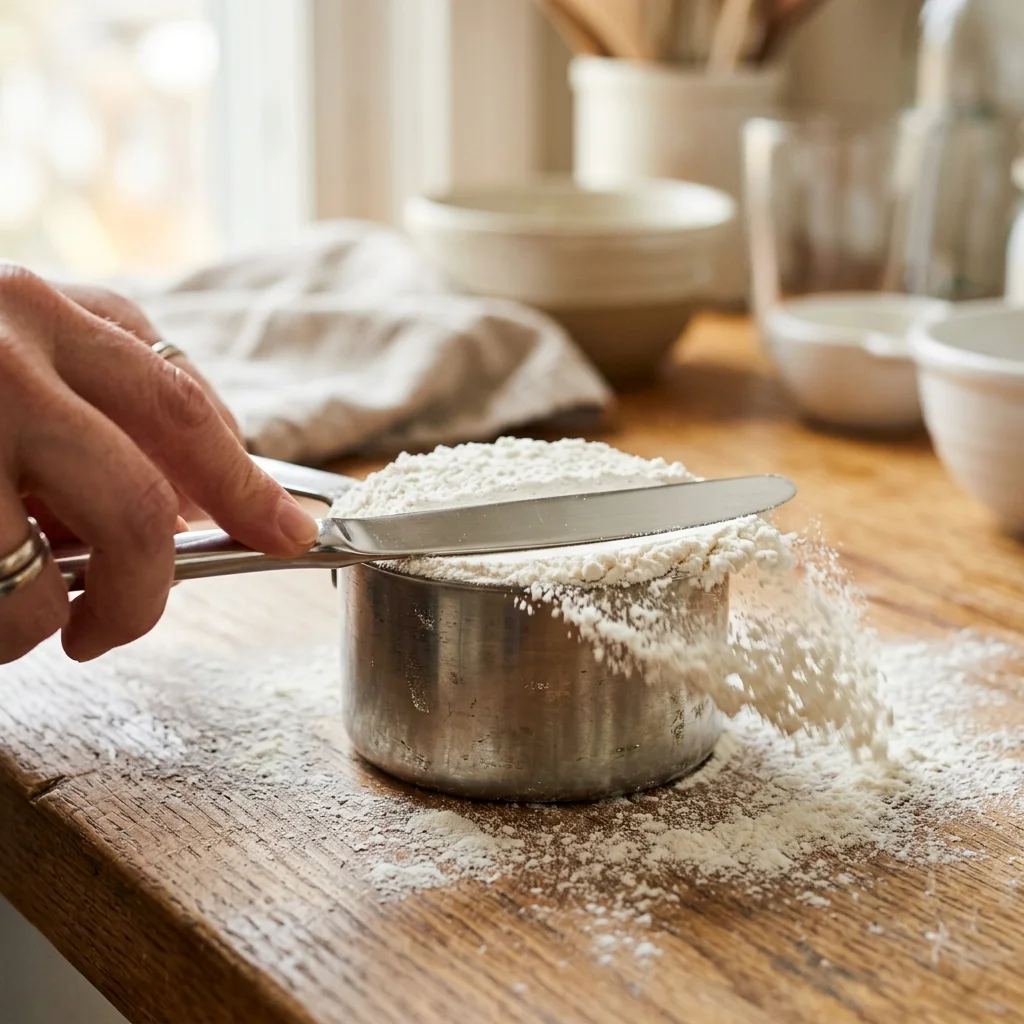
In artisan bread baking, sourdough hydration is defined as the total weight of water divided by the total weight of flour, expressed as a percentage.
Because flour density fluctuates wildly based on humidity, settling, and scoop technique, measuring sourdough ingredients by volume in cups produces erratic results. Calculating hydration in grams provides the mathematical precision required for predictable gluten development, consistent bulk fermentation, and optimal crumb structure. For example, a basic dough made with 500 grams of flour and 350 grams of water has a hydration level of exactly 70% (350 ÷ 500 × 100 = 70%).
Calculate exact sourdough formulas with our interactive Dough Hydration Calculator, balance baker's percentages with the Baker's Percentage Calculator, and check whole grain density in our Grain & Seed Conversions Hub.
What Is Sourdough Hydration?
Sourdough hydration represents the relationship between water and flour in both your starter and your final dough. In baker’s math, flour is always set as 100%, and all other ingredients, water, salt, and levain, are calculated relative to total flour weight.
To learn how baker's percentages govern all bread formulas, read our foundational guide: Artisan Bread Baking: Understanding Baker's Percentages and Gram Weights.
Why Sourdough Hydration Must Be Calculated by Weight
Measuring flour in cups for sourdough is inherently unreliable. A cup of all-purpose flour can weigh anywhere from 120 grams (if spooned lightly) to 150 grams (if scooped firmly from a flour sack). That 30-gram variance in a 3-cup recipe changes your actual dough hydration by over 12%, transforming a supple 75% hydration dough into a stiff, dense 63% dough.
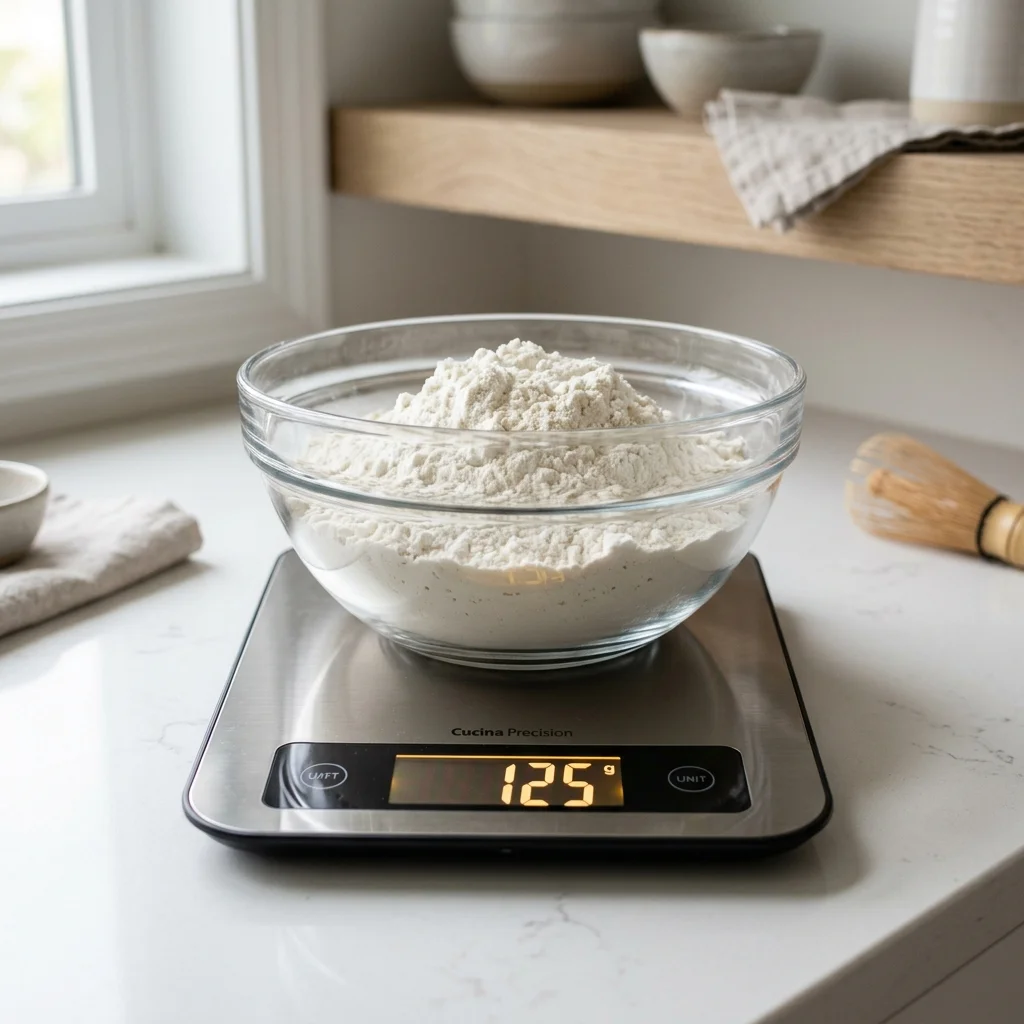 bread flour on a digital scale platform for accurate sourdough hydration" class="w-full h-auto rounded-xl border border-[#EFE4D8] shadow-sm" loading="lazy" decoding="async" />
Water volume can also introduce slight measurement errors if read improperly at the meniscus. By placing your mixing bowl directly on a scale and weighing water in grams (1 gram of water = 1 milliliter), you eliminate volume variance entirely. Discover why weight precision transforms baking results in Why Baking by Weight Is Superior to Measuring by Volume.
What Does 100% Hydration Sourdough Starter Mean?
A 100% hydration sourdough starter (often called a liquid starter or 1:1:1 starter) is fed with equal weights of flour and water.
- Example: 50 grams starter seed + 50 grams flour + 50 grams water.
- Clarification: 100% hydration does not mean the starter jar contains 100% water. It means water weight equals 100% of the flour weight. By total mass, a 100% hydration starter consists of 50% water and 50% flour.
- Stiff Starter Comparison: A stiff starter (50% hydration) uses 50g water for every 100g flour, fermenting more slowly and producing higher acetic acid levels.
Common Sourdough Starter Feeding Ratios
Feeding ratios dictate how much fresh flour and water you add relative to your starter seed mass. Professional bakeries like King Arthur Baking use feeding ratios such as 1:1:1 or 1:2:2 by weight to manage fermentation speed and acid accumulation:
| Feeding Ratio | Starter Seed | Flour Weight | Water Weight | Fermentation Peak Window & Use Case |
|---|---|---|---|---|
| 1:1:1 | 50g | 50g | 50g | Fast peak (3–5 hours); ideal for rapid bake days |
| 1:2:2 | 25g | 50g | 50g | Moderate peak (6–8 hours); standard daily maintenance |
| 1:3:3 | 20g | 60g | 60g | Extended peak (8–10 hours); overnight room temp build |
| 1:4:4 | 15g | 60g | 60g | Long peak (10–12 hours); warm room temperature feedings |
Note: A feeding ratio specifies the proportion of seed-to-food, whereas starter hydration specifies the water-to-flour proportion within the feed. All four ratios above yield a 100% hydration starter because flour weight equals water weight.
How to Calculate Total Sourdough Hydration
To calculate true total hydration in a sourdough recipe, you must include the flour and water contributed by your levain or active starter. Here is a verified step-by-step calculation:
Does Sourdough Starter Count Toward Hydration?
Yes, absolutely. Your active sourdough starter is composed of flour and water. If you omit the starter’s water contribution and only calculate hydration using added mixing water (375g ÷ 450g = 83.3%), you underestimate your true dough hydration by nearly 2%.
Failing to account for preferment liquids is one of the most frequent baking metric errors. Read more in Top 7 Gram-to-Cup Conversion Mistakes Bakers Make (And How to Fix Them).
What Is 65%, 70%, 75%, 80% and 85% Hydration?
The table below illustrates how total hydration percentage affects dough handling, fermentation dynamics, and suitable bread styles:
| Hydration % | Dough Feel & Texture | Handling Considerations | Recommended Bread Styles & Flours |
|---|---|---|---|
| 65% | Firm, cohesive, non-sticky | Extremely easy to shape; great for beginners | Sandwich bread, bagels, beginner boules |
| 70% | Soft, pliable, slightly tacky | Holds shape cleanly; minimal bench flour needed | Standard sourdough boules & batards (All-Purpose) |
| 75% | Supple, extensible, moderately sticky | Requires bench scraper and confident shaping | Artisan open-crumb loaves (Bread flour blends) |
| 80% | Wet, slack, highly extensible | Prone to spreading; requires coil folds & strong gluten | High-protein bread flour sourdough, ciabatta |
| 85%+ | Very wet, fluid, pudding-like if under-developed | Requires extensive stretch-and-folds & dough baskets | High Whole Wheat, Spelt, or Rye artisan loaves |
Does Higher Hydration Mean Better Bread?
No. Higher hydration is a baking tool, not a quality grade. Professional bread authority King Arthur Baking notes that while 80%+ is considered high hydration, pushing water percentage higher does not automatically guarantee superior bread.
- Benefits of Higher Hydration: Promotes a wild open crumb structure, a thinner & crispier crust, and an extended shelf life due to retained moisture.
- Drawbacks of Excessive Hydration: Weakens dough structure, causes the loaf to flatten into a "pancake" during baking, makes shaping difficult, and extends required baking time.
- The Bottom Line: The ideal hydration is the highest percentage your specific flour can absorb while allowing you to shape a taut, freestanding boule.
How Flour Type Changes Hydration
Two doughs with the exact same 75% mathematical hydration will feel completely different depending on flour selection:
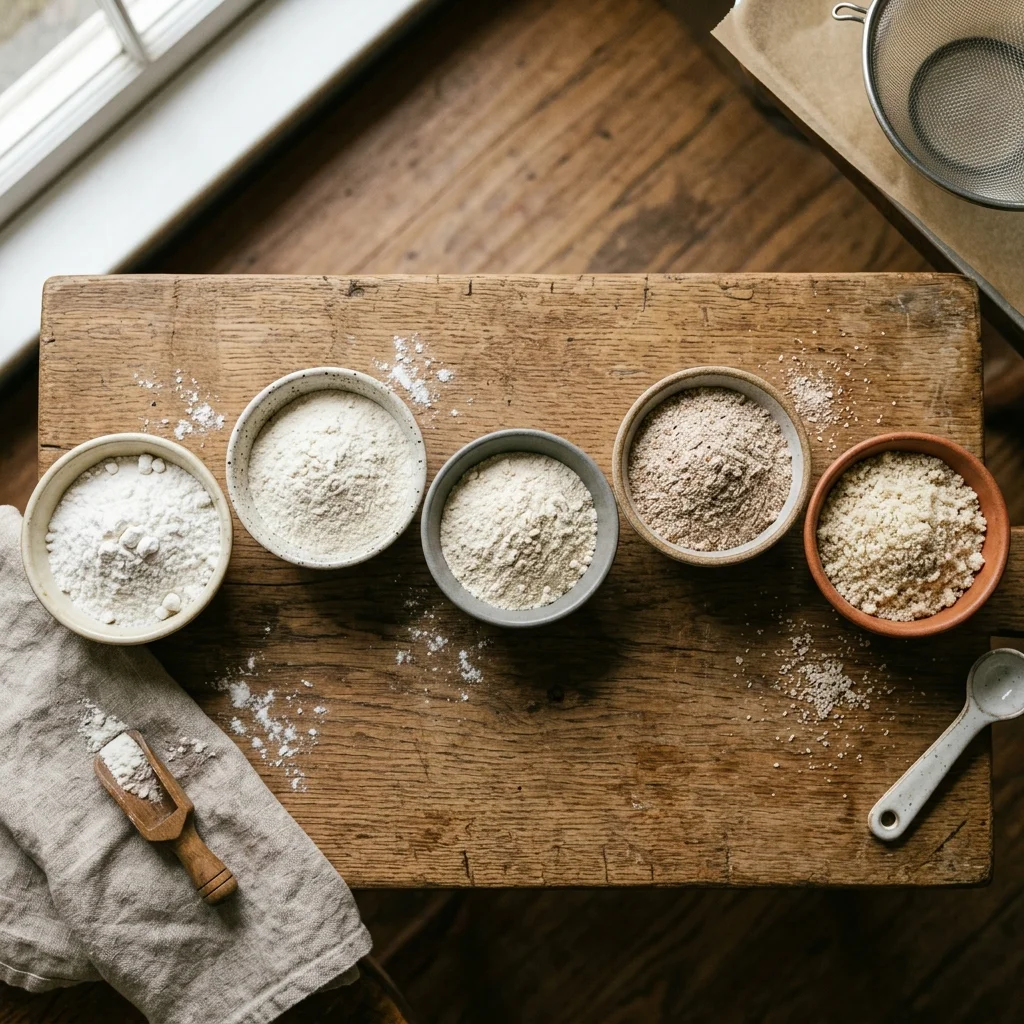
- Bread Flour (12%–14% Protein): High glutenin and gliadin content forms a strong gluten matrix that absorbs and traps large quantities of water cleanly at 75%–80% hydration.
- All-Purpose Flour (10%–11.5% Protein): Lower protein content absorbs less water. 72% hydration in AP flour often feels as wet as 78% in bread flour. Learn how to measure flour accurately in How to Measure Flour Correctly.
- Whole Wheat Flour: Sharp bran particles act like tiny sponges, absorbing significantly more water than white flour while cutting gluten strands. Whole wheat doughs require 5% to 10% higher hydration to achieve the same dough feel.
- Rye Flour: High in pentosan sugars, rye absorbs massive amounts of water but produces almost no elastic gluten network, creating a sticky paste texture.
Ambient room moisture also plays a role in flour absorption. Learn more in our guide on How Ambient Humidity Affects Flour Weight and Dough Hydration.
How to Adjust Sourdough Hydration
To scale or adjust sourdough hydration cleanly, calculate water weight using your total flour target. For a standard 500-gram total flour batch:
- 68% Hydration Target: 500g × 0.68 = 340g Total Water
- 72% Hydration Target: 500g × 0.72 = 360g Total Water
- 76% Hydration Target: 500g × 0.76 = 380g Total Water
- 80% Hydration Target: 500g × 0.80 = 400g Total Water
The Baker's Hold-Back Technique: When working with an unfamiliar flour, hold back 25g to 50g of your recipe's water during initial mixing. Add the reserved water gradually during autolyse only if the dough feels dry and capable of absorbing more.
If scaling recipe batches up or down, follow our guidelines in How to Double or Halve a Baking Recipe Without Ruining It.
Why Your Sourdough Dough Is Too Wet
If your sourdough dough turns into a soupy puddle that refuses to hold shape, investigate these seven root causes:
- Hydration Exceeds Flour Capacity: You added 80% water to lower-protein all-purpose flour.
- Omitted Starter Weight: You added starter water on top of high recipe water without adjusting total ratios.
- Insufficient Gluten Structure: You skipped stretch-and-folds or coil folds during early bulk fermentation.
- Over-Fermentation (Enzymatic Degradation): Dough fermented too long at warm room temperatures, allowing wild yeast acids and proteases to break down the gluten network.
- Acid Degradation from Weak Starter: Using a sluggish, acidic starter introduces excess protease enzymes that liquefy dough proteins.
- Measuring by Volume (Cups): Scoop measuring resulted in severely under-measured flour weight relative to liquid volume. Read The Master Cups to Grams Baking Conversion Guide.
- High Ambient Room Humidity: Flour absorbed atmospheric moisture prior to mixing.
Why Your Sourdough Dough Is Too Dry
Conversely, if your sourdough dough is stiff, dense, and difficult to incorporate, check these factors:
- High Whole-Grain Ratio: Adding whole wheat or rye without increasing total water weight.
- High-Protein Bread Flour: Professional bread flour absorbs up to 5% more water than standard AP flour.
- Dry Kitchen Climate: Low winter ambient humidity dries out exposed dough surfaces.
- Packed Flour Cup Measurement: Scooping packed flour introduced 20% extra flour mass beyond the target formula.
How to Use a Kitchen Scale for Sourdough
Follow this efficient 7-step scale workflow when mixing sourdough dough:
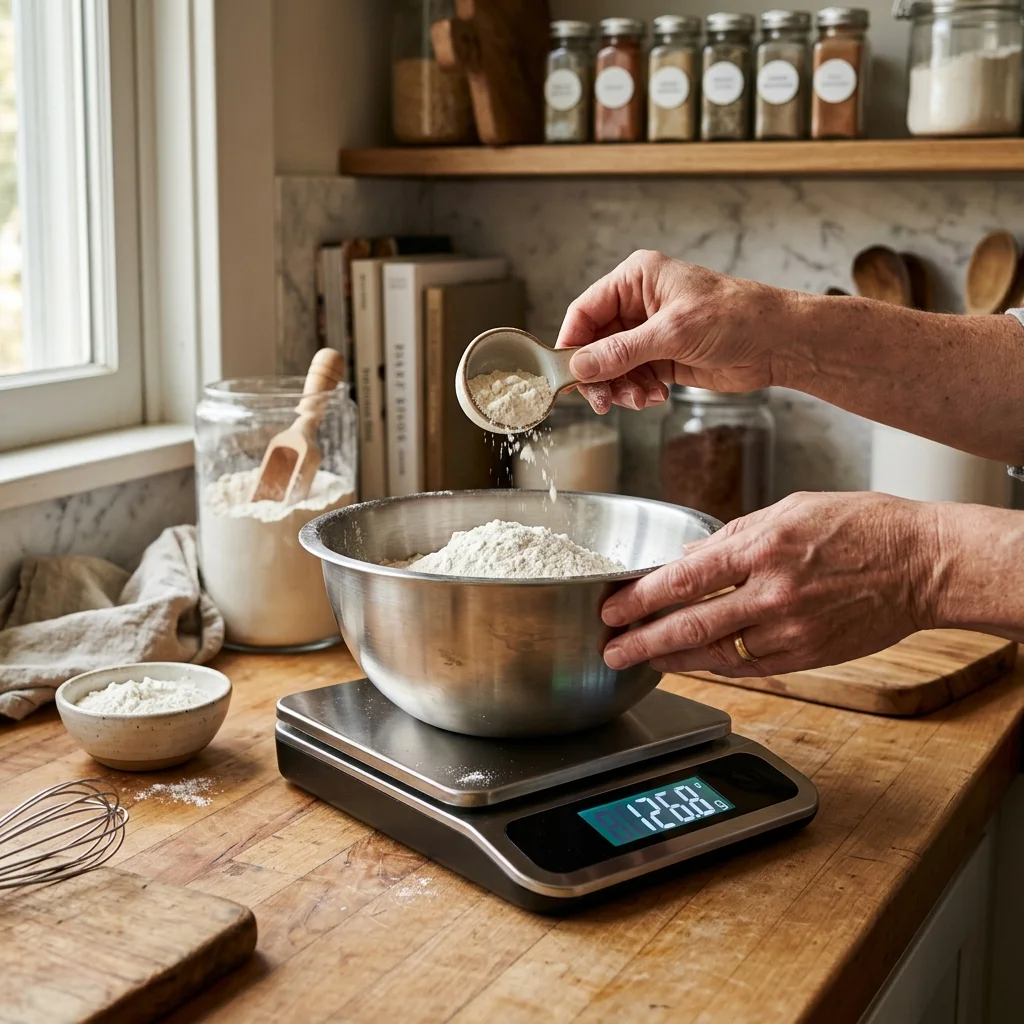
- Place your clean glass or ceramic mixing bowl on a digital kitchen scale platform.
- Press the Tare / Zero button to reset scale display to 0g.
- Weigh your flour blend in grams directly into the bowl.
- Tare the scale to 0g again.
- Add your liquid (water) in grams.
- Tare the scale to 0g and weigh your active sourdough starter.
- Tare one last time to weigh fine sea salt (typically 2% of total flour weight; e.g. 10g salt for 500g flour).
Master scale operations with our step-by-step walkthrough: Step-by-Step Guide: How to Use a Digital Kitchen Scale for Baking.
Sourdough Hydration vs Starter Hydration
Understanding the distinction between starter hydration and final dough hydration is critical for recipe development:
| Property | Starter Hydration | Dough Hydration |
|---|---|---|
| Definition | Ratio of water to flour in your culture jar | Ratio of ALL water to ALL flour across entire recipe batch |
| Standard Benchmark | 100% (1:1 water:flour by weight) | 65% – 85% depending on bread style |
| Calculation Formula | Feed Water ÷ Feed Flour × 100 | (Recipe Water + Starter Water) ÷ (Recipe Flour + Starter Flour) × 100 |
| Primary Function | Controls yeast/bacteria activity & acid speed | Controls crumb openness, dough handling & crust texture |
Compare historical volumetric measurements with modern metric standards in What Is a 'Cup' Measurement? History and Evolution of Culinary Volume and US Cup vs Metric Cup vs Imperial Cup: What’s the Difference?.
Frequently Asked Questions
1. What does 100% hydration starter mean?
A 100% hydration starter means it is fed with equal weights of flour and water (for example, 50 grams of flour and 50 grams of water).
2. How do you calculate sourdough hydration?
Divide the total water weight (including starter water) by the total flour weight (including starter flour) and multiply by 100.
3. Does sourdough starter count toward total hydration?
Yes. The flour in your starter counts toward total flour weight, and the water in your starter counts toward total water weight.
4. What is 70% hydration sourdough?
A 70% hydration sourdough dough contains 70 grams of total water for every 100 grams of total flour (e.g. 350g water for 500g flour).
5. Is 80% hydration too high for beginner sourdough bakers?
Yes. 80% hydration produces wet, extensible dough that requires confident handling and strong gluten development. Beginners should start at 68%–72%.
6. Why is my sourdough dough so sticky and wet?
Your dough may be over-hydrated for your flour type, over-fermented, insufficiently folded, or mixed with under-measured volumetric flour cups.
7. Why is my sourdough dough dry and stiff?
Your flour may have high absorption (whole wheat or high-protein bread flour), or your liquid was under-weighed relative to packed flour cups.
8. Does whole wheat flour require more water than white flour?
Yes. Whole wheat bran particles absorb significantly more water than endosperm flour, requiring roughly 5% to 10% higher hydration.
9. Is higher hydration always better for sourdough bread?
No. Higher hydration yields an open crumb, but excessive water weakens dough structure and causes flattening if gluten strength is lacking.
10. What is the difference between starter hydration and dough hydration?
Starter hydration measures the liquid ratio in your yeast culture jar (typically 100%), whereas dough hydration measures total water across the entire recipe batch.
11. How do I calculate hydration when using a levain build?
Add the levain's flour weight to recipe main flour and levain's water weight to recipe main water before calculating final percentage.
12. Why should sourdough ingredients be measured in grams?
Grams eliminate 15%–20% volumetric measuring errors caused by flour packing and humidity, ensuring repeatable sourdough fermentation and bake quality.
Interactive Sourdough Hydration Calculator
Calculate exact flour, water, and starter baker percentages.
Interactive Baking Calculator Widget
Adjust inputs below for instant real-time recipe formulation.
Need Full Density Reference Tables?
Explore complete g/cup density tables, USDA ratios, and measurement tools.