Converting Metric Baking Recipes (UK, European, Australian) for US Cooks
"Deciphering deciliters, grams, gas marks, and oven Celsius vs Fahrenheit conversions."
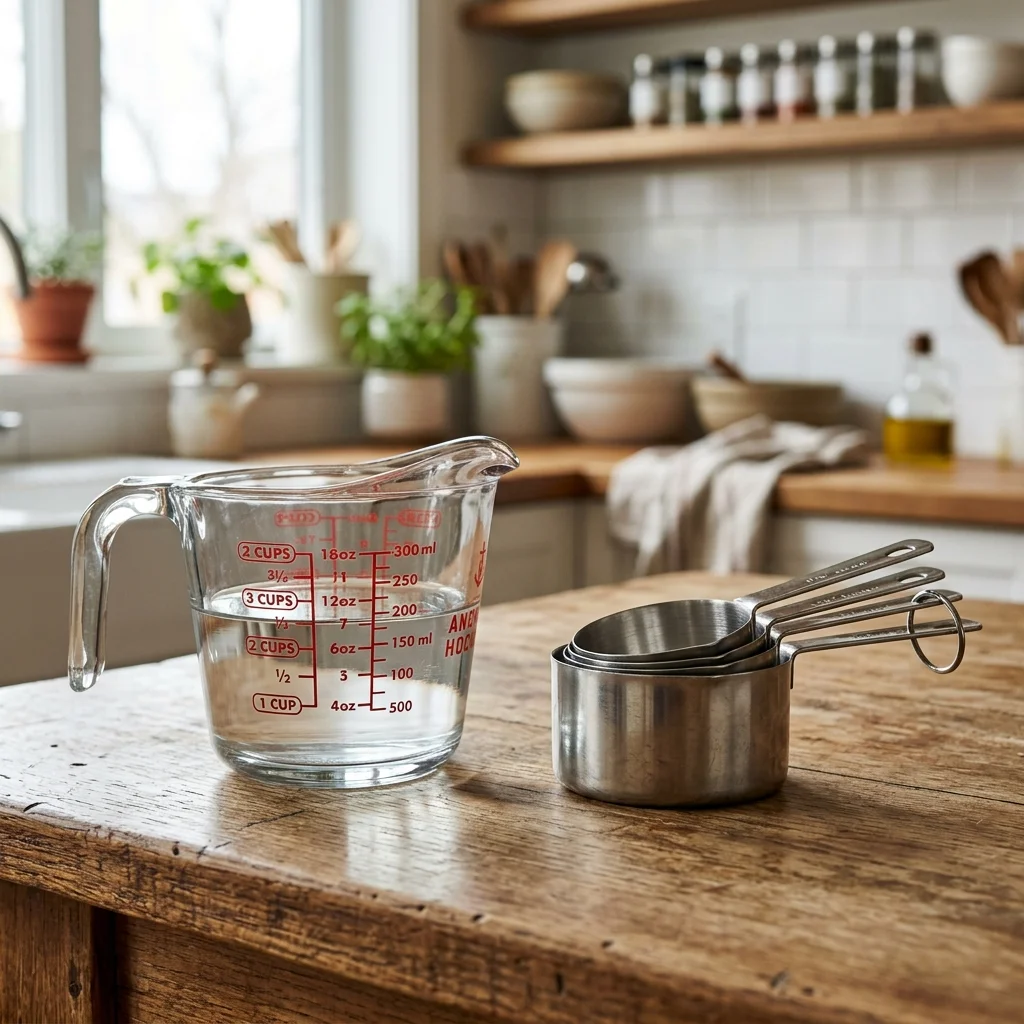
Converting metric baking recipes from the United Kingdom, Continental Europe, Australia, New Zealand, and Canada for American home kitchens requires navigating distinct volumetric definitions, mass standards, ingredient bulk densities, and oven temperature scales. Simply substituting a standard US cup for a European metric cup introduces a 6% volume mismatch that can undermine delicate cakes, artisan bread doughs, and pastries.
In this comprehensive guide, we provide step-by-step translation protocols for converting metric weights (grams, kilograms, milliliters, deciliters) into US customary measures, break down international cup variations, convert Celsius and British Gas Marks to Fahrenheit, and explain how to adjust for European high-fat butter.
Convert recipe measurements with our Recipe Converter, scale multi-ingredient formulas in the Recipe Scaler, look up base flour mass in All-Purpose Flour Grams to Cups, and convert butter sticks using the Butter Converter.
International Cup Standards: US vs Metric vs Imperial
A frequent trap for American bakers is assuming that 1 "cup" is universally identical across all English-language recipe blogs. The table below compares the four primary international culinary cup volumes:
| Cup Standard | Volume in Milliliters | Fluid Ounces (fl oz) | Primary Regions Used | Impact on Home Bakers |
|---|---|---|---|---|
| US Customary Cup | 236.59 mL (~236.6 mL) | 8.0 US fl oz | United States cookware & recipes | Standard baseline for American domestic baking |
| US Legal Cup (FDA) | 240.0 mL | 8.11 US fl oz | US FDA Nutrition Serving Panels | Mandated on commercial cereal boxes & milk cartons |
| Metric Cup | 250.0 mL | 8.45 US fl oz | Australia, New Zealand, Canada, South Africa | Exactly 250 mL; 5.7% larger than US Customary |
| Imperial Cup (UK Vintage) | 284.13 mL (~284.1 mL) | 10.0 Imperial fl oz | Pre-1970s British & Commonwealth books | 20.1% larger than US Customary; rare in modern UK baking |
For an in-depth analysis of international cup discrepancies, read our master comparison in US Cup vs Metric Cup vs Imperial Cup: The International Baking Guide and explore historical origins in What Is a Cup Measurement? Historical Evolution.
Oven Temperature Conversion: Celsius, Fan-Forced, Fahrenheit, & Gas Marks
European and UK recipes specify baking temperatures in Celsius or British Gas Marks. Furthermore, modern European ovens default to fan-forced (convection) circulation, which bakes approximately 20°C (35°F to 40°F) hotter than conventional radiant ovens.
| Gas Mark | Celsius (Conventional) | Celsius (Fan / Convection) | Fahrenheit (US Standard) | Common Baking Application |
|---|---|---|---|---|
| Gas Mark 1/2 | 130°C | 110°C | 250°F | Meringues, slow-drying fruit pavlovas |
| Gas Mark 1 | 140°C | 120°C | 275°F | Slow-roasted meats, rich fruitcakes |
| Gas Mark 2 | 150°C | 130°C | 300°F | Delicate cheesecakes, shortbread |
| Gas Mark 3 | 170°C | 150°C | 325°F | Pound cakes, gingerbread loaves, banana bread |
| Gas Mark 4 | 180°C | 160°C | 350°F | Standard baking benchmark (cookies, sponge cakes, muffins) |
| Gas Mark 5 | 190°C | 170°C | 375°F | Choux pastry, quick dinner rolls, fruit pies |
| Gas Mark 6 | 200°C | 180°C | 400°F | Puff pastry, drop biscuits, scones |
| Gas Mark 7 | 220°C | 200°C | 425°F | Crusty artisan loaves, Yorkshire puddings |
| Gas Mark 8 | 230°C | 210°C | 450°F | Sourdough dutch oven baking, high-heat focaccia |
Converting European Butter & Fats to US Sticks
European recipes typically specify butter in metric grams (e.g., 100g, 125g, or 250g blocks), whereas American recipes call for sticks or tablespoons. Furthermore, European butter contains 82% to 84% butterfat (and less water) compared to standard 80% American commodity butter.
- 1 Stick of US Butter: 113.4 grams = 8 tablespoons = 1/2 US cup = 4 oz.
- 2 Sticks of US Butter: 227 grams = 16 tablespoons = 1 US cup = 8 oz.
- Standard European Block (250g): Equals approximately 2.2 US sticks (1 cup + 1.5 tablespoons).
For complete butter calculations across sticks, tablespoons, and ounces, consult our Butter Conversion Master Table: Sticks to Grams to Cups and learn more European baking secrets in How to Bake European Recipes in an American Kitchen.
Deciphering Deciliters and Milliliters
Scandinavian and German recipes frequently list liquids and dry bulk ingredients in deciliters (dl). One deciliter equals exactly 100 milliliters (1/10th of a liter):
1 dl = 100 mL = 0.42 US Customary Cups (~6.75 tablespoons)
2.4 dl = 240 mL = 1 US Legal Cup
2.5 dl = 250 mL = 1 Metric Cup
5.0 dl = 500 mL = 1/2 Liter (~2.1 US Cups)
Why Weighing in Grams Is the Ultimate Solution
The single most effective way to eliminate international recipe translation errors is using a digital kitchen scale. In metric physics, 100 grams of flour or 200 grams of sugar is identical whether measured in London, Sydney, Paris, or New York.
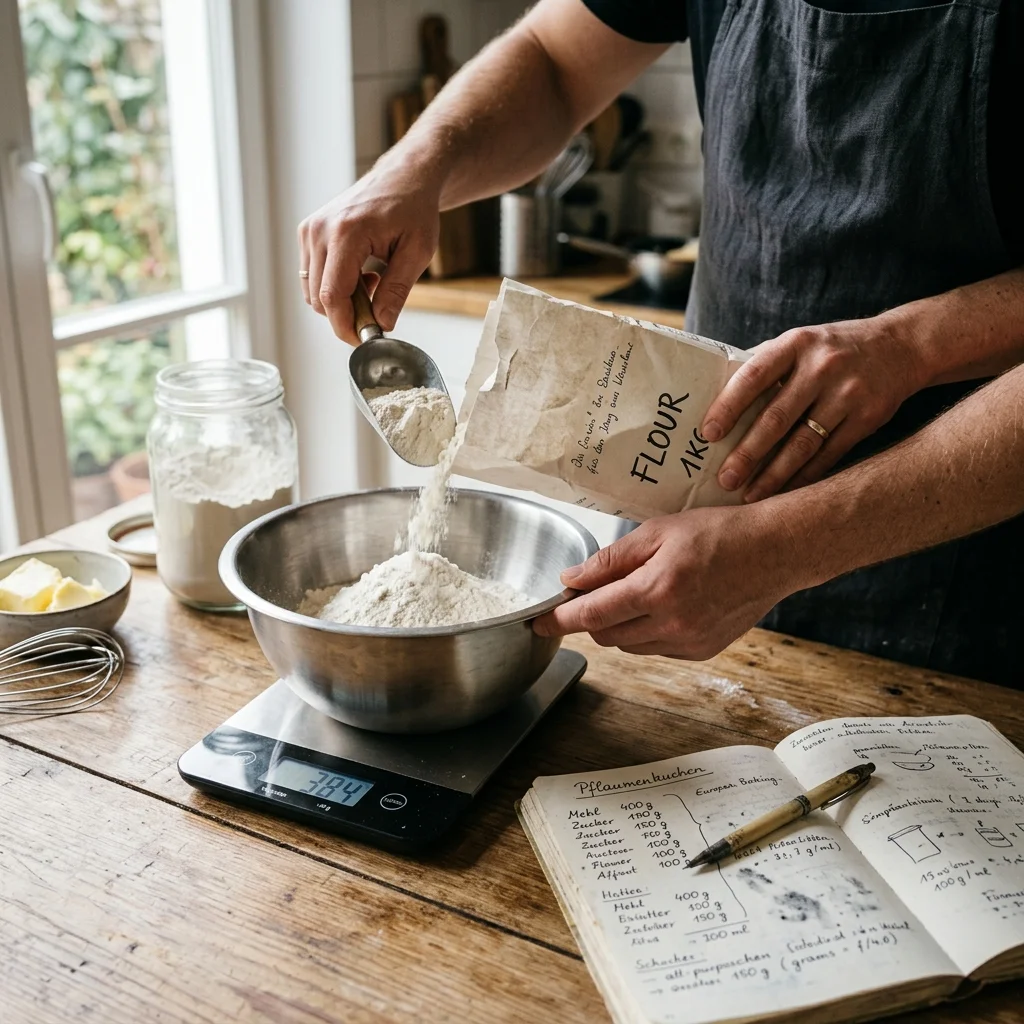
Learn step-by-step scale techniques in Step-by-Step Guide: How to Use a Digital Kitchen Scale for Baking, review Why Baking by Weight Is Superior to Measuring by Volume, and explore our master index in The Master Cups to Grams Baking Conversion Guide.
Frequently Asked Questions
1. What is 180°C in Fahrenheit?
180°C equals 350°F (or 160°C in a fan-forced/convection oven), which is the standard baking temperature for most cakes and cookies.
2. How much is 1 dl of liquid in US cups?
1 deciliter (dl) equals 100 milliliters, which is approximately 0.42 US cups (or roughly 6.75 tablespoons).
3. What is Gas Mark 4 in Fahrenheit?
British Gas Mark 4 equals 350°F (180°C conventional / 160°C fan).
4. Is an Australian cup bigger than a US cup?
Yes. An Australian metric cup holds 250 milliliters, which is about 5.7% larger than the 236.6 mL US customary cup.
Interactive Baking Weight Converter
Convert recipe volumes into exact gram weights instantly.
Interactive Baking Weight Converter
Convert recipe volumes into exact gram weights instantly.
Custom package weights override standard database densities for this session without altering official database records.
Need Full Density Reference Tables?
Explore complete g/cup density tables, USDA ratios, and measurement tools.
Related Baking Guides
US Cup vs Metric Cup vs Imperial Cup: The International Baking Guide
Learn the difference between US, metric, and Imperial cups, their milliliter sizes, and how to convert international baking recipes accurately.
Baking ScienceWhy Baking by Weight Is Superior to Measuring by Volume
Learn why weighing baking ingredients in grams is more accurate than cups, how density affects volume, and how a kitchen scale improves consistency.
Baking ScienceHow to Bake European Recipes in an American Kitchen
Learn how to convert European baking recipes for an American kitchen, including grams, milliliters, Celsius, gas marks, cups, and ingredient weights.