What Is a 'Cup' Measurement? History and Evolution of Culinary Volume
"Discover what a cup measurement means, how measuring cups evolved, Fannie Farmer's role in recipe standardization, and how US and metric cups differ."
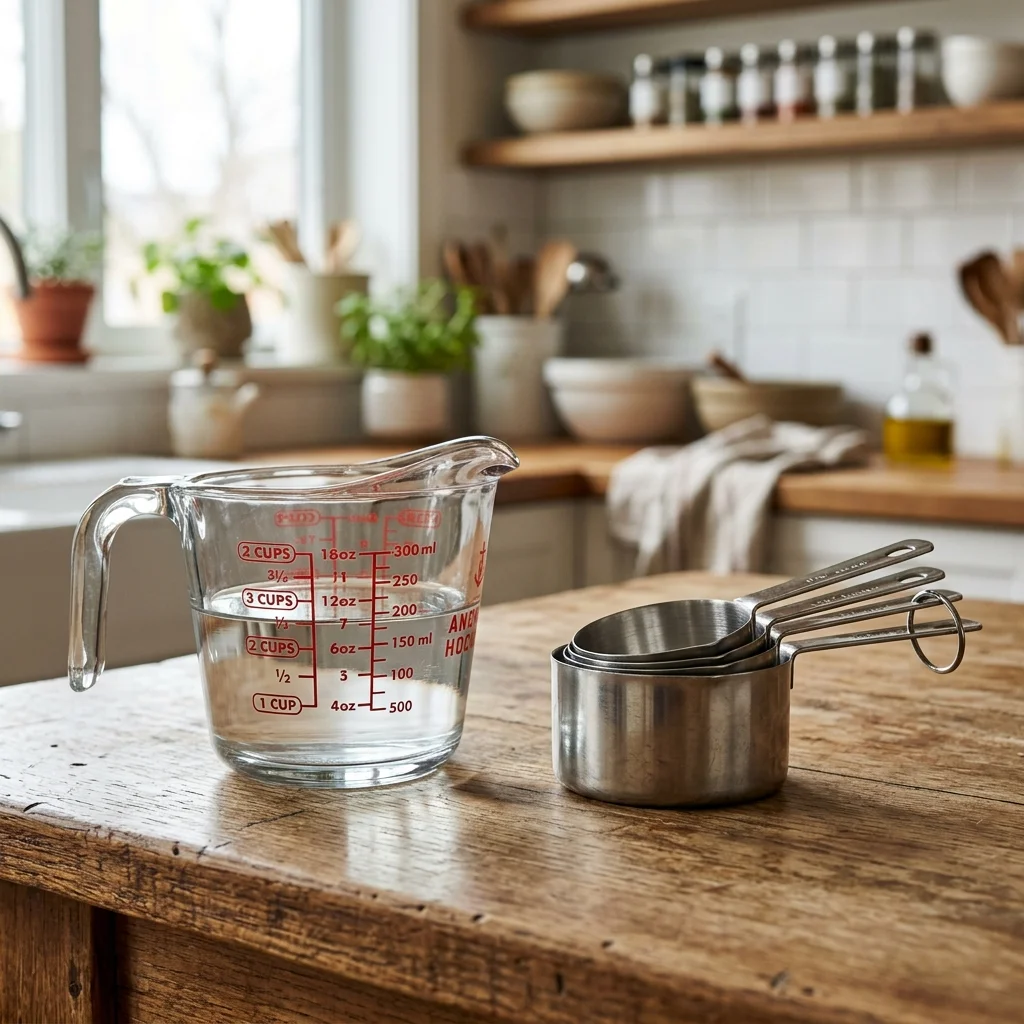
In American cooking and baking, a cup measurement is a standardized unit of volumetric capacity equal to 8 US fluid ounces, 16 US tablespoons, or approximately 236.59 milliliters (rounded to 240 mL in NIST metric kitchen guidelines for practical home cooking).
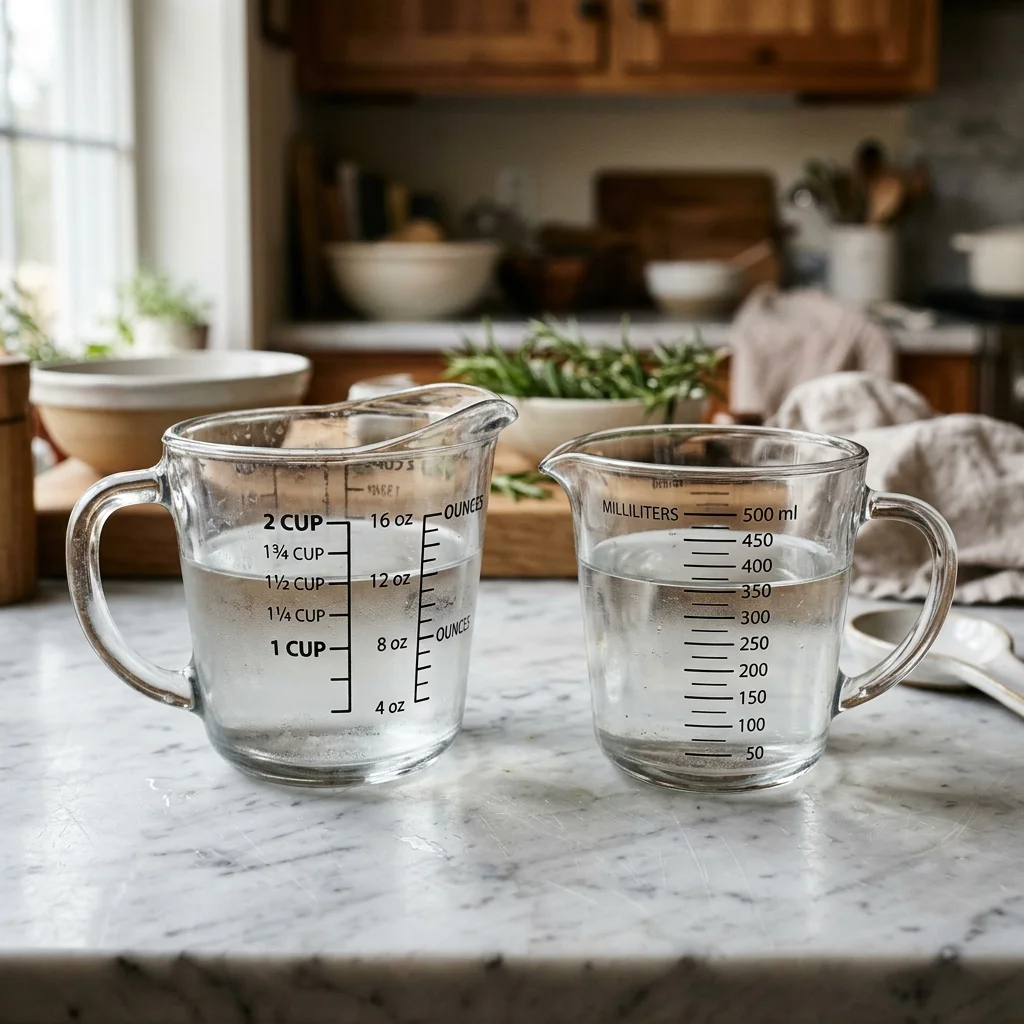
However, the exact physical volume of "one cup" varies around the globe. While American recipes rely on the US Customary Cup (236.59 mL) or FDA Legal Cup (240 mL), recipes from Australia, New Zealand, Canada, and Commonwealth nations use the Metric Cup (250 mL), and vintage British cookbooks specify the traditional Imperial Cup (284.13 mL). Understanding how this simple household drinking vessel evolved into a standardized culinary unit is essential for modern bakers converting international recipes.
Convert fluid volume into mass using our Ounces to Cups Calculator, convert liquid densities in our Baking Measurement Guide, and look up spoon amounts via Tablespoons to Grams.
What Is a Cup Measurement?
A cup measurement is a unit of volume, meaning it measures the amount of three-dimensional space an ingredient occupies rather than its physical weight (mass).
In cooking, volume measurements are applied to both liquid ingredients (water, milk, oil, molasses) and dry ingredients (flour, sugar, oats, cocoa powder). However, because different ingredients possess vastly different bulk densities, one cup of volume does not equal one constant weight. For example, one US cup of water weighs 236.5 grams, whereas one US cup of all-purpose flour weighs approximately 120 grams, and one US cup of granulated sugar weighs roughly 200 grams.
How Much Is One US Cup?
In modern American culinary practice, the standard US Customary Cup is mathematically defined through precise fluid volume equivalencies:
According to the National Institute of Standards and Technology (NIST) Metric Kitchen Reference, for home cooking and baking conversions, one US customary cup is practically approximated as 240 milliliters. Furthermore, United States Federal Food and Drug Administration (FDA) regulations mandate that commercial nutrition labels on food packaging define 1 cup as exactly 240 mL.
US Cup vs Metric Cup vs Imperial Cup
Global culinary traditions employ different cup volume standards. For an in-depth global analysis, consult our guide on US Cup vs Metric Cup vs Imperial Cup: Volume & Conversion Differences.
| Cup Standard | Exact Volume (mL) | Fluid Ounces | Primary Regions & Context |
|---|---|---|---|
| US Customary Cup | 236.59 mL | 8.0 fl oz (US) | United States home recipes & traditional cookbooks |
| US Legal Cup (FDA) | 240.00 mL | 8.12 fl oz (US) | US Nutrition Facts food packaging labels & dietary serving sizes |
| Metric Cup | 250.00 mL | 8.45 fl oz (US) | Australia, New Zealand, Canada, UK & Commonwealth metric recipes |
| Imperial Cup (Pre-1977) | 284.13 mL | 10.0 fl oz (Imp) | Vintage British, Australian & UK cookbooks prior to metrication |
| Japanese Cup (Gō / Modern) | 200.00 mL | 6.76 fl oz (US) | Japanese domestic cooking (180 mL for traditional rice gō cups) |
Where Did Cup Measurements Come From?
Unlike metric SI units created by French scientists in the 1790s, cup measurements were not invented by a single individual or government decree. Instead, measuring cups evolved organically from practical household drinking vessels used in early domestic kitchens.
In 18th-century European and American homes, cooks relied on everyday household items to portion food: teacups, coffee cups, wine glasses, punch cups, and soup spoons. Because domestic baking relied on regional grain quality and wood-fired brick ovens, absolute mathematical precision was secondary to visual intuition and dough handling experience.
Before Standardized Recipe Measurements
Early 19th-century American cookbooks used highly subjective, informal quantity descriptions that required considerable culinary instinct to interpret:
- "A good handful of cornmeal"
- "A teacupful of sweet butter"
- "A piece of butter the size of a walnut (or an egg)"
- "A pinch of salt and a gill of molasses"
- "Flour sufficient to make a stiff paste"
Because one family's teacup held 180 mL while a neighbor's coffee mug held 260 mL, sharing recipes between households frequently produced erratic baking failures.
Fannie Farmer and the 1896 Boston Cooking-School Cook Book
The pivotal movement toward standardized American recipe writing occurred at the end of the 19th century, led by Fannie Merritt Farmer, Principal of the Boston Cooking School.
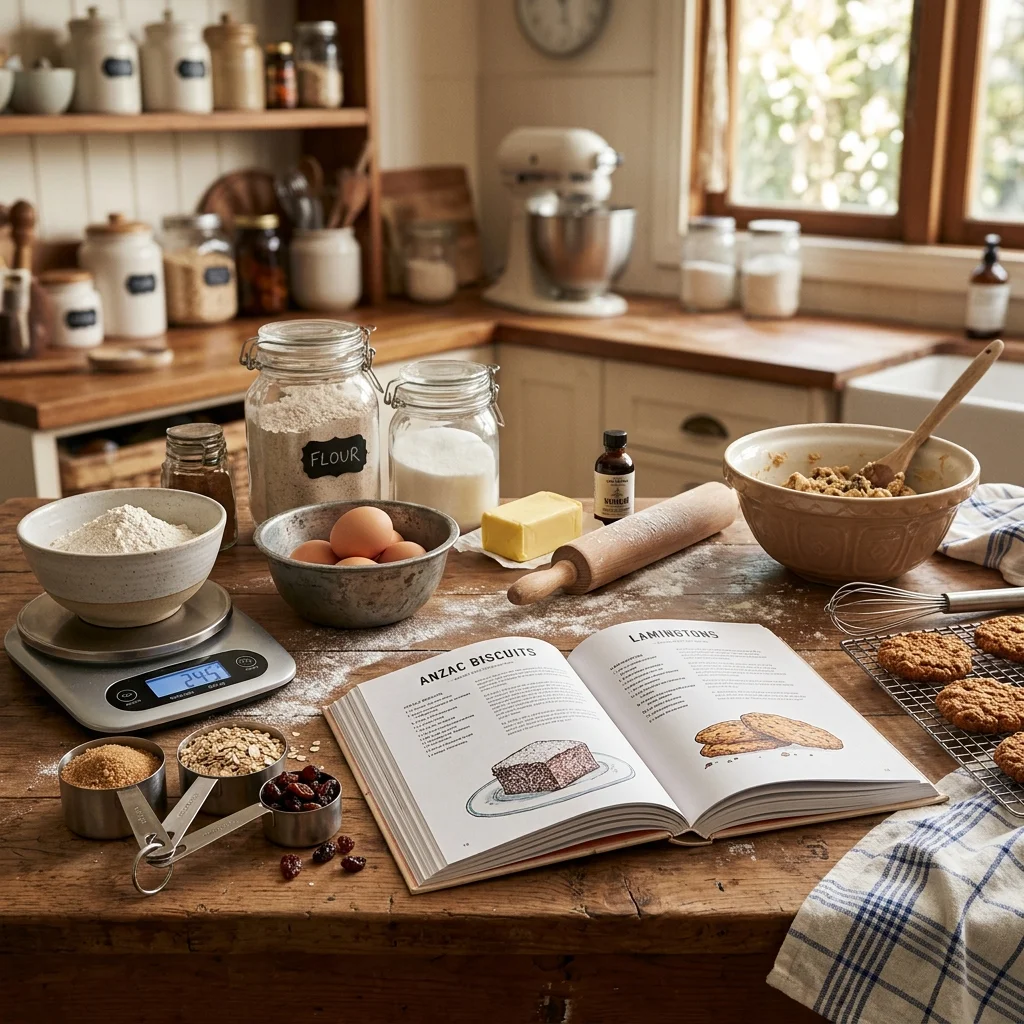
In her landmark 1896 publication, The Boston Cooking-School Cook Book, Fannie Farmer introduced a rigorous methodology for domestic kitchen measurements. In her dedicated "How to Measure" introductory section, she established the standard of level measurements:
"Correct measurements are absolutely necessary to insure good results. A cupful is measured level... A tablespoonful is measured level. A teaspoonful is measured level... To measure a cupful of dry ingredients, fill the cup with a spoon, and level off with the flat side of a knife knife-blade."
, Fannie Merritt Farmer, The Boston Cooking-School Cook Book (1896)
Historical Nuance: Fannie Farmer did not single-handedly "invent" the metal measuring cup (tin measuring cups with internal half and quarter marks were patented by inventors like George Hall and Mary Welch in the 1870s and 1880s). However, Farmer was the primary domestic science educator who popularized level-measurement practices and standardized cup/spoon terminology across American cookbook publishing.
How Fannie Farmer's Measurement Approach Changed American Recipes
Fannie Farmer's insistence on level cupfuls transformed American home cooking from a vague art into an accessible domestic science:
- Predictable Recipe Sharing: Home cooks could replicate newspaper and cookbook recipes reliably across different kitchens.
- Commercial Baking Powder Standardization: Industrial baking powder manufacturers (such as Royal Baking Powder) adopted level teaspoon and level cup metrics on tin product labels.
- Home Economics Education: Schools across North America adopted the Boston Cooking School curriculum, training generations of students in level cup measuring.
How Measuring Cups Evolved
Kitchen volume tools evolved continuously through four distinct technological eras:
- Late 19th Century (Tin & Copper Cups): Single tin or copper vessels featuring stamped internal ridges indicating 1/4, 1/3, 1/2, and 3/4 fill levels.
- 1915 (Pyrex Glass Liquid Cups): Corning Glass Works introduced heat-resistant Pyrex glass measuring cups featuring external red volume graduations, spouts, and handles.
- Mid-20th Century (Nested Dry Measuring Sets): Individual metal and plastic graduated cups (1 cup, 1/2 cup, 1/3 cup, 1/4 cup) designed for direct filling and straight-edge leveling.
- 21st Century (Digital Scales with Volume Modes): Modern digital kitchen scales featuring tare weight functions and liquid volume conversion modes (mL and fl oz).
Dry vs Liquid Measuring Cups
A common cause of baking failure in American home kitchens is using the wrong type of measuring cup for an ingredient. For complete design details, read Liquid Measuring Cups vs Dry Measuring Cups: Key Differences Explained.
Dry Measuring Cups
Designed with flat top edges so dry ingredients (flour, sugar, cocoa powder) can be heaped over the rim and swept clean with a straight knife edge. Measuring liquids in a dry cup leads to spills before reaching a full volume.
Liquid Measuring Cups
Crafted from transparent glass or plastic with extra headspace above the 1-cup graduation mark, a pour spout, and side fill lines. This allows cooks to view the liquid meniscus at eye level without spilling.
Why Cups Measure Volume Instead of Weight
Because cups measure volume (space) rather than mass (weight), ingredient density creates massive weight differences across identical 1-cup volumes:
- 1 Cup Water / Milk: 236.5g (8.34 oz)
- 1 Cup Granulated Sugar: 200g (7.05 oz)
- 1 Cup All-Purpose Flour (Spooned & Leveled): 120g (4.23 oz)
- 1 Cup All-Purpose Flour (Scooped Directly): 150g (5.29 oz)
- 1 Cup Packed Brown Sugar: 220g (7.76 oz)
To convert specific ingredients between volume and mass, refer to The Master Cups to Grams Baking Conversion Guide.
Why Modern Bakers Increasingly Use Grams
While cup measurements remain ubiquitous in American home kitchens, professional pastry chefs and modern bread bakers increasingly rely on digital gram scales. For complete benefits, read Why Baking by Weight Is Superior to Measuring by Volume.
- Uncompromising Precision: A digital scale measures exact mass, eliminating flour packing variations of up to 25%.
- Seamless Recipe Scaling: Doubling or halving recipes in grams requires simple multiplication, avoiding fraction conversions like 2/3 cup × 1.5.
- Fewer Dishes: Weighing ingredients sequentially into a single mixing bowl using the scale's tare button eliminates multiple dirty measuring cups.
Are Cups Still Useful?
Yes! Cup measurements remain highly practical for liquid ingredients (water, milk, broths) where density equals ~1g/mL, for quick everyday cooking (soups, casseroles, rice), and for traditional American family recipes. However, for precision pastry, artisan bread, and international conversions, digital scales provide superior consistency.
How to Measure Ingredients Correctly Today
If you choose to bake using cup measurements, follow these essential professional techniques:
- Use the "Spoon and Level" Method for Flour: Fluff your flour with a fork, spoon it gently into a dry measuring cup without packing, and level the top with a straight knife. Learn more in How to Measure Flour Correctly.
- Read Liquids at Eye Level: Place liquid glass measuring cups on a flat countertop and align your eyes with the bottom of the liquid meniscus line.
- Pack Brown Sugar Firmly: Press brown sugar into a dry measuring cup until it retains the shape of the cup when inverted.
- Use Digital Scales for Accuracy: For precise digital tare weighing, consult our Step-by-Step Guide: How to Use a Digital Kitchen Scale.
- Avoid Common Conversion Errors: Review our guide on Top 7 Gram-to-Cup Conversion Mistakes to Avoid in Baking and How to Bake European Recipes in an American Kitchen.
Cup Measurement Cheat Sheet
Reference this standard volume conversion cheat sheet for US Customary cooking measurements:
| US Customary Cup Volume | US Fluid Ounces | Tablespoons | Teaspoons | Exact Metric (mL) | NIST Practical (mL) |
|---|---|---|---|---|---|
| 1 Cup | 8.0 fl oz | 16 Tbsp | 48 Tsp | 236.59 mL | 240 mL |
| 3/4 Cup | 6.0 fl oz | 12 Tbsp | 36 Tsp | 177.44 mL | 180 mL |
| 2/3 Cup | 5.33 fl oz | 10.67 Tbsp | 32 Tsp | 157.73 mL | 160 mL |
| 1/2 Cup | 4.0 fl oz | 8 Tbsp | 24 Tsp | 118.29 mL | 120 mL |
| 1/3 Cup | 2.67 fl oz | 5.33 Tbsp | 16 Tsp | 78.86 mL | 80 mL |
| 1/4 Cup | 2.0 fl oz | 4 Tbsp | 12 Tsp | 59.15 mL | 60 mL |
| 1 Tablespoon | 0.5 fl oz | 1 Tbsp | 3 Tsp | 14.79 mL | 15 mL |
| 1 Teaspoon | 0.17 fl oz | 0.33 Tbsp | 1 Tsp | 4.93 mL | 5 mL |
Sources & Measurement Methodology
This historical and technical reference guide synthesizes primary-source cookbooks, federal standards, and culinary science research:
- Primary Historical Sources: Farmer, Fannie Merritt. The Boston Cooking-School Cook Book. Boston: Little, Brown, and Company, 1896 (Introductory Section: "How to Measure").
- Federal & Scientific Metrology Standards: National Institute of Standards and Technology (NIST), Special Publication 1038: Metric Kitchen Guide & Legal Metrology Manual; U.S. Food and Drug Administration (FDA) 21 CFR § 101.9 (Nutrition Labeling Serving Sizes).
- Agricultural & Culinary Data: United States Department of Agriculture (USDA) FoodData Central ingredient bulk density benchmarks for dry and liquid commodities.
Frequently Asked Questions
1. What is a cup measurement?
A cup measurement is a unit of volume equal to 8 US fluid ounces, 16 tablespoons, or approximately 236.59 mL (240 mL NIST practical standard) in American cooking.
2. How many milliliters are in a US cup?
A standard US Customary Cup contains 236.59 mL. For practical home kitchen conversions and FDA nutrition labeling, it is rounded to 240 mL.
3. Who invented the measuring cup?
Measuring cups were not invented by a single person. They evolved from 18th-century household teacups and tinware patents (such as George Hall and Mary Welch in the 1870s-1880s) before being standardized by Fannie Farmer in 1896.
4. Who was Fannie Farmer?
Fannie Merritt Farmer was the Principal of the Boston Cooking School and author of the 1896 Boston Cooking-School Cook Book, famous for introducing level-measurement standards to American cooking.
5. When did standardized cooking measurements become popular?
Standardized measurements gained widespread popularity following the 1896 publication of Fannie Farmer's cookbook and the adoption of level cup metrics by home economics schools and baking powder companies.
6. Is a US cup the same as a metric cup?
No. A US Customary Cup is 236.59 mL (240 mL legal), whereas a Metric Cup used in Commonwealth nations is exactly 250 mL, making metric cups about 5.6% larger.
7. Is a cup a measurement of weight or volume?
A cup is strictly a measurement of volume (space occupied), not weight (mass). One cup of flour weighs 120g, whereas one cup of water weighs 236.5g.
8. Why do American recipes use cups instead of grams?
American recipe culture inherited domestic volume practices popularized in 19th-century cookbooks before affordable digital kitchen scales became widespread in households.
9. Are dry and liquid measuring cups different?
Yes. Dry cups have flat rims for knife leveling, while liquid cups feature transparent walls, pour spouts, and headspace to read the meniscus at eye level.
10. Why do professional bakers use grams instead of cups?
Grams measure exact mass, eliminating flour packing errors (up to 25% volume variance) and enabling precise recipe scaling without fraction math.
11. How should I measure flour with a cup?
Use the "Spoon and Level" method: fluff flour with a fork, spoon it into a dry measuring cup without packing, and level off the top with a straight knife.
12. Is 1 cup always 240 mL?
In US nutrition labeling, 1 legal cup is 240 mL exact. In US recipes, 1 customary cup is 236.59 mL (often rounded to 240 mL in NIST guides). In metric countries, 1 cup is 250 mL.
If you are working with heirloom cards passed down through generations, see our step-by-step guide on how to convert vintage family recipes into modern gram weights.
Interactive Baking Weight Converter
Convert recipe volumes into exact gram weights instantly.
Interactive Baking Weight Converter
Convert recipe volumes into exact gram weights instantly.
Custom package weights override standard database densities for this session without altering official database records.
Need Full Density Reference Tables?
Explore complete g/cup density tables, USDA ratios, and measurement tools.
Related Baking Guides
US Cup vs Metric Cup vs Imperial Cup: The International Baking Guide
Learn the difference between US, metric, and Imperial cups, their milliliter sizes, and how to convert international baking recipes accurately.
Baking ScienceWhy Baking by Weight Is Superior to Measuring by Volume
Learn why weighing baking ingredients in grams is more accurate than cups, how density affects volume, and how a kitchen scale improves consistency.
Baking ScienceHow to Bake European Recipes in an American Kitchen
Learn how to convert European baking recipes for an American kitchen, including grams, milliliters, Celsius, gas marks, cups, and ingredient weights.