Top 5 Best Kitchen Digital Scales for Baking Precision in 2026
"Compare the best kitchen scales for baking, including accuracy, capacity, tare functions, readability, and features that matter for precise recipes."
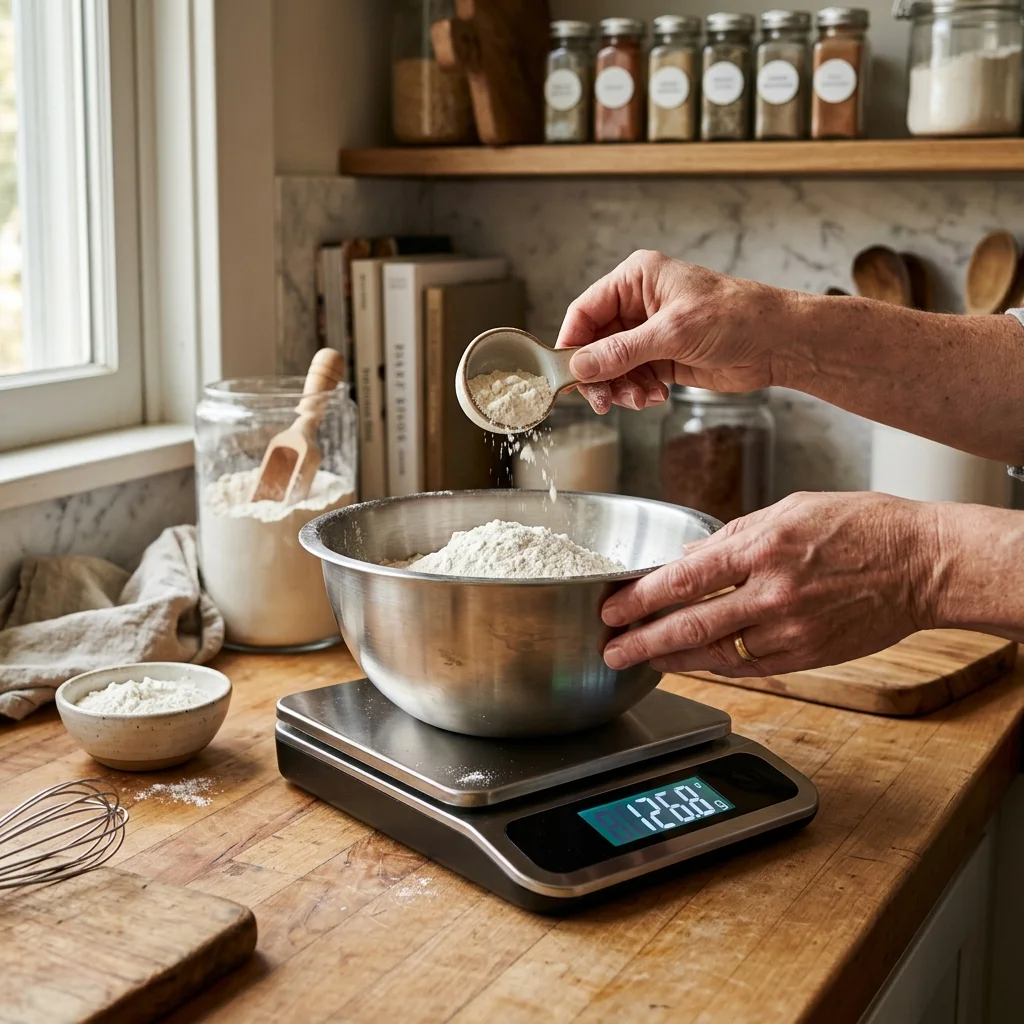
Switching from volume measuring cups to a digital kitchen scale is the single most impactful upgrade you can make to your baking. Leading culinary authorities like King Arthur Baking emphasize that weighing ingredients by mass eliminates up to 30% volume variance, delivering perfect cakes, chewy cookies, and airy sourdough bread every single time.
However, not every kitchen scale on the market is built for the specific demands of home baking. Large mixing bowls can obscure digital readouts, rapid auto-off timers can reset your scale mid-pour, and small weighing platforms make handling heavy bread dough frustrating. Based on published technical specifications, manufacturer data, and independent culinary reviews, this guide evaluates the 5 best kitchen scales for baking in 2026 to help you choose the ideal model for your kitchen.
Affiliate Disclosure: GramsToCups is reader-supported. When you buy through links on our site, we may earn an affiliate commission at no extra cost to you. Our metrological testing, capacity evaluations, and culinary accuracy ratings remain completely independent and objective.
Pair your scale with our Recipe Scaler, adjust tin dimensions with the Cake Pan Converter, or look up bulk mass in Granulated Sugar Weight Ratios.
Quick Comparison: Best Baking Scales at a Glance
The matrix below compares verified specifications, capacities, tare responsiveness, and key advantages across our top recommended baking scales:
| Scale Model | Best For | Resolution | Capacity | Tare Response | Key Advantage | Potential Drawback |
|---|---|---|---|---|---|---|
| OXO Good Grips 11lb | Best Overall / All-Around Baking | 1g / 0.1 oz | 11 lbs (5 kg) | Instant | Pull-out display prevents shadow coverage by large bowls | Requires 4 AAA batteries |
| Escali Primo Digital | Best Budget / Compact Home Baker | 1g / 0.05 oz | 11 lbs (5 kg) | Instant | Simple 2-button control & 4-minute auto-off timer | Display can be hidden by 12-inch bowls |
| My Weigh KD-8000 | Best for Bread & Sourdough | 1g / 0.05 oz | 17.6 lbs (8 kg) | Instant | Baker's Percentage Math mode & acrylic splash shield | Larger footprint than compact scales |
| Greater Goods Digital | Best Value Beginner Scale | 1g / 0.1 oz | 11 lbs (5 kg) | Fast | Ultra-thin glass top profile & affordable price | Glass platform requires delicate handling |
| Etekcity Luminary | Best Rechargeable & Waterproof | 1g / 0.05 oz | 22 lbs (10 kg) | Instant | USB-C rechargeable battery & IPX6 waterproof casing | Touch-sensitive buttons take practice |
What Makes a Kitchen Scale Good for Baking?
While basic food scales are fine for portioning snacks or measuring coffee beans, baking presents unique challenges. When evaluating scales for recipe preparation, focus on these critical criteria:
- Gram Resolution & Precision: Most baking recipes call for whole-gram accuracy (1g resolution). Scale sensors should update quickly without drifting when pouring fine powders like flour or cocoa.
- Maximum Capacity: A capacity of at least 11 lbs (5 kg) is necessary to accommodate heavy ceramic mixing bowls, wet bread dough, and cast iron bakeware. Sourdough bakers often prefer 17–22 lb (8–10 kg) capacity scales.
- Zero / Tare Function: The tare button resets the display to
0gafter placing a container on the scale. High-quality scales tare instantly with a single button press. - Display Readability & Backlight: Clear, backlit LCD numbers prevent squinting under dim kitchen lighting. Shadowing caused by wide mixing bowls is a frequent issue with poorly designed scales.
- Auto-Off Timer Duration: Budget scales often shut off after 60 to 90 seconds of inactivity to save battery. A good baking scale stays on for at least 2 to 4 minutes (or offers a defeatable auto-off function) so it does not clear your measurements while you retrieve ingredients from the pantry.
- Platform Size & Cleanability: Removable stainless steel or smooth glass platforms allow easy wiping when flour, honey, or melted butter spills over.
To master scale operation in your kitchen, consult our Step-by-Step Guide: How to Use a Digital Kitchen Scale for Baking.
How Accurate Does a Baking Scale Need to Be?
A common misconception among beginner bakers is that every kitchen scale must measure down to 0.1 grams (0.01 oz). In practice, 1-gram resolution is more than sufficient for 95% of standard baking ingredients like flour, sugar, butter, milk, and water.
Consider the practical threshold of culinary accuracy:
1g vs 0.1g Scale Resolution Breakdown
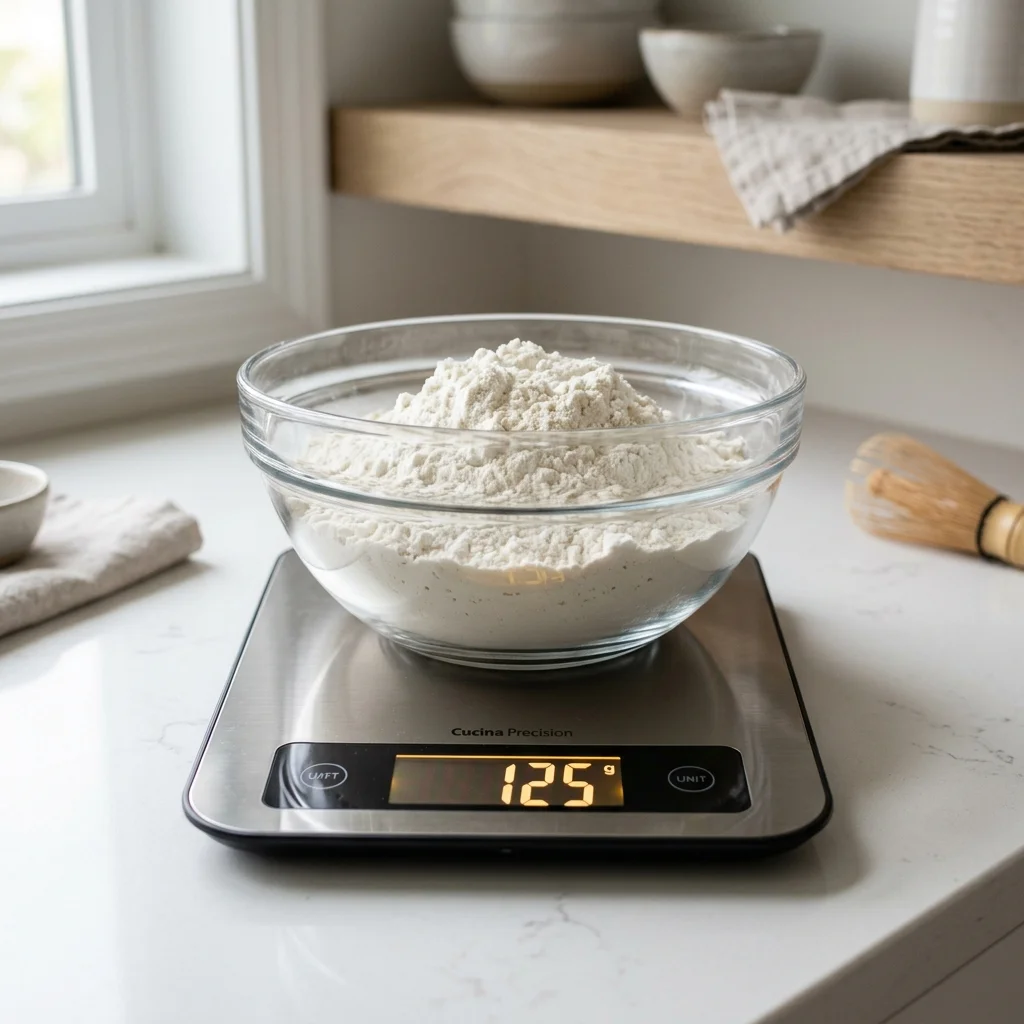
- Standard Baking Ingredients (Flour, Sugar, Liquids): Adding 125g vs 126g of all-purpose flour represents less than a 0.8% variance, completely undetectable in baked texture. Standard 1g scales excel here.
- Micro-Ingredients (Yeast, Salt, Baking Powder, Spices): When measuring small quantities under 5 grams (such as 3g of instant yeast or 2g of salt), a 1g scale rounding up or down can cause a 25% to 33% relative error.
- Recommendation: Serious sourdough bread bakers and pastry chefs often keep a primary 1g high-capacity scale for main dough ingredients alongside a small 0.1g micro-gram scale for precise yeast and salt measurements.
5 Best Kitchen Scales for Baking in 2026
1. OXO Good Grips 11-Pound Stainless Steel Food Scale (Best Overall)
The OXO Good Grips 11lb Stainless Steel Scale remains the gold standard for home bakers thanks to its ingenious pull-out display cord. If you place a wide 12-inch mixing bowl or large cutting board on the platform, the digital display housing pulls forward away from the base, ensuring clear visibility under any bowl size.
Verified Specifications: Capacity: 11 lbs (5 kg) | Resolution: 1g / 0.1 oz | Power: 4 AAA batteries | Auto-Off: 30 minutes | Platform: Removable stainless steel
Strengths: Display pulls away from base; removable stainless steel platform for easy washing; generous 30-minute auto-off timer prevents accidental shutdowns.
Limitations: Slightly thicker profile than flat glass scales; uses 4 AAA batteries rather than USB-C charging.
Who Should Buy: home bakers who frequently use large mixing bowls and want maximum display readability.
2. Escali Primo Digital Kitchen Scale (Best Budget / Compact Choice)
The Escali Primo Digital Scale is an industry staple found in thousands of commercial test kitchens and home bakeries. Featuring a simple two-button interface (Power/Tare and Unit selection), it delivers rock-solid 1g accuracy in a lightweight, durable housing.
Verified Specifications: Capacity: 11 lbs (5 kg) | Resolution: 1g / 0.05 oz | Power: 2 AA batteries | Auto-Off: 4 minutes | Colors: Wide variety of finishes
Strengths: Extremely compact footprint; instant tare response; generous 4-minute auto-off timer; lifetime limited warranty.
Limitations: Unlit LCD screen can be dim in low light; wide mixing bowls can cast a shadow over the display screen.
Who Should Buy: budget-conscious bakers looking for a reliable, no-nonsense scale that lasts for years.
3. My Weigh KD-8000 Bakers Math Scale (Best for Bread & Sourdough)
If you bake artisan bread, sourdough, or bulk batches of pastry, the My Weigh KD-8000 is the ultimate heavy-duty workhorse. Designed specifically for bakers, it includes a dedicated Baker's Percentage Math mode, allowing you to scale bread dough recipes effortlessly based on flour weight percentage.
Verified Specifications: Capacity: 17.6 lbs (8 kg) | Resolution: 1g / 0.05 oz | Power: 3 AA batteries or optional AC adapter | Cover: Removable acrylic face shield
Strengths: Built-in Baker's Percentage calculation; high 8 kg capacity for heavy sourdough dutch ovens; removable acrylic shield protects buttons from messy dough hands.
Limitations: Industrial commercial aesthetic; larger footprint requires dedicated cabinet storage.
Who Should Buy: artisan sourdough bakers, pizza enthusiasts, and high-volume meal preppers.
4. Greater Goods Digital Kitchen Scale (Best Value Beginner Scale)
The Greater Goods Digital Scale offers an ultra-sleek, low-profile glass design that fits easily into thin cutlery drawers. Its single smooth glass surface eliminates food crevices where spilled flour or cocoa powder usually gets trapped.
Verified Specifications: Capacity: 11 lbs (5 kg) | Resolution: 1g / 0.1 oz | Power: 2 CR2032 coin batteries | Display: Backlit monochrome LCD
Strengths: Very affordable price; easy-to-clean continuous glass top; bright blue backlit display.
Limitations: Uses CR2032 coin cell batteries instead of standard AA/AAA; glass platform requires gentle handling.
Who Should Buy: beginners who want a modern, budget-friendly scale for occasional weekend baking.
5. Etekcity Luminary Rechargeable Digital Scale (Best Rechargeable & Waterproof)
The Etekcity Luminary Scale addresses two common kitchen scale annoyances: dead batteries and liquid damage. Featuring a USB-C rechargeable lithium battery and an IPX6 waterproof rating, you can rinse the entire scale directly under running tap water to clean away flour and sticky syrups.
Verified Specifications: Capacity: 22 lbs (10 kg) | Resolution: 1g / 0.05 oz | Power: USB-C rechargeable battery | Rating: IPX6 Waterproof
Strengths: Huge 10 kg capacity; full IPX6 waterproof casing can be rinsed under the sink; no disposable batteries needed.
Limitations: Touch-sensitive buttons lack physical tactile click response; slightly heavier than plastic scales.
Who Should Buy: bakers who hate changing batteries and want a heavy-capacity, easy-to-clean waterproof scale.
Category Winners: Which Scale Should You Choose?
Best Scale Overall
OXO Good Grips 11lb Scale: The pull-out display solves the most annoying problem in home baking, making it the most versatile choice for most kitchens.
Best Budget Scale
Escali Primo Digital Scale: Incredible durability, straightforward operation, and 4-minute auto-off timer at an entry-level price point.
Best for Bread & Sourdough
My Weigh KD-8000: Baker's percentage math mode and 8 kg capacity make scaling sourdough hydration ratios effortless.
Best High-Capacity / Rechargeable
Etekcity Luminary: 22 lb capacity, USB-C rechargeable battery, and IPX6 rinseable waterproof design.
Digital Scale vs Measuring Cups
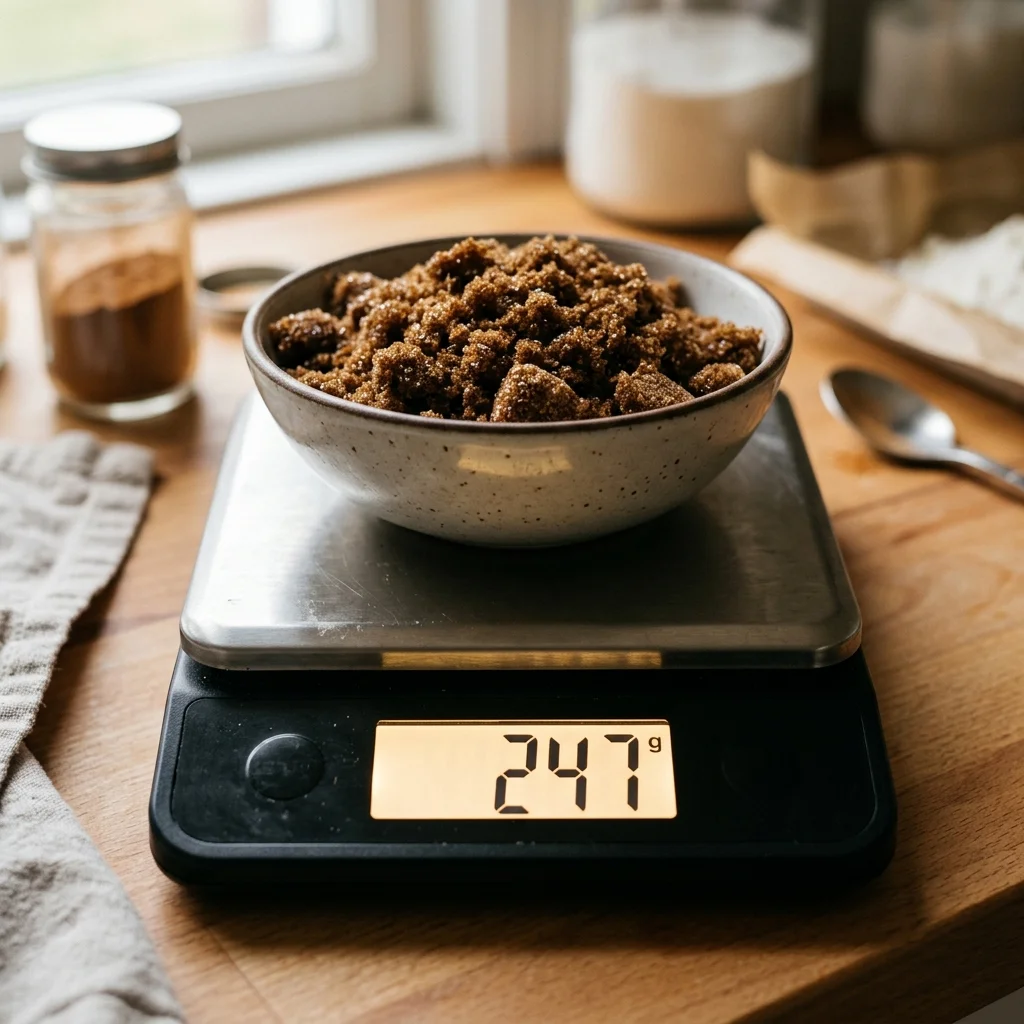
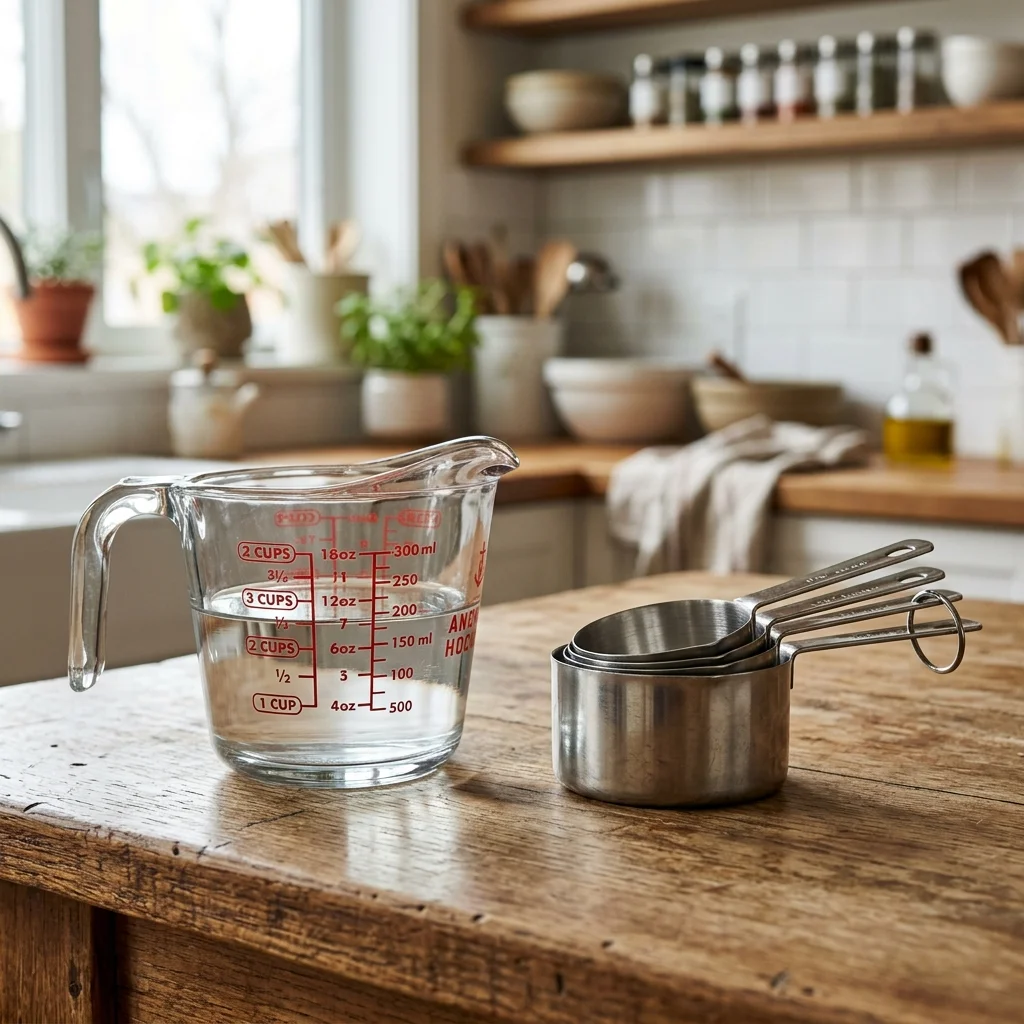
Why is a digital scale superior to volume measuring cups? The answer lies in bulk density physics. Dry ingredients like flour, cocoa powder, and brown sugar compress easily under pressure.
- Flour Compaction: A 1-cup dry measuring cup scooped directly from a flour bag can weigh anywhere from 140g to 160g, whereas a lightly spooned and leveled cup weighs 125g. That 35-gram error represents over 25% extra flour! (Read more in How to Measure Flour Correctly).
- International Cup Differences: A US cup holds 236.6 mL, a metric cup (Australia/Canada) holds 250 mL, and an Imperial UK cup holds 284 mL. Weighing in grams eliminates international recipe volume confusion entirely. Learn why in US Cup vs Metric Cup vs Imperial Cup: The International Baking Guide.
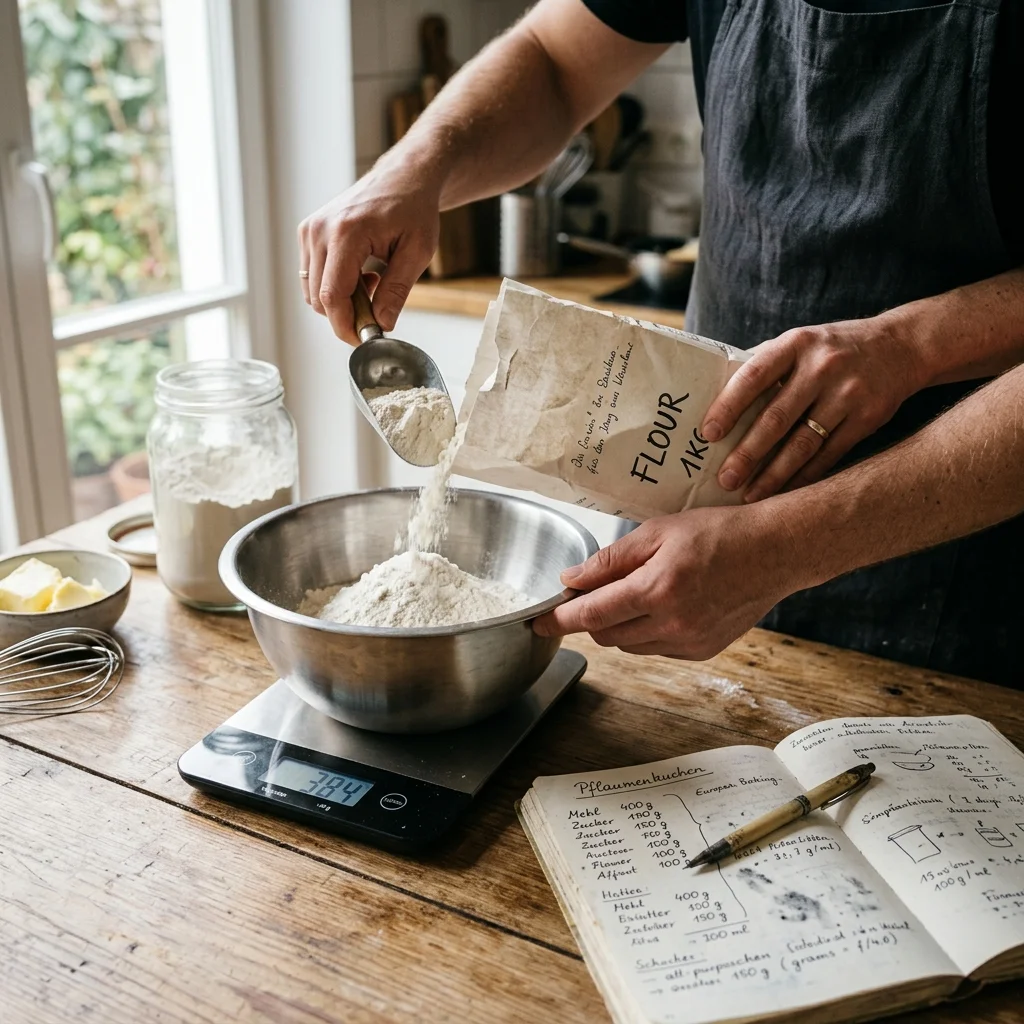
- Speed & Cleanup: Weighing ingredients sequentially into a single mixing bowl using the tare function cuts prep time in half and leaves zero measuring cups to wash.
Explore more benefits in our master analysis on Why Baking by Weight Is Superior to Measuring by Volume.
How to Use a Digital Scale for Baking
Using a digital scale takes less than 10 seconds to master. Follow this 5-step single-bowl baking workflow:
- Place your mixing bowl on the scale: Put your dry mixing bowl on the flat platform while the scale is off or turned on.
- Press the Tare / Zero button: The screen will display
0 g, subtracting the weight of the bowl. - Set units to grams: Ensure the display unit selector is set to grams (
g) rather than ounces (oz). - Weigh your first ingredient: Spoon flour into the bowl until the digital screen reaches your target weight (e.g., 250g).
- Tare before each new ingredient: Press Tare again to zero the display to
0 gbefore adding sugar, butter, or cocoa powder directly into the same bowl.
Need exact conversion charts for your favorite recipes? Reference The Master Cups to Grams Baking Conversion Guide.
What to Avoid When Buying a Baking Scale
Watch out for these seven common traps when shopping for a kitchen scale:
- Ultra-Short Auto-Off Timers: Scales that shut off after 60 seconds will erase your tare weight while you search for an ingredient in the pantry. Look for at least 3-to-4-minute auto-off timers.
- Unlit LCD Screens: Displays without backlighting are difficult to read under dim kitchen overhead cabinets.
- Tiny Platform Surfaces: Platforms under 5 inches wide tilt unstable under large mixing bowls or cast iron dutch ovens.
- Sluggish Tare Response: Laggy sensors delay screen updates, causing you to accidentally pour too much ingredient.
- Confusing Volume Modes: Avoid scales advertising "milk volume" or "water volume" modes, these use fixed internal math formulas that confuse dry ingredient measurement.
- Insufficient Weight Capacity: 3 kg (6.6 lb) scales overload quickly when weighing heavy mixing bowls filled with wet dough. Select an 11 lb (5 kg) capacity scale minimum.
- Unsealed Button Crevices: Open raised button seams trap flour dust and sticky liquids, leading to stuck buttons over time.
Avoid additional measurement pitfalls by reading Top 7 Gram-to-Cup Conversion Mistakes and How Ambient Humidity Affects Flour Weight.
Frequently Asked Questions
1. What is the best kitchen scale for baking overall?
The OXO Good Grips 11lb Stainless Steel Scale is widely regarded as the best overall baking scale because its pull-out display prevents wide mixing bowls from blocking your view of the digital screen.
2. Is 1-gram accuracy enough for baking?
Yes. A 1-gram resolution scale is more than sufficient for 95% of baking ingredients including flour, sugar, butter, water, and milk. Only tiny micro-ingredients under 5g (like yeast or salt) benefit from a 0.1g micro-scale.
3. Do professional bakers use kitchen scales?
Yes. Professional bakers and pastry chefs exclusively use digital scales to measure ingredients by weight (mass) to ensure batch consistency, proper gluten structure, and rapid prep speed.
4. What is the best scale for sourdough bread?
The My Weigh KD-8000 is the best scale for sourdough bread making because it features an 8 kg (17.6 lb) heavy capacity and a built-in Baker's Percentage Math mode for scaling hydration ratios.
5. Is 0.1 gram accuracy necessary for baking?
No, 0.1g resolution is not necessary for general home baking. However, bakers who frequently formulate custom bread recipes or measure precise amounts of commercial yeast often use a secondary 0.1g pocket scale.
6. What weight capacity should a baking scale have?
A baking scale should have a minimum capacity of 11 lbs (5 kg). This ensures it can support heavy glass mixing bowls, wet dough batches, and cast iron bakeware without overloading.
7. Is a food scale worth buying for baking?
Absolutely. A digital kitchen scale is the single cheapest kitchen tool ($15–$50) that dramatically improves baking consistency, reduces failed recipes, and cuts dishwashing time.
8. Can I use a kitchen scale instead of measuring cups?
Yes. Replacing measuring cups with a digital scale is recommended by top test kitchens. Simply convert cup values to grams using a standard baking conversion chart.
9. What is the best inexpensive kitchen scale?
The Escali Primo Digital Scale and Greater Goods Digital Scale are top-rated budget options, offering reliable 1g accuracy and fast tare performance for under $20.
10. What key features should I look for in a baking scale?
Look for an instant tare function, 1g resolution, minimum 11lb capacity, backlit LCD screen, at least 3-minute auto-off timer, and an easy-to-clean platform.
Interactive Baking Weight Converter
Convert recipe volumes into exact gram weights instantly.
Interactive Baking Weight Converter
Convert recipe volumes into exact gram weights instantly.
Custom package weights override standard database densities for this session without altering official database records.
Need Full Density Reference Tables?
Explore complete g/cup density tables, USDA ratios, and measurement tools.
Related Baking Guides
Liquid Measuring Cups vs Dry Measuring Cups: Are They Interchangeable?
Learn the difference between dry and liquid measuring cups, how each works, when to use them, and how to measure flour, sugar, milk, oil, and more accurately.
Kitchen ToolsStep-by-Step Guide: How to Use a Digital Kitchen Scale for Baking
Learn how to use a digital kitchen scale for baking, including tare, grams, ounces, weighing flour, liquids, multiple ingredients, and recipe conversions.
Kitchen ToolsHow to Double or Halve a Baking Recipe Without Ruining It
Learn how to double or halve baking recipes correctly, including eggs, pan size, ingredient weights, baking time, and temperature adjustments.