Baking Pan Conversion Chart: Volume in Cups and Gram Capacities
"Use this baking pan conversion chart to compare round, square, rectangular, loaf, Bundt, and muffin pans by size, volume, and recipe capacity."
Substituting a baking pan sounds simple until your cake overflows in the oven or comes out flat, dry, and overbaked in the center. When adapting a recipe for a different baking pan, many home bakers assume that pan width is all that matters. However, professional pastry chefs and baking researchers understand that successful cake pan conversion relies on three distinct geometric variables: pan volume, surface area, and batter depth.
Swapping an 8-inch round pan for a 9-inch round pan might seem minor, but it alters the surface area by over 26%, dramatically changing heat distribution and batter height. Similarly, replacing a 9x13 pan with square or round alternatives requires precise capacity calculations to maintain the ideal crumb texture and baking time.
In this guide, we break down the mathematics of baking pan size conversion, provide a verified baking pan conversion chart for volume in cups and gram batter capacities (aligned with King Arthur Baking standards), and explain how pan material, fill levels, and surface geometry affect your final bake.
Calculate exact pan substitution ratios with our interactive Cake Pan Converter, scale batter volumes using the Recipe Scaler, look up base flour mass in All-Purpose Flour, and portion cupcakes with the Cookie Scoop Calculator.
Quick Baking Pan Conversion Chart
Before diving into geometry, use this quick reference table to compare standard baking pans by dimensions, liquid cup capacity, approximate cake batter capacity in grams, common culinary uses, and recommended 1:1 or scaled alternatives. Note that liquid capacity reflects filling to the brim, while batter capacity represents practical usable filling volume (roughly 50% to 66% full).
| Pan Type & Dimensions | Dimensions (Inches) | Theoretical Liquid Volume | Usable Batter Volume | Batter Capacity (Grams) | Common Culinary Use | Recommended Alternatives |
|---|---|---|---|---|---|---|
| 8-Inch Round Pan | 8" diameter × 2" deep | ~6 Cups (1.4 L) | 3–4 Cups | 630g – 840g | Layer cakes, sponge cakes | 9-inch round (scale 1.27x), 8x8 square (scale 1.27x) |
| 9-Inch Round Pan | 9" diameter × 2" deep | ~8 Cups (1.9 L) | 4–5 Cups | 840g – 1,050g | Layer cakes, quiches, pie | 8x8 square pan (1:1 direct swap), 9x9 square |
| 8x8 Square Pan | 8" × 8" × 2" deep | ~8 Cups (1.9 L) | 4–5 Cups | 840g – 1,050g | Brownies, blondies, bars | 9-inch round pan (1:1 direct swap) |
| 9x9 Square Pan | 9" × 9" × 2" deep | ~10 Cups (2.4 L) | 5–6 Cups | 1,050g – 1,260g | Thick brownies, sheet cakes | 10-inch round pan, two 8-inch round pans |
| 9x13 Rectangular Pan | 13" × 9" × 2" deep | ~14–15 Cups (3.5 L) | 7–9 Cups | 1,470g – 1,890g | Sheet cakes, casseroles, bars | Two 9-inch rounds, two 8x8 square pans |
| 8.5x4.5 Loaf Pan | 8.5" × 4.5" × 2.75" deep | ~6 Cups (1.4 L) | 3–4 Cups | 630g – 840g | Quick breads, pound cake | 9x5 loaf pan (fill shallower), 12 muffin cups |
| 9x5 Loaf Pan | 9" × 5" × 2.75" deep | ~8 Cups (1.9 L) | 4–5 Cups | 840g – 1,050g | Banana bread, yeast loaves | 8.5x4.5 loaf (reduce batter by 18%), 8x8 square |
| 10-Inch Bundt Pan | 10" diameter × 3.75" deep | ~10–12 Cups (2.8 L) | 6–8 Cups | 1,260g – 1,680g | Heavy butter cakes, Bundt cakes | 9x13 rectangular pan, two 9-inch round pans |
| Standard Muffin Pan | 12 cups (2.75" × 1.25") | ~6 Cups total (1/2 cup/cup) | 3–4 Cups total | 50g – 70g per cup | Cupcakes, muffins, popovers | 8.5x4.5 loaf pan, 8-inch round pan |
How to Calculate Baking Pan Volume
Understanding how much batter fits in a pan starts with mathematical geometry. Never calculate pan capacity based solely on top width, always measure interior edge to interior edge and include the vertical depth.
1. Rectangular and Square Pan Volume Formula
To find the theoretical maximum liquid volume of a rectangular pan or square pan, multiply length by width by interior depth:
- Example for a 9x13 Pan (2 inches deep): 13 in × 9 in × 2 in = 234 cubic inches
- Since 1 US cup equals 14.4375 cubic inches, divide 234 by 14.4375: 234 ÷ 14.4375 ≈ 16.2 liquid cups (standard 9x13 pans are rated for 14 to 15 liquid cups to the brim due to rounded corners).
2. Round Pan Volume Formula
To calculate the total volume of a round pan, calculate the circular base surface area and multiply by depth:
Volume (round) = Surface Area × Depth
- Example for an 8-inch Round Pan (2 inches deep): Radius r = 4 inches
- Surface Area = 3.14159 × 4² = 50.27 square inches
- Volume = 50.27 sq in × 2 in = 100.53 cubic inches
- 100.53 ÷ 14.4375 ≈ 6.96 liquid cups
3. Theoretical Volume vs. Usable Batter Capacity
Crucially, a pan's theoretical volume (filling to the brim) is not the amount of cake batter you should pour inside. Cake batters contain chemical leavening agents (baking powder or baking soda) or whipped egg structures that expand by 30% to 50% during baking. Therefore, usable batter capacity is typically 50% to 66% of total theoretical volume.
For instance, while a 9-inch round pan has a theoretical volume of ~8.8 liquid cups, its practical batter capacity is 4 to 4.5 cups of batter (approx. 840g to 950g of standard cake batter).
8x8 Square vs 9-Inch Round
One of the most frequent baking questions is whether an 8x8 pan is equivalent to a 9-inch round pan. Mathematically, they are nearly identical in surface area and total capacity!
Geometric Comparison:
- 8x8 Square Pan (2" deep): Surface Area = 8" × 8" = 64 square inches | Volume = 128 cu in (~8.86 liquid cups)
- 9-Inch Round Pan (2" deep): Surface Area = π × (4.5)² = 63.62 square inches | Volume = 127.24 cu in (~8.81 liquid cups)
Because the surface area difference is under 0.6%, an 8x8 square pan and a 9-inch round pan are interchangeable 1:1 direct substitutes for brownies, cakes, and quick bars. The batter depth will remain identical, resulting in virtually the exact same baking time and texture.
8x8 vs 9x9 vs 9x13
When comparing square and rectangular baking pans, small dimensional increases yield significant surface area jumps:
- 8x8 Square Pan: Surface area = 64 sq in | Volume = 128 cu in (~8 cups liquid capacity)
- 9x9 Square Pan: Surface area = 81 sq in | Volume = 162 cu in (~10 cups liquid capacity)
- 9x13 Rectangular Pan: Surface area = 117 sq in | Volume = 234 cu in (~14–15 cups liquid capacity)
Notice that moving from an 8x8 to a 9x9 pan increases surface area by 26.6%. If you pour an 8x8 brownie recipe into a 9x9 pan without adjusting ingredient quantities, your brownies will be significantly thinner and can overbake rapidly.
Furthermore, a 9x13 pan (117 sq in) has nearly double the surface area of an 8x8 pan (64 sq in). To convert an 8x8 recipe for a 9x13 pan, you must scale the recipe by a factor of 1.8x to 2.0x.
8-Inch Round vs 9-Inch Round
Bakers often assume that increasing cake pan diameter by 1 inch makes very little difference. In reality, moving from an 8-inch round to a 9-inch round creates a substantial surface area expansion:
- 8-Inch Round Base Area: π × 4² = 50.27 sq in
- 9-Inch Round Base Area: π × 4.5² = 63.62 sq in
The 9-inch round pan has 26.5% more surface area and volume than the 8-inch round pan!
If you bake a batter designed for an 8-inch round pan in a 9-inch round pan:
- The batter depth drops by ~21%.
- Heat penetrates to the center much faster, reducing required baking time by 3 to 7 minutes.
- The resulting cake layers will be noticeably thinner.
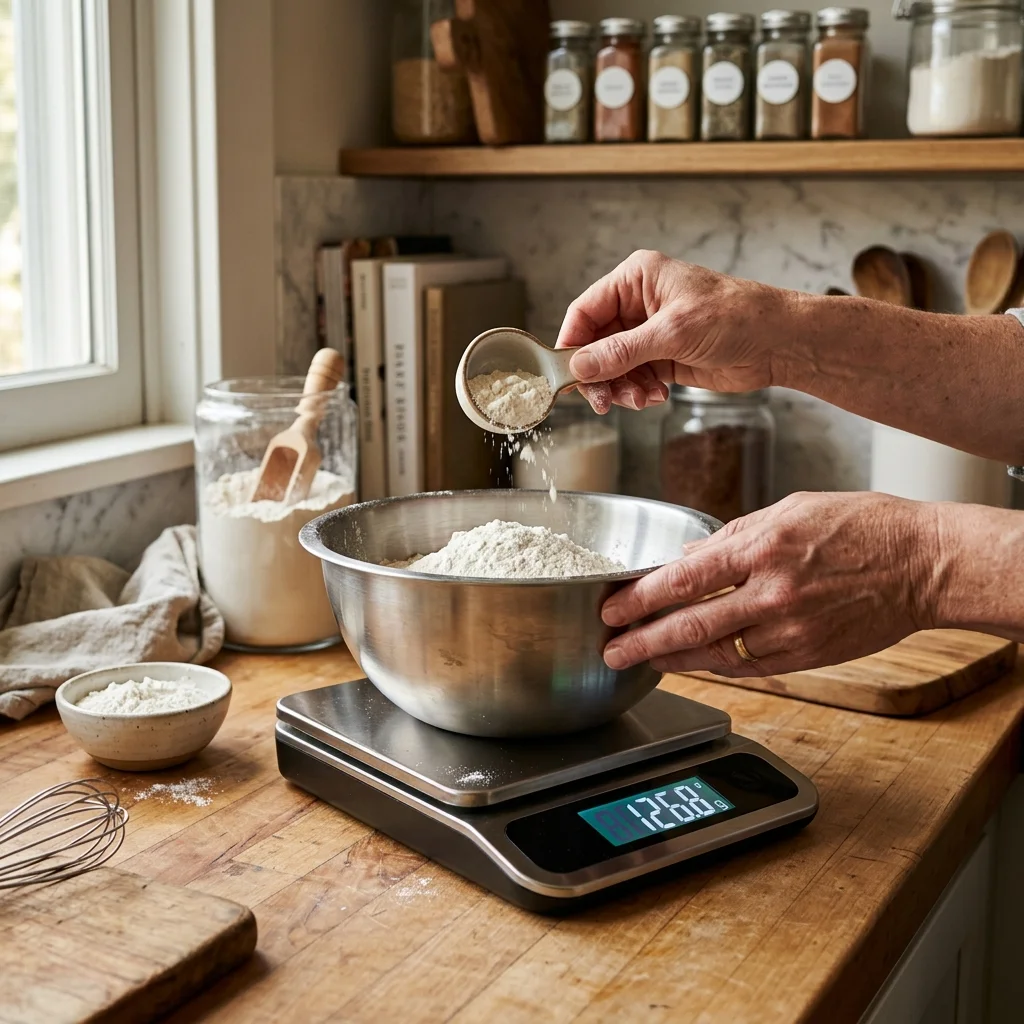
Conversely, pouring a 9-inch round recipe into an 8-inch round pan fills the pan too high. The batter may overflow or form a dome, while the middle remains undercooked. To learn how to convert ingredient weights accurately when changing pan sizes, refer to our guide on Why Baking by Weight Is Superior to Measuring by Volume and use a Step-by-Step Digital Kitchen Scale.
9-Inch Round vs 9x13
Can you substitute a 9-inch round pan for a 9x13 pan?
The answer is no, not on a 1:1 basis. A single 9-inch round pan has a base area of 63.6 sq in, whereas a 9x13 pan has a base area of 117 sq in. A 9x13 pan is 84% larger than a single 9-inch round pan!
However, a 9x13 recipe translates beautifully into two 8-inch round pans (combined surface area of 50.27 × 2 = 100.54 sq in) or two 9-inch round pans (combined surface area of 63.62 × 2 = 127.24 sq in).
When splitting a 9x13 cake recipe across two 9-inch round pans, the batter depth will be slightly shallower, but it creates two classic, even layer-cake rounds.
Loaf Pan Conversion
Loaf pans come in two primary standard US sizes that look nearly indistinguishable at a glance but differ considerably in volume:
- 8.5x4.5 Loaf Pan (1-Pound Loaf): Dimensions 8.5" × 4.5" × 2.75" depth | Theoretical Volume ~105 cu in (~7.3 liquid cups / rated 6 cups usable) | Base Area 38.25 sq in
- 9x5 Loaf Pan (1.25-Pound Loaf): Dimensions 9" × 5" × 2.75" depth | Theoretical Volume ~123.75 cu in (~8.6 liquid cups / rated 8 cups usable) | Base Area 45.0 sq in
The 9x5 loaf pan has 18% greater volume than the 8.5x4.5 loaf pan.
If you pour batter intended for an 8.5x4.5 pan into a 9x5 pan, the loaf will bake flatter with less crown rise. If you pour a 9x5 recipe (such as our Moist Metric Banana Bread Recipe) into an 8.5x4.5 pan, the batter will rise over the rim and spill into your oven. Always verify which loaf pan size your quick bread or yeast recipe specifies.
Bundt Pan Conversion
A Bundt pan is a heavy, fluted tube pan designed for dense, high-fat cakes like pound cakes, fruitcakes, and monkey breads.
Key attributes of Bundt pans:
- Fluted Surface and Central Tube: The hollow central chimney allows heat to enter the center of the deep batter simultaneously with the outer rim, ensuring even thermal penetration through thick batter.
- Large Capacity: Standard Bundt pans are rated for 10 to 12 cups of liquid volume (approx. 2.4 to 2.8 liters).
- Batter Depth and Density: Bundt batters are dense. Substituting a Bundt pan with a shallow rectangular pan requires caution because delicate batters may lack structural support without the central chimney.
If converting a Bundt cake recipe to standard pans, a 10-to-12-cup Bundt recipe easily fits into a 9x13 rectangular pan or two 9-inch round cake pans.
Muffin Pan Conversion
Muffin pans provide individual baking portions with rapid heat distribution. Standard capacity guidelines:
- Standard Muffin Cup (12-cup pan): Each cup measures approx. 2.75" wide by 1.25" deep. Theoretical volume per cup is ~1/2 cup (120 ml). Usable batter volume per cup is 1/3 cup (~70g to 80g batter). A 12-cup muffin pan holds roughly 4 cups of total batter, equivalent to one 8-inch round or one 8.5x4.5 loaf pan.
- Mini Muffin Cup (24-cup pan): Each cup holds ~2 tablespoons (30 ml) of liquid capacity. Usable batter per mini cup is 1 to 1.5 tablespoons (~20g batter).
- Jumbo Muffin Cup (6-cup pan): Each cup holds ~1 cup (240 ml) of liquid capacity. Usable batter per jumbo cup is ~1/2 to 2/3 cup (~150g batter).
When converting a quick bread loaf or layer cake recipe into muffins, avoid overfilling, fill each cup 2/3 full to allow proper doming.
How Pan Size Changes Baking Time
Changing your baking pan alters how thermal energy travels through the batter. Pan depth and surface area directly dictate oven time:
- Shallower Batter (Larger Surface Area): When batter is spread thinner (e.g., pouring an 8-inch round recipe into a 9x13 pan), moisture evaporates faster and heat reaches the center rapidly. Baking time decreases.
- Deeper Batter (Smaller Surface Area): When batter is concentrated in a narrower, deeper vessel (e.g., pouring a 9-inch round recipe into a small loaf pan), heat takes significantly longer to reach the interior core. Baking time increases.
Never rely on universal minute guidelines when swapping pan sizes. A recipe stating "bake for 30 minutes" may take 20 minutes in a shallower pan or 42 minutes in a deeper vessel.
Testing Doneness Accurately
Instead of trusting the timer, monitor physical cues:
- Visual Cues: The cake edges pull slightly away from the pan walls, and the top springs back gently when pressed lightly in the center.
- Toothpick/Tester Test: Insert a wooden toothpick into the center of the cake. It should come out clean or with a few moist crumbs, but no wet batter.
- Internal Temperature: For precise bakes, insert an instant-read digital thermometer into the center core. Layer cakes are fully set at 200°F–205°F (93°C–96°C), while rich butter/pound cakes set at 205°F–210°F.
How Pan Material Changes Baking
The physical composition of your baking pan affects thermal absorption, conductivity, and crust formation:
- Dark Metal (Anodized or Dark Non-Stick): Dark surfaces absorb radiant heat rapidly. Cakes bake faster and develop darker, thicker bottom and side crusts. Guidance: Lower oven temperature by 25°F (14°C) and check doneness 3 to 5 minutes earlier.
- Light Aluminum (Shiny Metal): Conducts heat evenly and reflects excess radiant heat. Highly recommended by pastry chefs for delicate yellow cakes, white cakes, and biscuits.
- Glass (Pyrex/Borosilicate): Glass is an insulator; it heats up slowly but retains intense heat for extended periods. Once hot, it can brown outer edges before the middle cooks. Guidance: Lower oven temperature by 25°F (14°C) when substituting glass for metal.
- Ceramic and Stoneware: Similar to glass, ceramic heats slowly and holds heat long after leaving the oven. Ideal for casseroles and cobblers, but less optimal for delicate sponge cakes.
How Much Should You Fill a Cake Pan?
Overfilling a cake pan is the leading cause of oven spills, sunken centers, and dense crumb structures.
Evidence-Based Filling Rules:
- Standard Cake Batters: Fill pans between 1/2 full and 2/3 full (50% to 66% depth). This leaves 3/4 inch to 1 inch of headspace for leavening expansion.
- High-Rising Batters (Sponge, Chiffon, Soufflé): Fill no more than 1/2 full (50%).
- Dense Bars and Brownies: Can be filled up to 3/4 full (75%), as they contain minimal chemical leaveners and expand very little.
If you have leftover batter after reaching 2/3 fill depth, do not force it into the pan! Bake the remaining batter in individual muffin cups. To avoid common measurement errors when calculating batter, check our guide on Top 7 Gram-to-Cup Conversion Mistakes.
How to Scale a Recipe for a New Pan
When you want to adapt a recipe to a pan with a different surface area, calculate the Pan Scale Factor.
For detailed step-by-step ratio math, consult our complete guide on How to Double or Halve a Baking Recipe.
Scaling Ratio Formula:
Multiply every ingredient weight in your recipe by this Scale Factor.
Example: Converting an 8-inch round cake recipe to a 9x13 rectangular pan.
- Original Pan Area (8-inch round): 50.27 sq in
- New Pan Area (9x13 rect): 117 sq in
- Scale Factor = 117 ÷ 50.27 ≈ 2.33
- Multiply all ingredient weights (flour, sugar, butter, eggs) by 2.33.
Always weigh your ingredients in grams using The Master Cups to Grams Baking Conversion Guide to maintain exact formula balance.
Worked Pan Conversion Examples
Let's walk through four real-world baking pan conversion scenarios:
Example 1: 9-Inch Round → 8-Inch Round
Original Pan Area: 63.6 sq in | New Pan Area: 50.3 sq in
Scale Factor: 50.3 ÷ 63.6 = 0.79 (reduce ingredient weights by ~21%).
Alternative: If baking without scaling ingredients, split batter into one 8-inch round pan (fill to 2/3 full) and bake remaining batter into 2 cupcakes.
Example 2: 8x8 Square → 9x13 Rectangular
Original Pan Area: 64 sq in | New Pan Area: 117 sq in
Scale Factor: 117 ÷ 64 = 1.83
Multiply all ingredient weights by 1.83 (or nearly double the recipe).
Example 3: 9x13 Rectangular → Two Smaller Pans
A single 9x13 pan (117 sq in) translates perfectly into two 8x8 square pans (64 × 2 = 128 sq in) or two 9-inch round pans (63.6 × 2 = 127.2 sq in) with zero ingredient modifications needed!
Example 4: 9x5 Loaf → Standard Muffins
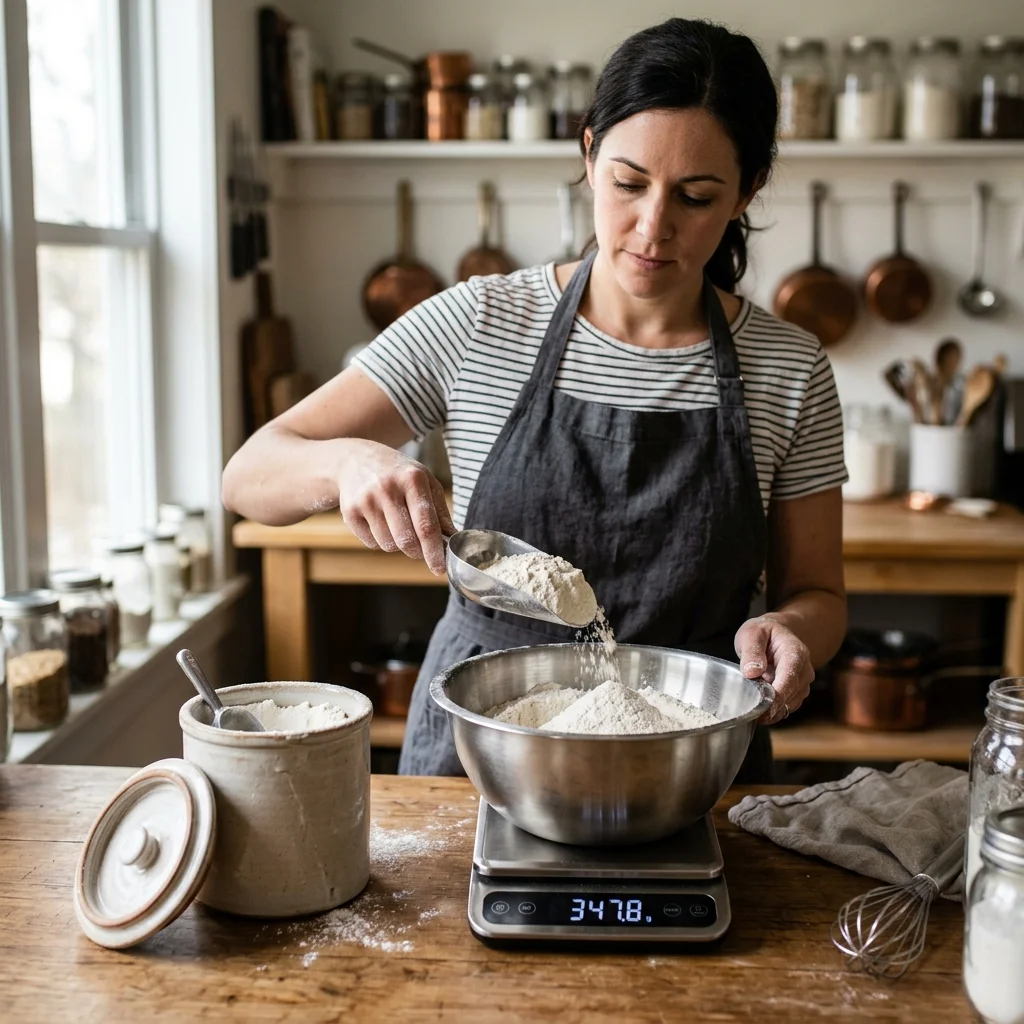
A 9x5 loaf pan holds ~4 to 5 cups of usable batter. A standard muffin cup holds ~1/3 cup usable batter. 4.5 cups batter ÷ (1/3 cup per muffin) = 13.5 muffins. Pour batter into 12 to 14 standard muffin cups and reduce baking time from 55–65 minutes down to 18–22 minutes. Test doneness with a toothpick. Try this technique with our Fluffy American Pancakes Recipe or dessert treats like our Ultimate Chocolate Chip Cookie Recipe.
Common Pan Conversion Mistakes
Avoid these critical pan substitution pitfalls:
- Comparing Dimensions Without Volume: Assuming a 9x5 loaf pan is identical to an 8.5x4.5 loaf pan because they look similar.
- Ignoring Interior Depth: Substituting a 2-inch deep round pan with a 1.5-inch shallow pie dish causes catastrophic oven overflows.
- Overfilling the Pan: Pouring batter more than 2/3 full, resulting in collapsed centers and messy spills.
- Changing Pan Size Without Scaling Ingredients: Pouring an 8x8 brownie mix into a 9x13 pan without adjusting weights creates paper-thin, dry bricks.
- Assuming the Same Baking Time: Expecting a deeper or shallower pan to bake in the exact time written in the original recipe.
- Ignoring Pan Material Differences: Baking in dark non-stick metal or glassware at standard temperatures without reducing heat by 25°F.
- Using a Bundt Recipe in a Standard Pan Without Tube Circulation: Pouring dense Bundt batter into a deep solid pan without adjusting temperatures, causing burnt edges and raw centers.
FAQs
1. What pan is equivalent to a 9x13?
A 9x13 rectangular pan (117 sq in surface area) is equivalent to two 9-inch round cake pans (127 sq in combined) or two 8x8 square pans (128 sq in combined).
2. Is an 8x8 pan the same as a 9-inch round?
Yes! An 8x8 square pan has a surface area of 64 sq in, while a 9-inch round pan has a surface area of 63.6 sq in. They hold virtually the same volume (~8 cups liquid capacity) and can be substituted 1:1.
3. How many cups does a 9x13 pan hold?
A standard 9x13 pan (2 inches deep) holds approximately 14 to 15 cups of liquid volume to the brim, with a usable batter capacity of 7 to 9 cups.
4. How many cups does a Bundt pan hold?
Standard Bundt pans hold 10 to 12 cups of liquid volume to the brim, with a usable batter capacity of 6 to 8 cups of dense cake batter.
5. Can I use a loaf pan instead of a cake pan?
Yes, provided batter capacity matches. An 8.5x4.5 loaf pan holds ~6 cups liquid volume (equivalent to an 8-inch round), while a 9x5 loaf pan holds ~8 cups liquid volume (equivalent to a 9-inch round).
6. Does changing pan size change baking time?
Yes. Shallower batter in a larger pan bakes faster, while deeper batter in a smaller pan requires a longer bake time. Always check doneness using visual cues and toothpicks rather than relying solely on the recipe timer.
7. How do I calculate pan volume?
For rectangular pans, multiply Length × Width × Depth. For round pans, multiply π × Radius² × Depth. Divide cubic inches by 14.4375 to calculate volume in US cups.
8. Can I use a larger pan for a cake?
Yes, but the cake will be thinner and will bake significantly faster. Watch the oven closely to prevent overbaking and drying out the crumb.
9. Can I use a smaller pan?
Only if you reduce ingredient amounts or reserve excess batter for cupcakes. Filling a smaller pan beyond 2/3 full will cause batter to overflow.
10. How full should I fill a cake pan?
Fill standard cake pans 1/2 to 2/3 full (50% to 66%), leaving at least 3/4 inch of headspace for leavening expansion.
11. What is the difference between pan volume and surface area?
Surface area (Length × Width or π × r²) measures the two-dimensional bottom plane that batter spreads across, dictating batter depth. Volume includes pan depth and measures three-dimensional liquid capacity.
12. Can I convert a 9x13 recipe to a round pan?
Yes. Split a 9x13 cake recipe evenly between two 9-inch round pans or two 8-inch round pans for perfect layer cakes.
When resizing cake pans or adjusting batch volumes, consult our master cups to grams baking conversion guide and our recipe scaling and doubling guide for precise volumetric calculations.
Interactive Cake Pan Volume Converter
Scale batter quantities between round and rectangular cake pans.
Interactive Baking Calculator Widget
Adjust inputs below for instant real-time recipe formulation.
Need Full Density Reference Tables?
Explore complete g/cup density tables, USDA ratios, and measurement tools.
Related Baking Guides
Top 5 Best Kitchen Digital Scales for Baking Precision in 2026
Compare the best kitchen scales for baking, including accuracy, capacity, tare functions, readability, and features that matter for precise recipes.
Kitchen ToolsLiquid Measuring Cups vs Dry Measuring Cups: Are They Interchangeable?
Learn the difference between dry and liquid measuring cups, how each works, when to use them, and how to measure flour, sugar, milk, oil, and more accurately.
Kitchen ToolsStep-by-Step Guide: How to Use a Digital Kitchen Scale for Baking
Learn how to use a digital kitchen scale for baking, including tare, grams, ounces, weighing flour, liquids, multiple ingredients, and recipe conversions.