Fluffy American Pancakes Recipe (Grams & Cups Dual Chart)
"Make fluffy American pancakes with an easy grams-and-cups recipe, buttermilk tips, precise ingredient weights, and troubleshooting for light pancakes."
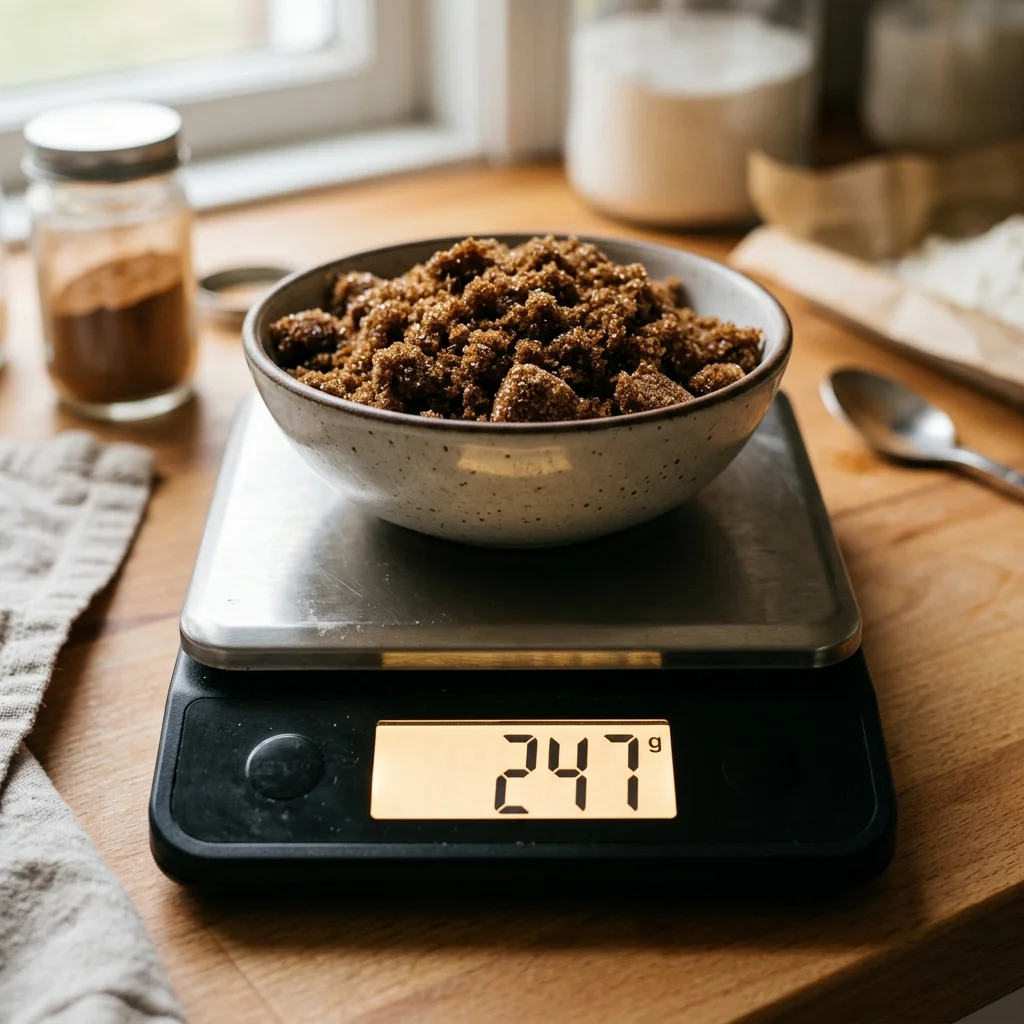
Making diner-style fluffy American pancakes with light, airy centers, delicate golden edges, and towering height comes down to two key secrets: weighing your flour and buttermilk in grams on a digital scale (240g flour to 454g buttermilk) to guarantee ideal batter hydration, and allowing the mixed batter to rest undisturbed for 15 minutes before cooking.
Whether you prefer weighing ingredients in grams for 100% precision or using traditional US customary cups for quick breakfast prep, this master guide provides dual measurement charts, step-by-step cooking instructions, griddle temperature science (350°F–375°F), and solutions for flat or dense pancakes.
Calculate portion scoop yields with our Cookie Scoop & Portion Calculator, look up liquid weights in Whole Milk Grams to Cups, or scale batch servings with the Recipe Scaler.
Pancake Recipe at a Glance
Ingredients, Grams & Cups
This dual measurement chart provides exact metric weights alongside standard US volume equivalents for perfectly balanced buttermilk pancakes:
| Ingredient | Grams (Weight) | US Volume Equivalent | Culinary Function |
|---|---|---|---|
| All-Purpose Flour (Unbleached) | 240g | 2 US Customary Cups (spooned & leveled) | Provides gluten matrix for pancake height & structure |
| Buttermilk (Full-Fat or Low-Fat) | 454g | 2 US Customary Cups (16 fl oz / ~454ml) | Tenderizes gluten & activates baking soda for rise |
| Large Eggs (Room Temp) | 100g | 2 Large Eggs (out of shell) | Binds batter, adds richness, and aids trapped gas expansion |
| Unsalted Butter (Melted & Cooled) | 56g | 1/4 Cup (4 tbsp / 1/2 stick) | Coats flour proteins for tender crumb & buttery flavor |
| Granulated White Sugar | 30g | 2 Tablespoons | Provides subtle sweetness & aids griddle browning |
| Baking Powder | 10g | 2 Teaspoons | Primary leavener for instant heat-activated rise |
| Baking Soda | 3g | 1/2 Teaspoon | Neutralizes buttermilk acid & creates golden crust color |
| Fine Sea Salt | 3g | 1/2 Teaspoon | Balances sweetness & enhances buttermilk flavor |
| Pure Vanilla Extract | 5g | 1 Teaspoon | Adds warm aromatic bakery notes |
Why We Use Both Grams and Cups
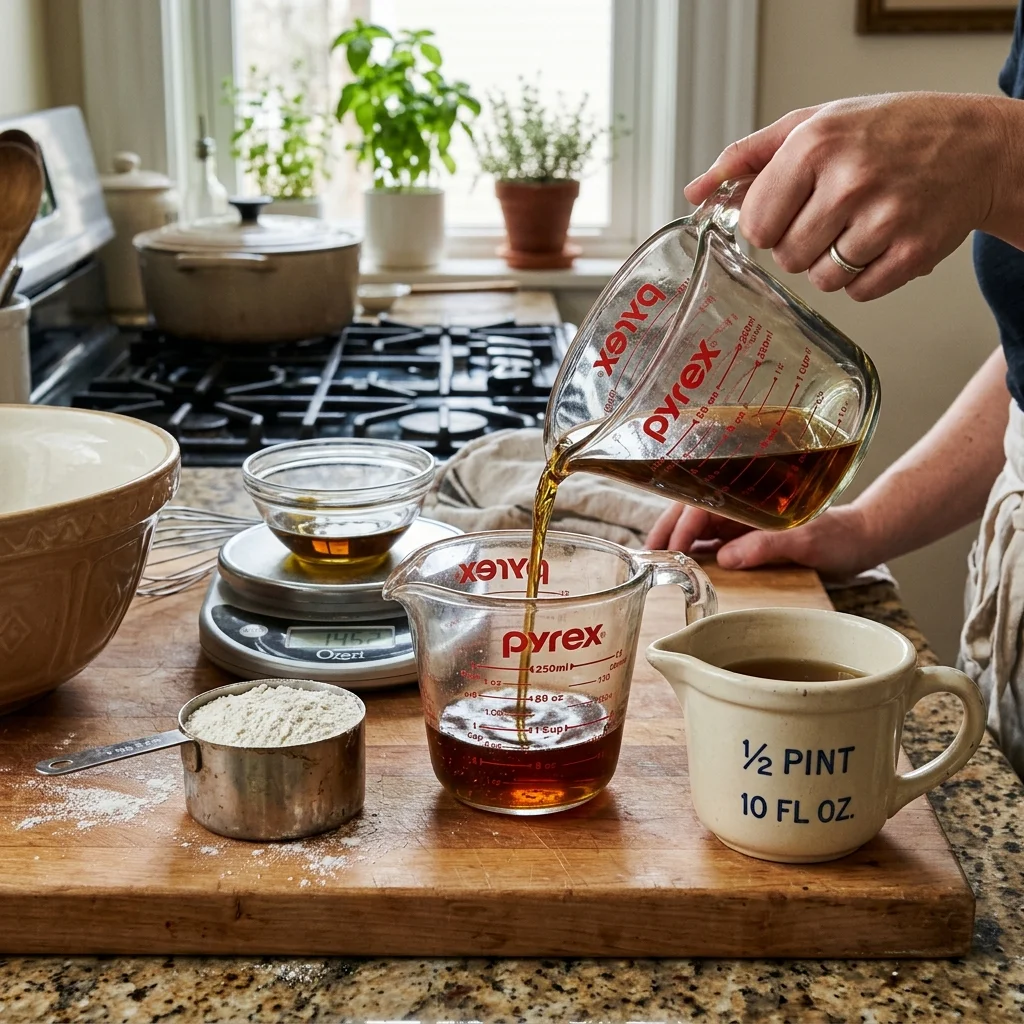
Baking is applied chemistry. Measuring flour by volume using a measuring cup can vary by up to 25% depending on how tightly packed the flour is. Dip a cup directly into a flour bag, and you might scoop 150g per cup instead of the standard 120g, resulting in 300g of dry flour in your batter, making your pancakes thick, leaden, and rubbery.
Weighing 240g of flour on a digital scale ensures 100% exact batter hydration every single batch. However, because many American home kitchens rely on customary volume cups, our dual chart gives you both options. If using cups, be sure to spoon flour into your measuring cup and level it off with a knife. For a deeper dive into volume differences, explore US Cup vs Metric Cup vs Imperial Cup and The Master Cups to Grams Baking Conversion Guide.
How to Make Fluffy American Pancakes
Follow these 8 step-by-step instructions for restaurant-quality fluffy pancakes. For digital scale setup steps, read Step-by-Step Guide: How to Use a Digital Kitchen Scale.
1. Mix Dry Ingredients
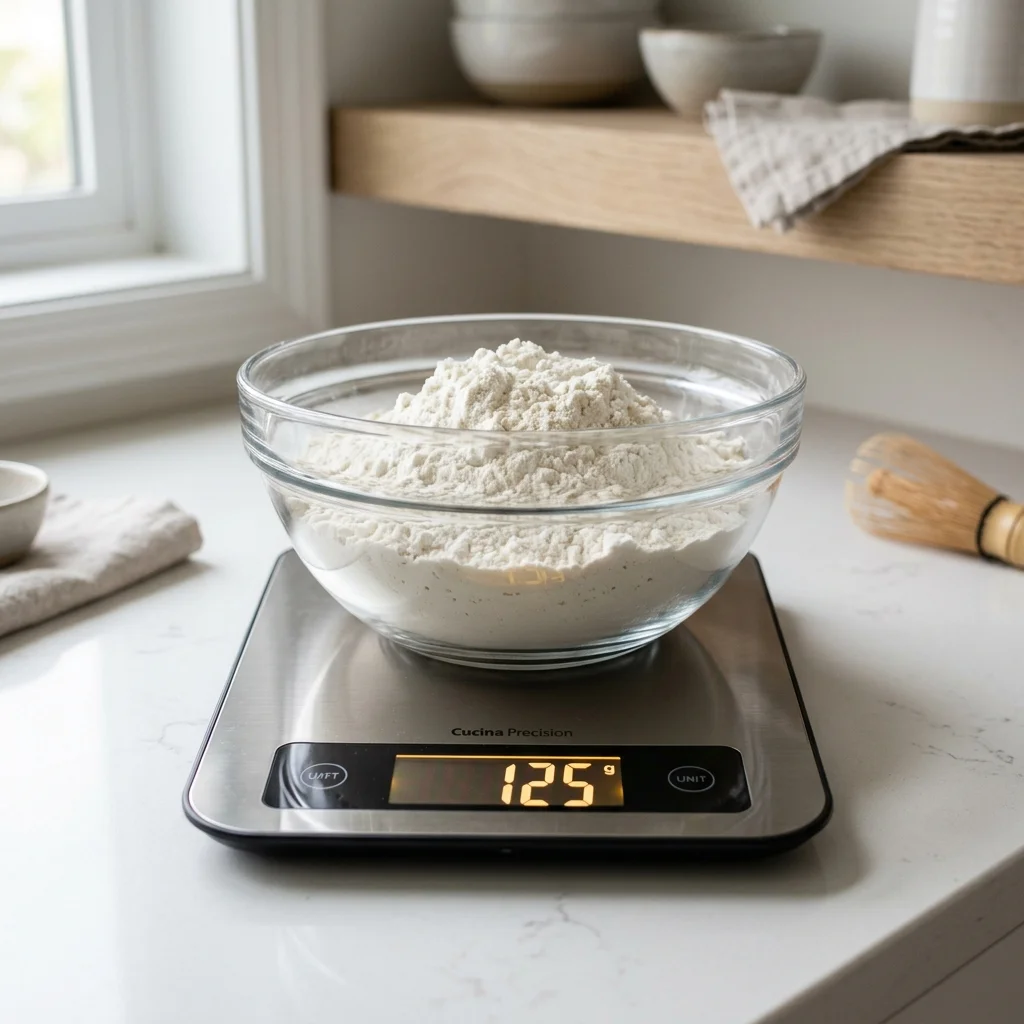
In a large mixing bowl, weigh out 240g all-purpose flour, 30g granulated sugar, 10g baking powder, 3g baking soda, and 3g fine sea salt. Whisk dry ingredients thoroughly for 30 seconds to ensure the leavening agents are evenly distributed throughout the starch.
2. Mix Wet Ingredients
In a separate liquid measuring pitcher, weigh out 454g buttermilk, 100g room-temperature eggs (2 large), 56g melted and slightly cooled unsalted butter, and 5g pure vanilla extract. Whisk vigorously until smooth and emulsified.
3. Combine Wet and Dry (Do Not Overmix!)
Pour the wet mixture into the bowl of dry ingredients. Using a flexible rubber spatula, gently fold the wet and dry ingredients together just until the flour streaks disappear (about 10 to 15 gentle folds). Lumps are completely normal and required! Over-whisking develops gluten protein chains, resulting in tough, chewy pancakes instead of tender ones.
4. Rest the Batter for 15 Minutes
Set the mixing bowl aside at room temperature and allow the batter to rest undisturbed for 15 minutes. During this resting period, two crucial scientific reactions occur: flour starches absorb liquid fully, and the lactic acid in the buttermilk reacts with the baking soda and baking powder to create millions of trapped carbon dioxide micro-bubbles. This 15-minute rest (recommended by King Arthur Baking science experts) is what gives pancakes their airy, tall structure.
5. Preheat Griddle to 350°F–375°F
Preheat a heavy cast-iron skillet or electric griddle to 350°F to 375°F (175°C to 190°C) over medium-low to medium heat. Lightly coat the cooking surface with a thin layer of unsalted butter or neutral oil, then wipe off excess with a paper towel so the pan is lightly lubricated without pooling fat.
6. Portion Batter
Gently scoop out 1/4 US cup (approx 60g) of rested pancake batter per pancake onto the hot griddle. Do not stir or deflate the rested batter in the bowl between scoops; scoop gently from the top to preserve trapped gas bubbles.
7. Flip at the Right Visual Moment
Cook the first side for 2 to 3 minutes. Watch for surface bubbles to pop and remain open while the outer edges look set and matte. Slide a thin spatula underneath; the bottom should be a uniform golden brown. Flip the pancake gently in one fluid motion. Never press down on the pancake with your spatula!
8. Finish and Serve Warm
Cook the second side for 1 to 2 minutes until puffed and golden brown. Transfer finished pancakes to a warm plate covered loosely with foil, or keep warm in a 200°F (93°C) oven on a wire rack. Serve immediately with warm pure maple syrup and salted butter.
What Makes Pancakes Fluffy?
The science of maximum pancake fluffiness relies on five interconnected chemical factors:
- Synergistic Chemical Leaveners: Combining 10g baking powder with 3g baking soda provides both double-acting rise (gas production upon mixing and secondary expansion when heated on the griddle). Read more in Baking Powder vs Baking Soda: Weight Ratios and Potency.
- Lactic Acid Reaction: Real buttermilk contains natural lactic acid (pH ~4.5). Acid reacts instantly with alkaline baking soda to release carbon dioxide gas bubbles that get trapped inside the flour matrix.
- Controlled Hydration Ratio: Maintaining a 240g flour to 454g buttermilk ratio creates a thick, moundable batter that holds its height on the griddle rather than spreading thin.
- Gluten Minimization: Folding batter gently prevents gliadin and glutenin proteins from forming elastic webs, keeping the crumb tender and delicate.
- 15-Minute Starch Relaxation: Resting batter gives flour granules time to hydrate completely, allowing gas bubbles to expand evenly without popping prematurely.
Why Are My Pancakes Dense?
Dense, heavy pancakes usually stem from mechanical or measurement mistakes. Use this troubleshooting guide:
| Symptom | Root Cause | Science-Backed Fix |
|---|---|---|
| Heavy, rubbery texture | Overmixing dry and wet ingredients | Fold with spatula 10-15 times maximum; leave visible lumps |
| Leaden, dry pancake crumb | Too much flour from volume scooping | Weigh flour on scale to 240g exact. Learn more in How to Measure Flour Correctly |
| Gummy interior core | Griddle temperature too high (outside burns before inside cooks) | Lower heat to 350°F (medium-low); cook 2-3 mins first side |
| Tough, chewy bite | Bread flour used instead of AP flour or un-rested gluten | Use low-protein AP flour (10-11% protein); rest batter 15 mins |
Why Are My Pancakes Flat?
Flat pancakes lack the gas structure needed for height. Primary culprits include:
- Expired Chemical Leaveners: Baking powder and baking soda lose potency over 6 months once opened. Test baking powder by placing 1/2 tsp in warm water; it should fizz violently.
- Batter Too Thin: Adding excess liquid (over 480g buttermilk) thins out the batter, causing it to spread flat across the griddle before setting.
- Skipping Batter Rest: Cooking batter immediately doesn't give gas bubbles time to form and stabilize in the thick starch matrix.
- Pressing Pancakes Down: Flattening pancakes with a spatula squashes trapped air pockets, forcing out carbon dioxide gas.
How to Know When to Flip a Pancake
Flipping at the exact right moment is essential for fluffy height. Look for these three visual cues:
- Popping Surface Bubbles: Micro-bubbles will rise to the top surface. When bubbles burst open and leave small open holes that do not immediately fill back in with wet batter, the interior is set.
- Matte Edge Setting: The wet, shiny gloss around the pancake perimeter disappears, forming a dull, set matte ring.
- Golden Underside: Gently lift an edge with a thin spatula. The bottom should display an even, golden-brown color.
Best Griddle Temperature
The optimal cooking temperature for American pancakes is **350°F to 375°F (175°C to 190°C)**. If using a stovetop skillet, set the burner to **medium-low to medium**.
The Water Drop Test: Flick a few drops of cold water onto your dry pan. If the water sizzles gently and evaporates after 2 seconds, the pan is ready. If the water drops bead up and jump frantically across the pan, it is too hot (lower heat). If the water sits and slowly steams without bubbling, the pan is too cold.
Pancake Batter Consistency
Ideal pancake batter should be **thick, scoopable, yet pourable**, resembling thick cottage cheese or soft cake batter. When ladled onto a 350°F griddle, a 1/4-cup portion should spread into a round disc about 4 inches in diameter and roughly 1/2-inch thick. If the batter spreads rapidly into a thin puddle, whisk in 1 tablespoon (8g) of flour. If the batter is too stiff to spread at all, fold in 1 tablespoon (15g) of buttermilk.
Common Pancake Mistakes
Avoid these six frequent breakfast cooking errors:
- Overmixing: Whisking until smooth breaks down air bubbles and over-develops gluten. Stop mixing while lumps remain!
- Using Cold Milk Instead of Buttermilk: Regular milk lacks acidity. If substituting milk, add 1 tablespoon of lemon juice or white vinegar per cup of milk and rest 5 minutes to sour.
- Scooping Compressed Flour: Measuring flour by volume adds excess starch. Always spoon and level or weigh 240g on a digital scale. See Why Baking by Weight Is Superior to Measuring by Volume.
- Cooking in Too Much Butter: Excess fat in the pan fried-cooks outer pancake edges unevenly. Use a paper towel to wipe pan fat down to a thin sheen.
- Pressing Pancakes Down: Never smash pancakes with your spatula after flipping! Squeezing out steam destroys fluffiness.
- Flipping Repeatedly: Flip each pancake exactly once. Multiple flips dry out the crumb and deflate height.
Grams vs Cups Pancake Conversion
Here is how key pancake ingredients convert between weight in grams and US customary volume cups:
| Ingredient | Weight in Grams | US Volume Equivalent | Conversion Notes |
|---|---|---|---|
| All-Purpose Flour | 240g | 2 US Customary Cups | Standard density = 120g per spooned & leveled cup |
| Buttermilk | 454g | 2 US Customary Cups (16 fl oz) | Liquid density = ~1.03g per ml (227g per cup) |
| Melted Butter | 56g | 1/4 Cup (4 tbsp / 1/2 stick) | Butter density = 14g per tablespoon |
| Granulated Sugar | 30g | 2 Tablespoons | Sugar density = ~15g per tablespoon |
If scaling recipe quantities up or down for large family breakfasts, consult our master How to Double or Halve a Baking Recipe.
Serving Ideas
Elevate your fluffy pancake breakfast stack with classic American toppings:
- Classic Diner Style: A pat of softened salted butter and warm Grade A dark amber pure maple syrup.
- Fresh Fruit & Berries: Fresh blueberries, sliced strawberries, or ripe banana slices folded into batter or layered on top.
- Nutty Crunch: Toasted chopped pecans or walnuts with a drizzle of warm honey.
- Chocolate Lovers: Semi-sweet dark chocolate chips (100g) folded into batter before cooking.
Frequently Asked Questions
1. What makes American pancakes fluffy?
American pancakes become fluffy through double leavening (baking powder + baking soda), buttermilk lactic acid reaction, gentle mixing (leaving lumps), and resting batter for 15 minutes.
2. How many grams of flour are in pancakes?
This standard recipe uses 240 grams of all-purpose flour (equivalent to 2 US customary cups spooned and leveled).
3. How much buttermilk do pancakes need?
Pancakes need 454 grams of buttermilk (2 US customary cups / 16 fl oz) to hydrate 240g of flour and activate leaveners.
4. Should pancake batter rest?
Yes! Resting batter for 15 minutes allows flour starches to hydrate and gives leaveners time to generate micro gas bubbles for tall, fluffy pancakes.
5. Why are my pancakes flat?
Flat pancakes are caused by expired baking powder, overmixing batter, adding excess liquid, skipping the 15-minute rest, or smashing pancakes with a spatula.
6. Why are my pancakes dense?
Dense pancakes stem from scooping dry flour with a cup (adding up to 300g flour) or over-whisking batter, which overdevelops tough gluten webs.
7. What temperature should I cook pancakes at?
Cook pancakes at 350°F to 375°F (175°C to 190°C) or over medium-low to medium heat on a cast-iron skillet.
8. How do I know when to flip pancakes?
Flip when surface bubbles pop and remain open, edges set matte, and the underside is golden brown (typically after 2 to 3 minutes).
9. Can I make pancakes using grams instead of cups?
Yes! Measuring in grams on a digital scale is more accurate than cups, ensuring 100% consistent batter thickness and fluffiness.
10. Can I substitute milk for buttermilk?
Yes. Combine 454g (2 cups) whole milk with 2 tablespoons of white vinegar or lemon juice and rest 5 minutes to sour before adding to batter.
If adding cocoa powder to pancake batter, refer to our breakdown of Dutch process vs natural cocoa powder density and sifting.
Interactive Portion & Scoop Calculator
Calculate exact portion sizes and dough yields.
Interactive Baking Calculator Widget
Adjust inputs below for instant real-time recipe formulation.
Need Full Density Reference Tables?
Explore complete g/cup density tables, USDA ratios, and measurement tools.
Related Baking Guides
US Cup vs Metric Cup vs Imperial Cup: The International Baking Guide
Learn the difference between US, metric, and Imperial cups, their milliliter sizes, and how to convert international baking recipes accurately.
Baking ScienceWhy Baking by Weight Is Superior to Measuring by Volume
Learn why weighing baking ingredients in grams is more accurate than cups, how density affects volume, and how a kitchen scale improves consistency.
Baking ScienceHow to Bake European Recipes in an American Kitchen
Learn how to convert European baking recipes for an American kitchen, including grams, milliliters, Celsius, gas marks, cups, and ingredient weights.