Ultimate Chocolate Chip Cookie Recipe by Weight (Grams)
"Make chewy chocolate chip cookies with precise gram measurements for flour, butter, sugar, and chocolate chips, plus tips for perfect texture."

Baking the ultimate batch of chocolate chip cookies with golden, crispy edges, soft chewy centers, and predictable spread relies on one fundamental rule: weighing your ingredients in grams on a digital kitchen scale instead of scooping volume cups. Measuring flour and sugars by weight eliminates volume packing variations, ensuring your cookie dough hydration and fat ratios remain mathematically exact every single time.
Whether you want thick, bakery-style cookies or thin, crisp wafer-style treats, using precise gram measurements removes the guesswork. In this master recipe guide, we break down exact metric weights for every ingredient, explain the food chemistry behind cookie texture, provide a step-by-step dough mixing workflow, and solve common baking pitfalls.
Portion uniform dough balls with our Cookie Scoop Size Calculator, convert stick weights via the Butter Converter, or double batch servings using the Recipe Scaler.
Chocolate Chip Cookies by Weight: Quick Recipe Overview
Ingredients in Grams
The table below details exact metric weights alongside standard US volume equivalents for this chocolate chip cookie recipe:
| Ingredient | Grams (Weight) | US Volume Equivalent | Culinary Function |
|---|---|---|---|
| All-Purpose Flour (Unbleached) | 250g | 2 US Customary Cups | Provides gluten structure & body |
| Unsalted Butter (Softened) | 170g | 3/4 Cup (1.5 sticks / 12 tbsp) | Adds fat, flavor, and controls spread |
| Packed Light Brown Sugar | 150g | ~3/4 Cup packed | Adds moisture, caramel notes & chewiness |
| Granulated White Sugar | 100g | 1/2 Cup | Promotes edge crispness & surface browning |
| Semisweet Chocolate Chips (60%) | 220g | 1 1/4 Cups | Creates rich melted chocolate pockets |
| Large Egg (Room Temp) | 50g | 1 Large Egg (out of shell) | Binds dough & provides moisture balance |
| Large Egg Yolk | 18g | 1 Extra Egg Yolk | Adds rich fat emulsion for fudge-like chew |
| Pure Vanilla Extract | 5g | 1 Teaspoon | Enhances butter & chocolate aromatics |
| Baking Soda | 3g | 1/2 Teaspoon | Promotes browning (Maillard reaction) & rise |
| Fine Sea Salt | 3g | 1/2 Teaspoon | Cuts sweetness & strengthens gluten bond |
Why This Cookie Recipe Uses Grams
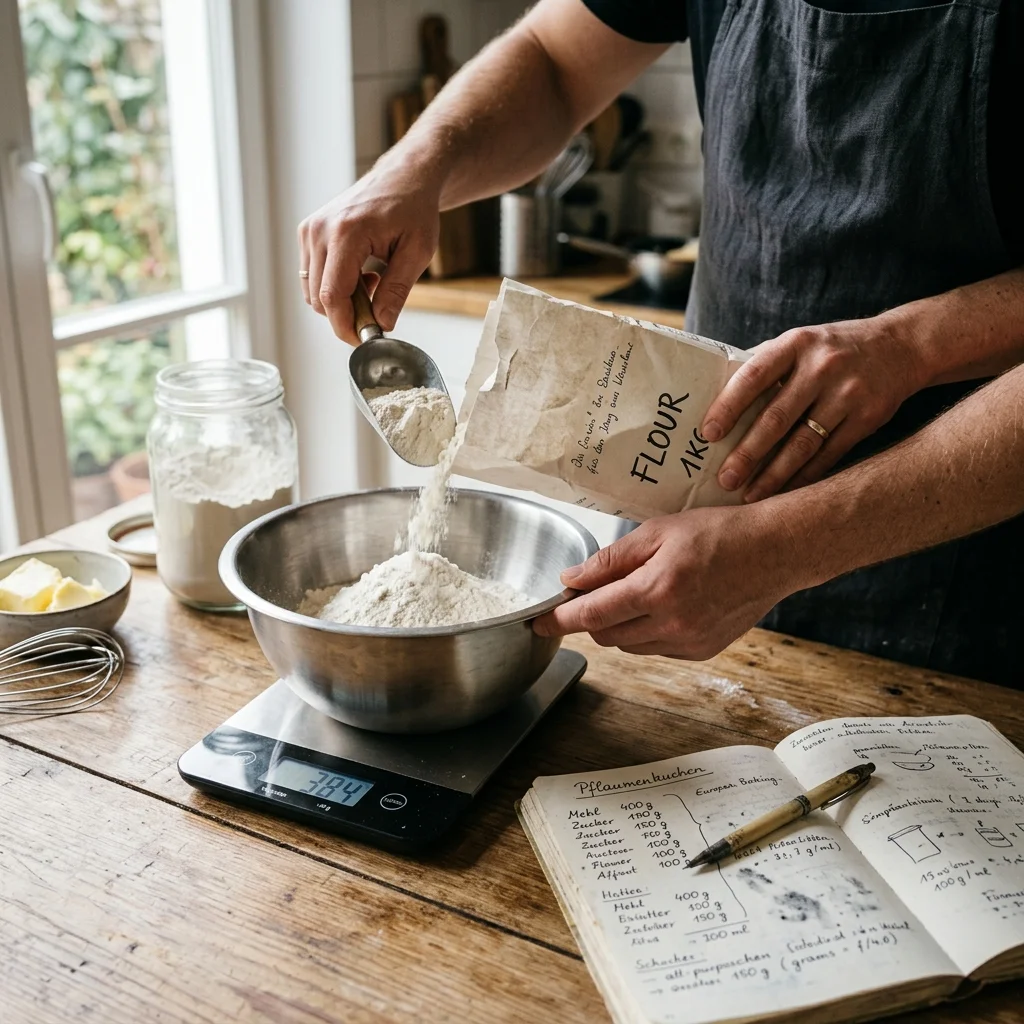
Switching from volume cups to grams is the single most effective way to eliminate baking inconsistencies. Learn more in Why Baking by Weight Is Superior to Measuring by Volume and our master guide The Master Cups to Grams Baking Conversion Guide.
- Flour Packing Variation: Scooping 2 cups of flour with a measuring cup can easily yield 280g–300g instead of the required 250g. That extra 50g of dry flour transforms soft cookies into dry, cakey discs. Learn more in How to Measure Flour Correctly: Spoon and Level Method vs Scooping.
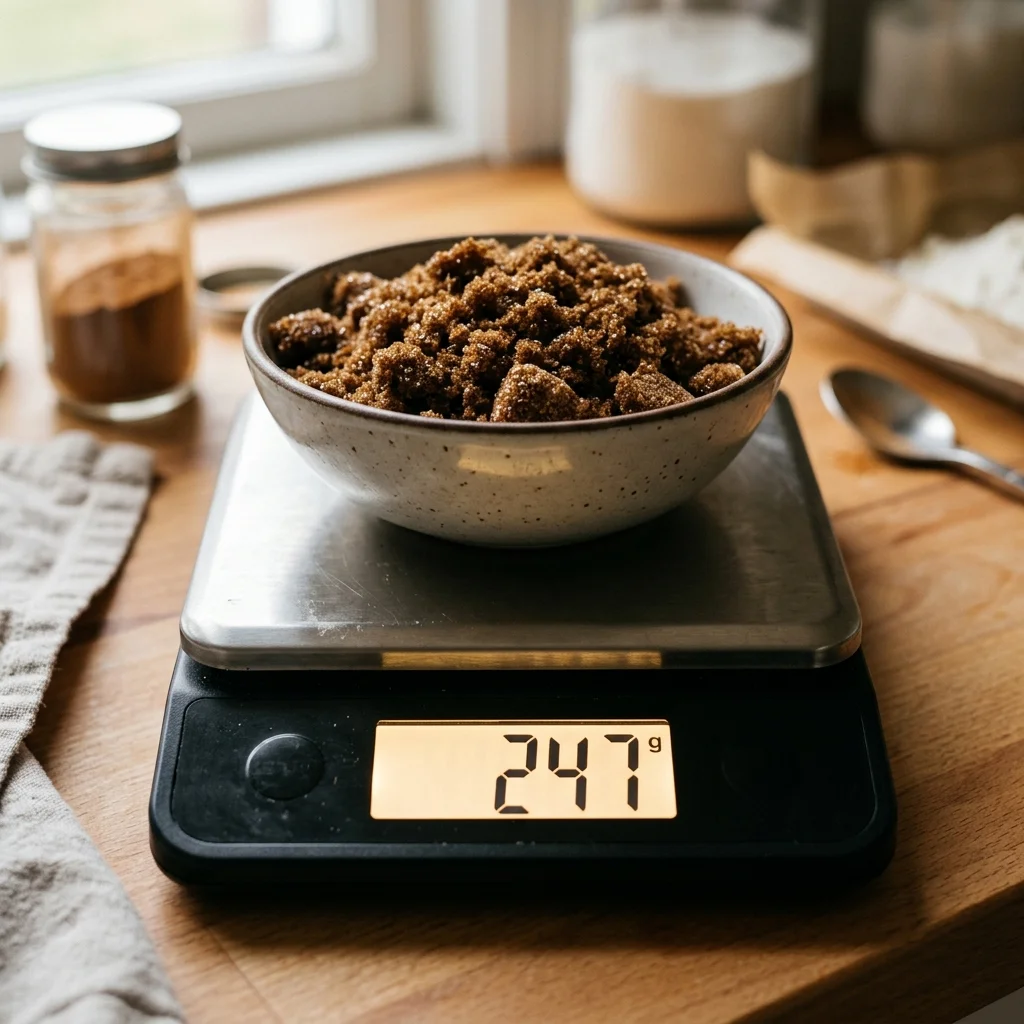
- Brown Sugar Packing Density: Depending on how hard brown sugar is pressed into a cup, weight ranges between 140g (loose) and 220g (packed). Stating 150g removes all ambiguity. Read How to Measure Brown Sugar: Lightly Packed vs Firmly Packed vs Grams and Sugar Conversion Guide.
- Butter Ratio Precision: 170g butter provides the precise fat balance needed to melt at 95°F during baking, controlling cookie spread before egg proteins coagulate. Reference our Butter Conversion Master Table.
How to Make Chocolate Chip Cookies Step by Step
Follow these step-by-step instructions to prepare the cookie dough using your digital kitchen scale. For setup assistance, reference Top 5 Best Kitchen Digital Scales for Baking Precision in 2026.
1. Measure Ingredients on a Digital Scale
Place your mixing bowl on a digital kitchen scale and press the Tare (Zero) button. Weigh 170g softened unsalted butter, 150g brown sugar, and 100g granulated sugar directly into the bowl.
2. Cream Butter and Sugars
Using a stand mixer fitted with a paddle attachment (or a hand mixer), beat the butter, brown sugar, and granulated sugar on medium speed for 2 to 3 minutes until smooth and lightened in color. Avoid over-creaming; beating too much air into the fat creates cakey cookies rather than chewy ones.
3. Add Egg, Extra Yolk, and Vanilla
Add 1 whole large egg (50g), 1 extra egg yolk (18g), and 5g pure vanilla extract. Beat on low speed for 60 seconds until completely emulsified and glossy.
4. Add Dry Ingredients
In a separate bowl (or weighed directly into the main bowl using tare), add 250g all-purpose flour, 3g baking soda, and 3g fine sea salt. Mix on low speed for 20 to 30 seconds just until no raw flour streaks remain. Learn how baking soda drives browning in Baking Powder vs Baking Soda: Weight Ratios and Potency.
5. Fold in Chocolate Chips
Add 220g semisweet chocolate chips. Use a rubber spatula to gently fold the chocolate into the dough until evenly distributed.
6. Chill the Dough (Crucial for Texture)
Cover the bowl with plastic wrap and refrigerate the dough for at least 45 minutes (ideally 2 to 24 hours). Chilling solidifies the butter fats and allows flour starches to fully hydrate, preventing excessive cookie spread in the oven.
7. Portion the Cookies by Weight
Line a large baking sheet with parchment paper. Place a small plate on your kitchen scale and weigh out 50-gram dough balls (roughly 3 tablespoons each). Roll gently into smooth balls and arrange 2 inches apart on the prepared tray.
8. Bake at 350°F (175°C)
Bake in the center rack of a preheated oven at 350°F (175°C) for 10 to 12 minutes. The cookies are done when the edges are golden brown and set, while the centers remain slightly soft and pale.
9. Cool on Sheet and Wire Rack
Remove from the oven and let the cookies rest on the hot baking sheet for 5 minutes (residual heat finishes cooking the center). Transfer to a wire cooling rack to cool completely.
How to Get Chewy Centers and Crispy Edges
The combination of crispy edges and a chewy, gooey center is controlled by sugar chemistry and egg composition:
- 150g Brown Sugar (Chewiness): Brown sugar contains hygroscopic molasses syrup that retains water during baking, producing a tender, chewy crumb.
- 100g Granulated White Sugar (Crispness): Granulated sugar caramelizes at high heat and recrystallizes as it cools, forming crisp outer edges.
- Extra Egg Yolk (18g Fat): Adding an extra yolk introduces additional lecithin fat emulsifiers without adding excess egg white liquid, boosting fudgy chewiness.
- 45-Minute Dough Chill: Cold butter melts slower in the oven, allowing edges to set crisp before centers over-spread.
Why Weighing Flour Matters for Cookies
Flour is the primary structural foundation of cookie dough. When flour is measured using volume cups, scooping directly from a bag compresses the starch granules, causing cup weight to jump from 125g up to 145g or 150g. Using 300g of flour in this recipe instead of 250g produces dry, crumbly cookies that fail to spread properly. Weighing 250g on a digital scale guarantees consistent moisture absorption every time.
Cookie Dough Portion Size Guidance
Standardizing your dough portions by weight ensures every cookie on the sheet bakes at the exact same rate:
Standard Cookie (50g)
Bake Time: 10–12 mins. Yields 16 medium bakery-style cookies with soft chewy centers.
Large Bakery Cookie (85g)
Bake Time: 13–15 mins. Yields 9 jumbo cookies with thick, molten centers.
Bite-Sized Cookie (30g)
Bake Time: 8–9 mins. Yields 26 mini cookies perfect for party platters.
Common Chocolate Chip Cookie Problems & Fixes
Use this troubleshooting guide if your cookies don't turn out as expected:
| Problem | Likely Cause | Practical Fix |
|---|---|---|
| Cookies spread too much & flatten | Warm butter or unchilled dough | Chill dough balls for 45+ minutes before baking |
| Cookies don't spread at all | Excess flour from volume scooping | Weigh flour to exactly 250g on a digital scale |
| Dry, crumbly cookie texture | Over-baking or too little fat | Remove when centers look soft; ensure 170g butter |
| Puffy, cakey cookies | Over-creaming butter or using extra egg whites | Cream butter just 2 mins; use 1 whole egg + 1 yolk |
| Burnt edges with raw center | Oven temperature too high | Verify oven temp with oven thermometer (350°F / 175°C) |
| Greasy bottom surface | Melted butter incorporated warm | Ensure butter is softened room temp (65°F / 18°C) |
How to Store Chocolate Chip Cookies
Keep your freshly baked cookies soft and fresh using proper storage techniques:
- Room Temperature Storage: Store cooled cookies in an airtight container at room temperature for up to 5 days. Add a slice of white bread to the container; the cookies will absorb moisture from the bread, keeping them soft.
- Freezing Baked Cookies: Freeze baked cookies in a single layer on a tray, then transfer to a freezer bag for up to 3 months. Thaw at room temperature for 15 minutes.
- Freezing Raw Dough Balls: Portion 50g dough balls onto a baking tray and freeze solid for 1 hour. Transfer to a sealed freezer bag. Bake straight from frozen at 350°F (175°C) for 12 to 14 minutes (add 2 minutes to bake time).
Can You Convert This Recipe Back to Cups?
While we recommend using a digital scale for maximum accuracy, if you must use volume cups, use these approximate conversions: 250g All-Purpose Flour = 2 US cups (spooned & leveled), 170g Butter = 3/4 cup (1.5 sticks), 150g Brown Sugar = 3/4 cup packed, 100g Granulated Sugar = 1/2 cup, and 220g Chocolate Chips = 1 1/4 cups.
Frequently Asked Questions
1. What is the best way to measure ingredients for chocolate chip cookies?
The best way is using a digital kitchen scale set to grams. Weighing flour, sugars, and butter directly in mixing bowls eliminates volume packing errors.
2. How many grams of flour are in this chocolate chip cookie recipe?
This recipe uses exactly 250 grams of all-purpose flour (equivalent to 2 US customary cups spooned and leveled).
3. Is weighing flour better than using cups?
Yes. Scooping flour with volume cups can pack up to 20% extra flour into the dough, causing dry, cakey cookies. Weighing 250g ensures exact consistency.
4. How do I make chocolate chip cookies chewy?
Use a higher ratio of brown sugar (150g) to white sugar (100g), add an extra egg yolk (18g), and chill the dough for at least 45 minutes before baking.
5. Why do my chocolate chip cookies spread too much?
Cookies over-spread when butter is too warm, dough isn't chilled, or flour weight is too low. Chilling dough for 45 minutes solidifies fats and stops over-spreading.
6. Why are my cookies cakey?
Cakey cookies result from beating too much air into the butter/sugar mixture or using too many whole eggs. Cream butter for only 2–3 minutes and use 1 egg + 1 yolk.
7. Should chocolate chip cookie dough be chilled?
Yes. Chilling solidifies butter fat and allows flour starches to hydrate, yielding thicker, chewier cookies with deeper caramel flavor.
8. How many grams should each cookie be?
Standard bakery cookies are 50 grams per dough ball. Jumbo cookies are 85 grams, and bite-sized cookies are 30 grams.
9. Can I use grams instead of cups?
Yes. Grams are the global standard in professional baking because they eliminate volume packing variations and guarantee repeatable results.
10. How should I store homemade chocolate chip cookies?
Store cooled cookies in an airtight container at room temperature for up to 5 days with a slice of bread to maintain soft centers.
If you need to adjust batch sizes for larger gatherings, consult our recipe scaling and doubling guide to maintain perfect cookie texture.
Interactive Portion & Scoop Calculator
Calculate exact portion sizes and dough yields.
Interactive Baking Calculator Widget
Adjust inputs below for instant real-time recipe formulation.
Need Full Density Reference Tables?
Explore complete g/cup density tables, USDA ratios, and measurement tools.
Related Baking Guides
US Cup vs Metric Cup vs Imperial Cup: The International Baking Guide
Learn the difference between US, metric, and Imperial cups, their milliliter sizes, and how to convert international baking recipes accurately.
Baking ScienceWhy Baking by Weight Is Superior to Measuring by Volume
Learn why weighing baking ingredients in grams is more accurate than cups, how density affects volume, and how a kitchen scale improves consistency.
Baking ScienceHow to Bake European Recipes in an American Kitchen
Learn how to convert European baking recipes for an American kitchen, including grams, milliliters, Celsius, gas marks, cups, and ingredient weights.