Moist Metric Banana Bread Recipe (Gram Measurements)
"Make moist banana bread with precise gram measurements for bananas, flour, butter, and sugar, plus tips for avoiding dry or gummy results."
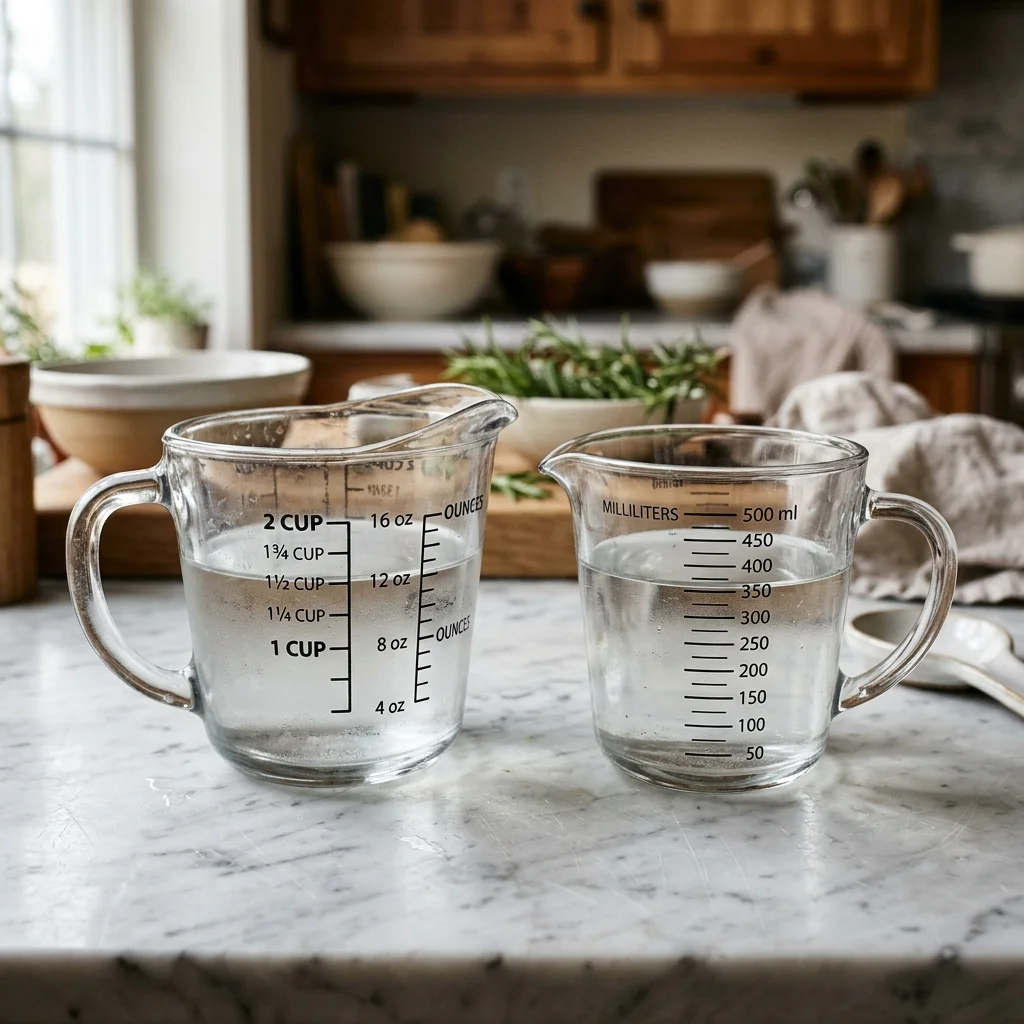
Achieving the ultimate moist, tender banana bread with a golden domed crust and rich fruit flavor comes down to one crucial baking rule: weighing your mashed bananas and all-purpose flour in grams on a digital scale rather than relying on volume cups or counting '3 bananas'. Because banana size and flour packing density vary wildly, weighing exactly 340g of mashed banana and 270g of flour guarantees perfect batter hydration and prevents dry, crumbly, or gummy loaves.
In this master metric baking guide, we break down exact gram weights for every ingredient, explain the food chemistry behind banana bread texture, provide an 8-step preparation workflow, solve the science of internal doneness temperatures (200°F–205°F), and troubleshoot common baking mistakes.
Adjust batter volume for different loaf tin dimensions using our Cake Pan Converter, look up melted fat density in Melted Butter Grams to Cups, or resize the recipe with our Recipe Scaler.
Banana Bread Recipe at a Glance
Ingredients in Grams
The table below provides exact metric weights alongside standard US volume equivalents for this moist banana bread recipe:
| Ingredient | Grams (Weight) | US Volume Equivalent | Culinary Function |
|---|---|---|---|
| Very Ripe Mashed Bananas | 340g | ~1 1/2 Cups mashed (3 medium-large) | Provides natural moisture, sweetness & flavor |
| All-Purpose Flour (Unbleached) | 270g | 2 1/4 US Customary Cups | Establishes crumb structure & prevents collapsing |
| Unsalted Butter (Melted & Cooled) | 113g | 1/2 Cup (1 stick / 8 tbsp) | Adds fat for tender crumb & rich flavor |
| Packed Light Brown Sugar | 150g | ~3/4 Cup packed | Retains moisture (hygroscopic) & adds caramel depth |
| Granulated White Sugar | 50g | 1/4 Cup | Promotes golden crust browning |
| Large Eggs (Room Temp) | 100g | 2 Large Eggs (out of shell) | Binds batter structure & emulsifies fats |
| Pure Vanilla Extract | 5g | 1 Teaspoon | Complements banana & butter aromatics |
| Baking Soda | 5g | 1 Teaspoon | Reacts with fruit acidity for rise & browning |
| Fine Sea Salt | 3g | 1/2 Teaspoon | Balances sweetness & strengthens gluten structure |
| Optional Chopped Walnuts / Pecans | 100g | 1 Cup chopped | Adds nutty crunch & contrasting texture |
How Much Mashed Banana Do You Need?
The single biggest cause of inconsistent banana bread is relying on vague recipe instructions like "use 3 medium bananas." Bananas vary dramatically in fruit density and water content depending on variety, peel thickness, and ripeness stage. A peeled banana labeled "medium" can weigh anywhere between 90g and 135g. Using 3 small bananas yields barely 270g of fruit (causing dry bread), while 3 large bananas yield over 400g (causing a gummy, collapsed center).
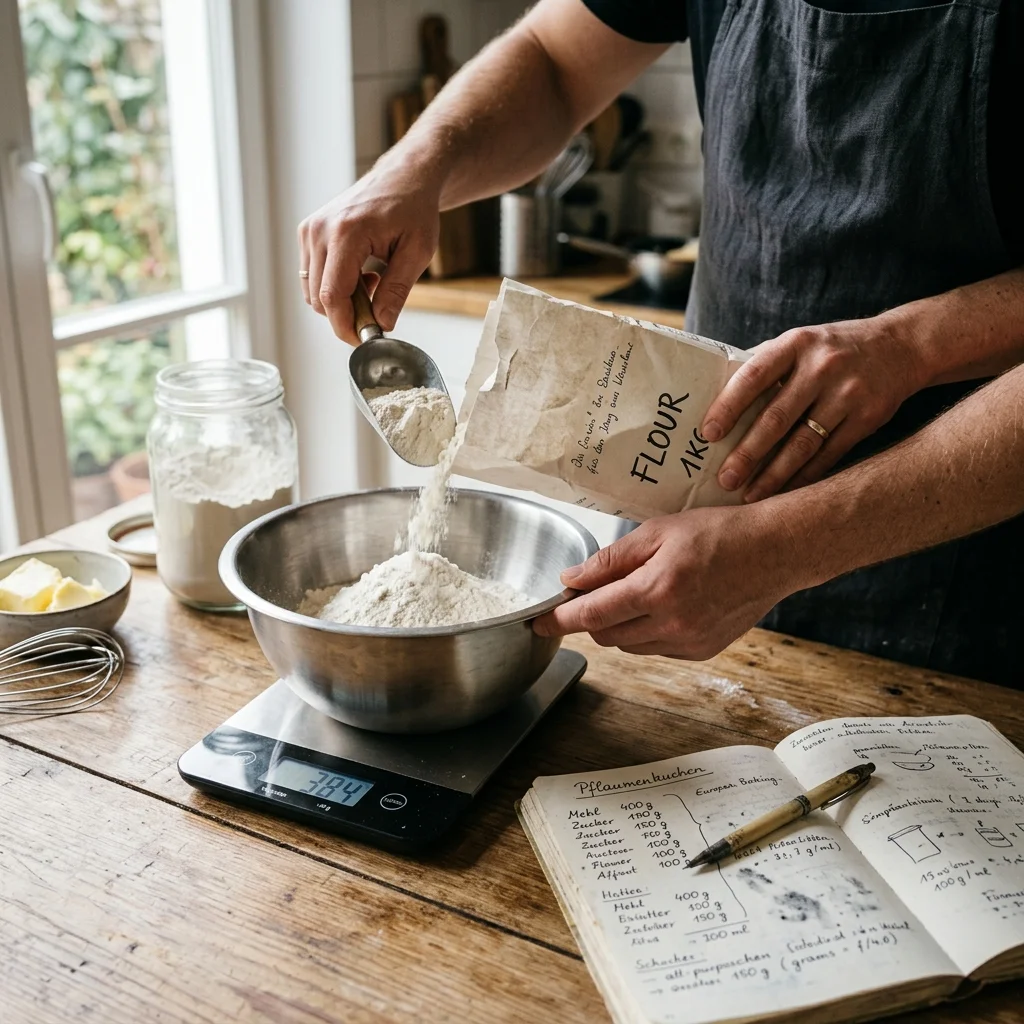
For optimal results, **weigh out exactly 340 grams of mashed banana** (approx 1 1/2 cups). This 340g standard (supported by baking institutions like King Arthur Baking) provides the perfect moisture balance when paired with 270g of all-purpose flour. Mash your ripe bananas in a bowl first, place your mixing bowl on your scale, and spoon in 340g for 100% predictable baking chemistry.
Why Weighing Flour Matters
Flour is highly compressible. When you dip a measuring cup directly into a flour bag, starch granules pack tightly against the cup walls, scooping up to 145g or 150g per cup instead of the standard 120g. In a recipe requiring 2 1/4 cups of flour, volume scooping can accidentally add 330g of dry flour instead of 270g, a massive 60g excess!
This excess flour absorbs all the liquid in the batter, producing a dense, dry, sawdust-like loaf. Weighing 270g on a digital kitchen scale guarantees exact moisture-to-flour ratios. To master proper flour handling, read our guide How to Measure Flour Correctly: Spoon and Level Method vs Scooping and explore Why Baking by Weight Is Superior to Measuring by Volume.
How to Make Moist Banana Bread
Follow these step-by-step instructions using your digital scale. For scale setup assistance, see Top 5 Best Kitchen Digital Scales for Baking Precision in 2026.
1. Prepare the Pan and Oven
Preheat your oven to 350°F (175°C) with the rack set in the center position. Lightly grease an 8.5 x 4.5-inch metal loaf pan with butter or baking spray, then line it with parchment paper leaving a 2-inch overhang on the long sides for easy loaf removal.
2. Mash and Weigh the Bananas
Peel 3 to 4 very ripe, brown-speckled bananas into a bowl. Mash thoroughly with a fork or potato masher until smooth with minimal lumps. Place a mixing bowl on your scale, tare it to zero, and weigh out exactly 340g of mashed banana.
3. Mix Wet Ingredients
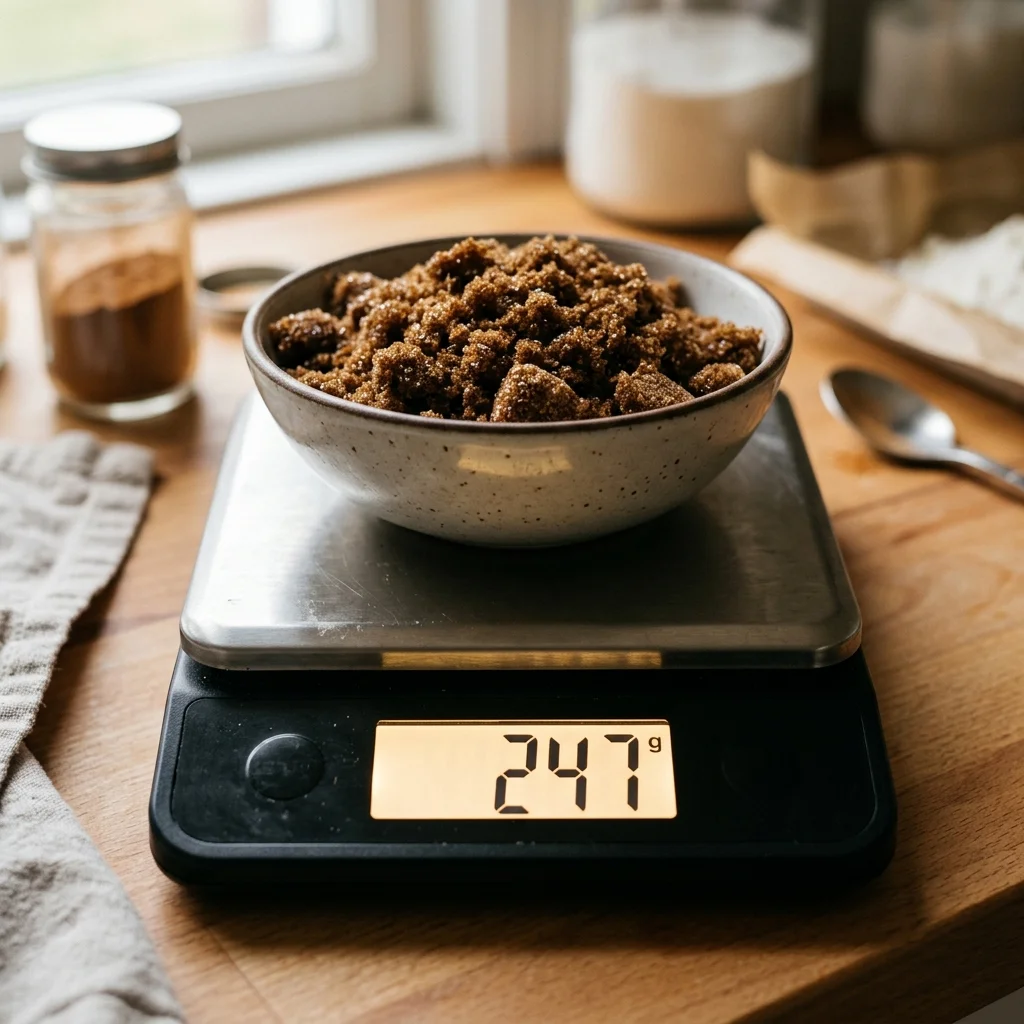
In a large bowl, whisk together 113g melted and slightly cooled unsalted butter, 150g light brown sugar, and 50g granulated sugar until smooth. Add 100g room-temperature eggs (2 large eggs) and 5g pure vanilla extract. Whisk vigorously for 60 seconds until glossy. Whisk in the 340g mashed banana until combined. For sugar density details, see How to Measure Brown Sugar and Sugar Conversion Guide.
4. Add Dry Ingredients
In a separate bowl, weigh out 270g all-purpose flour, 5g baking soda, and 3g fine sea salt. Whisk dry ingredients briefly to distribute the baking soda evenly. Learn how baking soda leavens fruit breads in Baking Powder vs Baking Soda: Weight Ratios and Potency.
5. Combine Without Overmixing
Pour the dry flour mixture into the wet banana mixture. Using a flexible rubber spatula, gently fold the batter just until no visible streaks of raw flour remain (typically 15 to 20 gentle strokes). If adding 100g chopped walnuts or chocolate chips, fold them in during the last 3 strokes. Do not overmix, as excessive stirring develops tough gluten webs that make quick bread rubbery.
6. Transfer Batter to Pan
Scrape the batter into the prepared parchment-lined loaf pan. Use your spatula to spread the top evenly, smoothing toward the corners.
7. Bake
Bake at 350°F (175°C) for 55 to 65 minutes. If the top crust browns too quickly after 35 minutes, tent the pan loosely with a sheet of aluminum foil to prevent burning while the center finishes baking. If scaling the loaf size, consult How to Double or Halve a Baking Recipe.
8. Cool Before Slicing
Remove the pan from the oven and set it on a wire cooling rack for 15 minutes. Use the parchment paper sling to lift the banana bread out of the pan onto the rack. Allow the loaf to cool completely for at least 1 hour before slicing. Slicing warm banana bread releases trapped steam prematurely, causing a gummy interior crumb.
How to Tell When Banana Bread Is Done
Because banana bread is a dense, fruit-heavy quick bread, testing doneness requires both visual cues and accurate thermal measurement:
- Visual Cues: The loaf should feature a deep golden-brown crust with a natural split running down the center dome. The top should feel firm and spring back gently when lightly pressed with a fingertip.
- Wooden Skewer Test: Insert a thin wooden skewer or cake tester into the center of the loaf. It should come out clean or with a few moist crumbs attached, but no wet, shiny batter.
- Internal Temperature Test (Most Accurate): Insert a digital probe thermometer into the geometric center of the loaf. Banana bread is perfectly baked when its internal temperature reaches 200°F to 205°F (93°C to 96°C). Temperatures below 200°F indicate un-gelatinized starches (gummy center), while temperatures exceeding 208°F indicate overbaked, drying crumb.
Why Banana Bread Turns Out Dry
If your banana bread turns out dry, dense, or crumbly, look for these four primary causes:
- Too Much Flour (Volume Scooping): Scooping flour with a measuring cup packs extra starch granules. 300g of flour in this recipe instead of 270g dries out the crumb. Always weigh flour on a scale.
- Overbaking: Leaving the loaf in the oven past 205°F internal temperature evaporates essential fruit moisture. Use a probe thermometer.
- Insufficient Banana Weight: Using 250g of banana instead of 340g leaves the batter short on natural fruit sugars and moisture.
- Low Fat Ratio: Reducing butter below 113g strips away the fat coat required to keep starch molecules tender.
Why Banana Bread Turns Gummy
A dark, wet, gummy streak down the center of banana bread stems from moisture-to-heat imbalances:
- Excess Fruit Moisture (Over 380g Banana): Adding too much mashed banana over-saturates starch granules so they cannot set during baking. Weigh 340g banana exactly.
- Underbaking: Removing the loaf when internal temp is under 198°F leaves wet batter unbaked in the center core.
- Slicing While Too Hot: Slicing fresh banana bread straight out of the oven releases internal steam pressure. Steam is required for 30 minutes post-bake to finalize starch structure; cutting early collapses the moist crumb into a gummy paste.
- Glass Pan Heat Insulation: Glass loaf pans conduct heat slower than dark metal metal pans, often scorching outer edges while leaving centers undercooked. Use aluminum metal pans.
Best Bananas for Banana Bread
The optimal bananas for baking are **heavily speckled or dark brown/black**. As bananas ripen, amylase enzymes convert complex starches into simple sugars (sucrose, glucose, and fructose). This enzymatic conversion makes ripe bananas sweeter, softer, and far easier to mash into a smooth liquid phase.
Avoid using bright yellow or green-tipped bananas. Green bananas contain high amounts of insoluble starch and pectin, producing bland, chalky banana bread with poor moisture retention. If your bananas are yellow, speed up ripening by placing them in a brown paper bag with an apple for 24 hours.
Can You Use Frozen Bananas?
Yes! Freezing ripe bananas is a great way to save overripe fruit. When bananas freeze, ice crystals expand and rupture the fruit cell walls. Upon thawing, the bananas release a significant amount of dark, sweet banana liquid.
How to process frozen bananas: Thaw 3 to 4 frozen bananas completely in a bowl. Do not discard the released liquid! Pour the liquid into a small saucepan and simmer over medium heat for 3 to 5 minutes until reduced by half into a thick banana syrup. Whisk this concentrated syrup back into the mashed banana flesh, then weigh out 340g of the combined mixture on your digital scale. This preserves 100% of the banana flavor without watering down your batter.
Banana Bread Storage and Freezing Guidance
Keep your banana bread fresh and moist with these food-safe storage practices:
- Room Temperature Storage (Up to 4 Days): Wrap the cooled loaf tightly in aluminum foil or place it in an airtight container lined with parchment paper. Store at room temperature (68°F–72°F). Do not refrigerate, as cold air accelerates starch retrogradation (staling), making the bread dry.
- Freezing Whole Loaf (Up to 3 Months): Cool the loaf completely. Double-wrap tightly in plastic wrap, then wrap in heavy-duty aluminum foil. Freeze for up to 3 months. Thaw overnight on the counter at room temperature before slicing.
- Freezing Individual Slices: Slice the cooled loaf into individual portions. Wrap each slice in plastic wrap and place in a zip-top freezer bag. Reheat individual slices in a toaster oven or microwave for 20 seconds for warm, fresh-baked taste.
Grams vs Cups for Banana Bread
Comparing weight-based metric baking against traditional volume cup measuring highlights why grams produce superior quick breads:
| Measurement Method | Flour Accuracy | Banana Moisture Control | Baking Result Consistency |
|---|---|---|---|
| Metric Gram Scale (Recommended) | Exact 270g (+/- 1g) | Exact 340g (+/- 1g) | 100% repeatable moist crumb every batch |
| Volume Cups & Banana Count | Variable 270g–330g (+/- 22%) | Variable 260g–420g (+/- 45%) | High risk of dry or gummy center variations |
Common Banana Bread Mistakes
Troubleshoot common baking pitfalls with this practical guide:
| Problem | Likely Cause | Practical Fix |
|---|---|---|
| Banana bread is dry & crumbly | Too much flour from scooping or overbaking | Weigh flour to 270g; pull oven at 200°F–205°F internal temp |
| Gummy, wet streak in center | Too much banana, underbaking, or hot slicing | Weigh banana to 340g; bake to 200°F; cool 1 hour before slicing |
| Loaf collapsed in middle | Excess baking soda or underbaked core | Weigh baking soda to 5g; ensure center probe reaches 200°F |
| Tough, rubbery texture | Overmixing batter after adding flour | Fold dry into wet with spatula just until flour streaks disappear |
| Dark crust with raw interior | Oven temp too high or glass pan heat absorption | Bake at 350°F in aluminum metal pan; tent foil after 35 mins |
Frequently Asked Questions
1. How many grams of banana do I need for banana bread?
You need exactly 340 grams of mashed ripe banana (approx 1 1/2 cups, or 3 medium-to-large bananas).
2. How many grams of flour are in banana bread?
This recipe uses 270 grams of all-purpose flour (equivalent to 2 1/4 US customary cups spooned and leveled).
3. Can I weigh mashed bananas instead of counting bananas?
Yes, weighing mashed bananas is strongly recommended. Banana sizes vary widely; weighing 340g guarantees exact moisture balance.
4. Why is my banana bread dry?
Dry banana bread is caused by too much flour (from volume scooping), overbaking past 205°F, or using less than 340g of banana.
5. Why is my banana bread gummy?
Gummy banana bread results from adding too much banana (over 380g), underbaking under 200°F internal temp, or slicing while still steaming hot.
6. How ripe should bananas be for banana bread?
Bananas should be heavily brown-speckled or almost black. Ripe bananas convert starches into sweet fructose, maximizing flavor and moisture.
7. Can I use frozen bananas?
Yes. Thaw frozen bananas completely, reduce the released liquid by half in a small saucepan, combine with banana mash, and weigh out 340g.
8. How do I know banana bread is done?
Banana bread is done when a skewer inserted in the center comes out clean and an instant-read probe thermometer reads 200°F to 205°F (93°C–96°C).
9. Can I make banana bread without a scale?
While you can use volume approximations (2 1/4 cups flour, 1 1/2 cups banana mash), using a digital scale prevents dry or gummy results.
10. Should banana bread ingredients be measured in grams?
Yes. Measuring in grams eliminates volume packing errors and ensures identical moisture-to-flour ratios every single time you bake.
For chocolate banana bread variations, see our detailed guide on Dutch process vs natural cocoa powder weights and acid balance.
Interactive Portion & Scoop Calculator
Calculate exact portion sizes and dough yields.
Interactive Baking Calculator Widget
Adjust inputs below for instant real-time recipe formulation.
Need Full Density Reference Tables?
Explore complete g/cup density tables, USDA ratios, and measurement tools.
Related Baking Guides
US Cup vs Metric Cup vs Imperial Cup: The International Baking Guide
Learn the difference between US, metric, and Imperial cups, their milliliter sizes, and how to convert international baking recipes accurately.
Baking ScienceWhy Baking by Weight Is Superior to Measuring by Volume
Learn why weighing baking ingredients in grams is more accurate than cups, how density affects volume, and how a kitchen scale improves consistency.
Baking ScienceHow to Bake European Recipes in an American Kitchen
Learn how to convert European baking recipes for an American kitchen, including grams, milliliters, Celsius, gas marks, cups, and ingredient weights.